# 40
DISCLAIMER: The information provided in this post is for informational purposes only. Any reliance you place on such information is therefore, strictly at your own risk. I do not accept responsibility for, and explicitly disclaim all liability for any illegal or dangerous acts carried out by any person or persons in the pursuit of railfanning or hiking. I urge you to exercise extreme caution whenever in the vicinity of trains and railway lines in general & also follow all applicable laws, rules, and regulations, whether on railway property or not. For full Disclaimer and Content (including Images) Policy, click here -> Terms of Use.
General information:
When: Summer ‘17
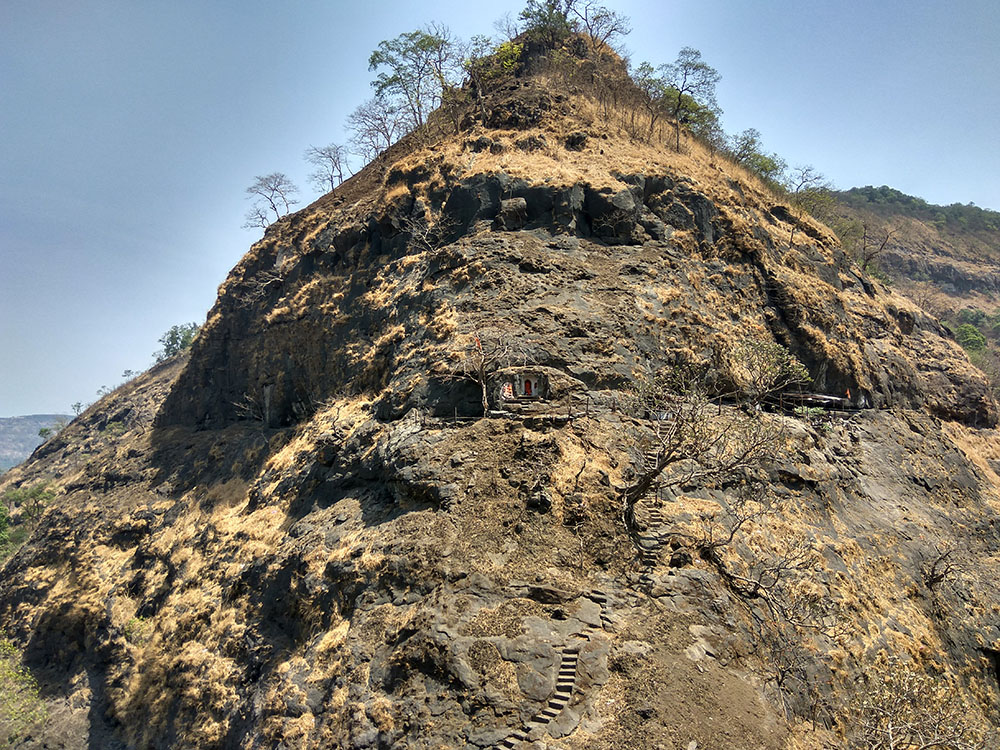
Where: Gorakshnath/Nagnath Temple & Gambhirnath Cave complex.
Range: Bhor Ghat
Nearest railway stations:
1. Thakurwadi Station (Down & Bidirectional Line): 2.4 kms
2. Nagnath Cabin (Up line): 1.3 kms
3. Monkey Hill (Up & Down Line): 4.5 kms
Max Elevation: 1292 Ft Above MSL
Total Distance: ~7 km
Total Active Time: 4 Hours
Approx. expenses: Below 250 Rs/Head
Best time to visit: Monsoon
Difficulty: Low
Endurance: 2
Risk Factor: Low but walking along the tracks is an inherently dangerous activity.
What do these gradings indicate? Find out here!
Route: Mumbai-Thakurwadi Station-Nagnath Cabin-Gambhirnath caves-Thakurwadi Station/Nagnath Cabin.
Directions: Alight at Thakurwadi and enter the Service tunnel by a trail south of the station. Exit near the top of Nagnath catch siding and reach Gambhirnath viaduct after crossing three tunnels via Nagnath cabin. One of the trail to the caves originates from the right of Tunnel # 36. Cross the sparse forest to reach the col by a traverse beneath the caves. Climb the rock cut steps to reach the cave complex and temples. Shivling on the northern hill of Nagnath cha Dongar can also be visited. Turn right (east) from the col to descend to Thakurwadi line. The trail leads you to a series of irregular steps culminating at the southern end of Tunnel 29. Walk back to Thakurwadi by the Down line (right most track when facing Karjat) and board any UP train/Banker.
Railway Terminology:
Banker: A banker is a locomotive that assists the leading loco in hauling the train up a steep gradient.
Catch Siding: A siding along a steep railway grade so placed as to catch runaway trains.
Central Railway HQ: Chhatrapati Shivaji Terminus (CST).
Down (DN) line/Train: Down refers to a train travelling away from its headquarters.
UP line/Train: Up refers to a train travelling towards its headquarters.
MID line: A bidirectional line used by trains travelling in both directions.
Railfan: A person interested in the technical & historical aspects of Railways.
Service Tunnel: A tunnel
through the mountain behind Thakurwadi (TKW) used for ferrying Men &
Material while constructing the Nagnath line in 1982
For more info about such terms, visit: IRFCA FAQ
Map:
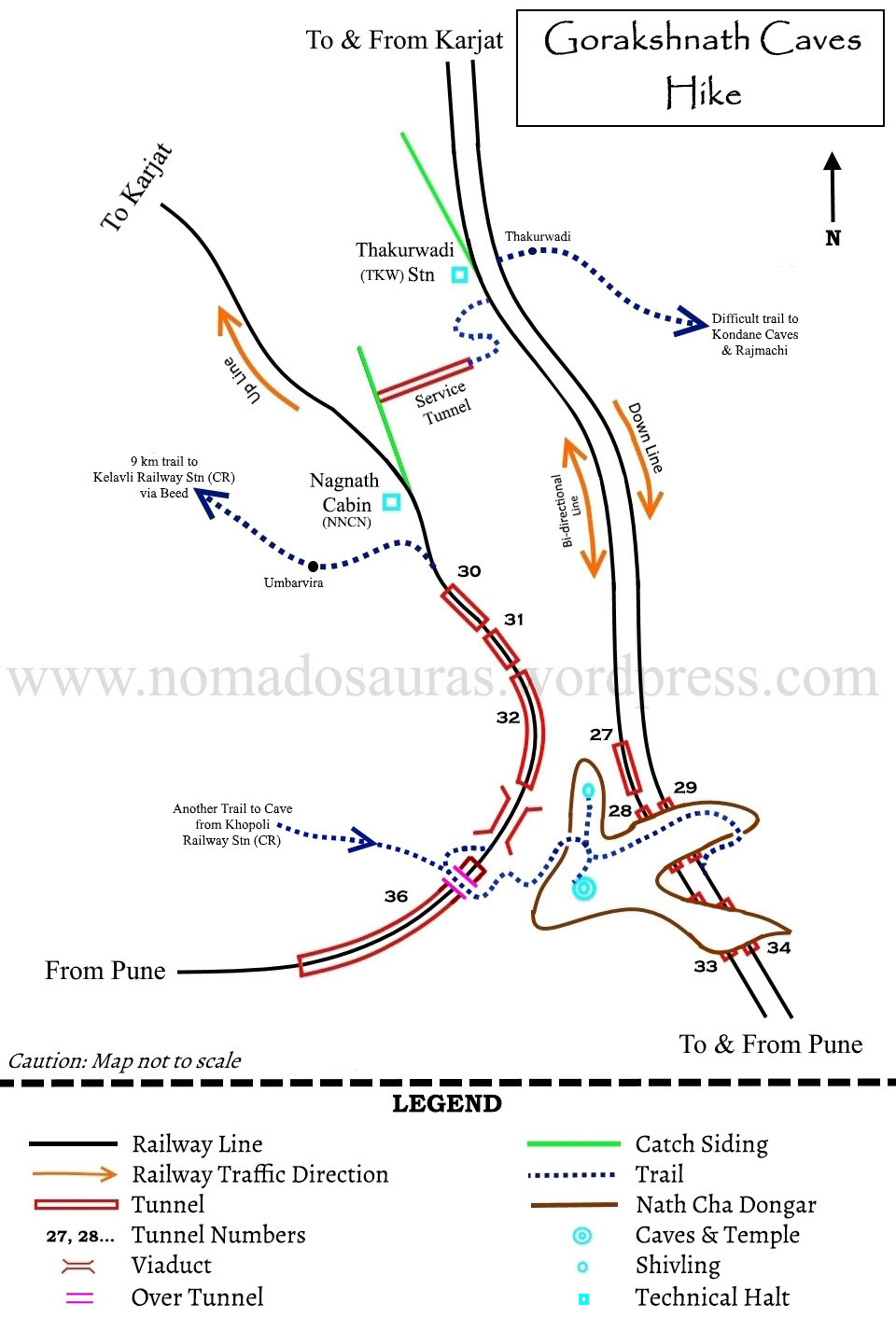
GPS Coordinates:
1. Service Tunnel (Thakurwadi side): 18.831820, 73.364113
2. Diversion to Caves on Nagnath side: 18.817101, 73.368515
3. Diversion to caves on Thakurwadi side: 18.817167, 73.371010
4. Gorakshnath Temple/Gambhirnath Caves: 18.816570, 73.369690
5. Shivling on northern hill of Nagnath cha Dongar: 18.817799, 73.370102
Transport Options: People travelling from Mumbai can reach Thakurwadi by multiple ways.
- Alight at Karjat, take a tum tum/auto to Kondivade village (also the base village for Kondana caves hike) and trek to Thakurwadi station (1.5 hours).
- Alight at Karjat and take a tum tum to Beed gaon and walk up to Nagnath cabin/ Thakurwadi station. (1.5 hours).
- Board a Pune bound train and alight at Thakurwadi (Only three Down trains stop at Thakurwadi station- Deccan Express, Sinhagad Express & Siddheshwar Express in the morning, evening and late night respectively. Obviously, Deccan Express is the most convenient for a one-day trip from Mumbai).
- Alight at Khopoli and trek all the way to Gambhirnath caves (2 hours).
- Alternatively, Alight at Kelavli stn (CR) and hike up by the beed route to join the railway line at Nagnath cabin and walk up to the caves (2-3 hours).
Our Itinerary:
0700 hrs- Deccan Express from CST
0930 hrs- Reached Thakurwadi station
1100 hrs- Crossed Nagnath Cabin
1200 hrs- Gambhirnath Caves
1400 hrs- Started descent to Thakurwadi line
1430 hrs- reached Tunnel 29
1545 hrs- Thakurwadi Station
1630 hrs- boarded Banker for Karjat from Nagnath Cabin
1720 hrs- Fast local train for CST from Karjat
Alternative Routes:
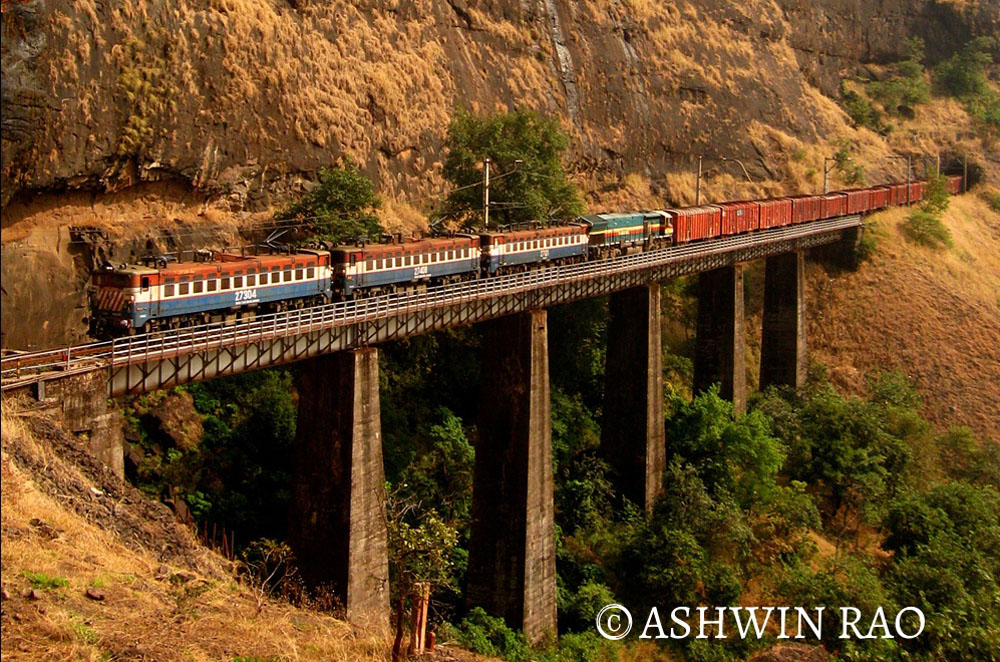
For Pune folks (Both routes have been planned in such a way that you ’ll always be walking against the rail traffic on the given line as it’s safer):
- Monkey hill Loop: Alight at
Monkey hill and start walking along the DN line (right most track when
facing Karjat), visit a small temple besides the track and take the
diversion on the right of Tunnel 29’s entrance to hike up to Gambhirnath
caves. Descend to Nagnath UP line on the other side of the mountain and
walk towards Monkey hill to board a train for Pune.
Pros: Zenith waterfall & crossing the 150m long Viaduct # 6.
Cons: Longest route, fewer DN trains stop at Monkey Hill. - Thakurwadi Loop: Alight at
Nagnath Cabin (or cross over to the catch siding by the service tunnel
if your train halts at Thakurwadi) and hike up to the caves by the trail
on the right of Tunnel 36’s entrance. Descend to the DN line on the
eastern side of the mountain and walk towards Thakurwadi Station to
board a train for Pune.
Pro: Shortest route.
Con: Fewer DN trains stop at Thakurwadi Station.
For Mumbai Folks: Follow the same
itinerary as we did till Gambhirnath caves. Descend back to Nagnath UP
line and walk towards Monkey Hill Station to board any UP train/Banker.
Pros: Zenith waterfall, crossing Viaduct # 6 & greater number of UP trains halt at Monkey Hill Station.
Cons: Longer route & you do not get to explore the eastern trail to the caves.
NOTE: All the pictures used in this post have been clicked by me or my friends, unless stated otherwise.
Prologue:
Our quest to find a summer hike concluded after reading about a cave complex nestled in the mountains of Bhor Ghat near Khopoli. After three days of research, we set out with a rough map of the trail to Gambhirnath caves. I would like to thank veteran Railfan and IRFCA member, Mr. Apurva Bahadur for his invaluable help in planning the hike as well as assuaging my concerns about Railfanning in the busy Ghat section of the Indian Railways.
The Gang: Abhishek, Krunal, Manish, Shardul, Tejas & Me
Account of the trek:
To all the
Trekker (& Blogger) friends of mine who were eagerly looking forward
to being a part of the next trek- I am really sorry for not inviting
you for this one! Since this was my first attempt at combining
Railfanning and Trekking, there was an element of uncertainty in the
trip. Considering the risks involved, I had no choice but to keep the
gang as small as possible. Next time Pakka! 
Also, there is some confusion about the cave’s name. So, let’s get the facts out of the way –
- The caves are located on Nagnath Hill, locally known as Nagnath cha Dongar (Dongar means Mountain, in Marathi).
- It is known as the Nagnath Temple because of the Idol of Nagnath on the left of the cave’s entrance.
- An Idol of Gorakshnath is carved from the wall in a chamber of the caves, which is why the place has been named Gorakshnath Temple on Google Maps
- I have come across two different boards referring to the caves specifically as Gorakshnath and Gambhirnath caves-
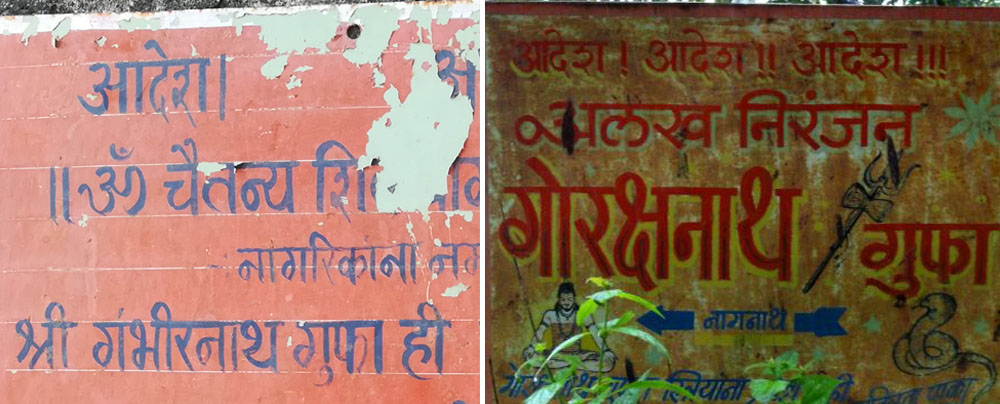
Left: Board near Caves; Right: An old board from Picasa Album Archives
For the purpose of this post and the Map, I have referred to the cave complex as Gambhirnath caves as I found it to be the most widely used.
Now let’s shed some light on the background of our trek! Two months had passed since the Rajgad-Torna range trek and we were as always, itching to get back in the mountains.

The
restrictions on my movement had eased off a bit as my right knee’s MCL
was recovering well. Now the only thing holding us back was the small
matter of climbing hills in the 40+ degree heat. Did you say heat
stroke? Meh 
Jokes apart, trekking in peak summer is a perilous affair and hence, we were looking for a short hike. I was sifting through my usual go-to blogs to find such a destination when I came across a post by Shrikant Shimpi about the hike to Gambhirnath caves, nestled in the mountains of Bhor Ghat. The post was a treasure trove of information but a few blind spots remained.
We soon found out that the nearest railway station for Mumbai folks is Thakurwadi, a mandatory technical halt for UP (coming to Mumbai) trains but not one for the DN (going to Pune) trains. This meant that returning to Mumbai wasn’t a problem but reaching Thakurwadi was.
While collecting info about the numerous trails of the Ghat section, I came across some IRFCA articles about trekking around Monkey hill by Apurva Sir and we figured that he might be able to answer our questions about the section. I got in touch with him and he was kind enough to take out time and help us with many details about the route along with the service tunnel’s exact location. More importantly, he told us how to stay safe while Railfanning in the Ghat section and that was a great relief.
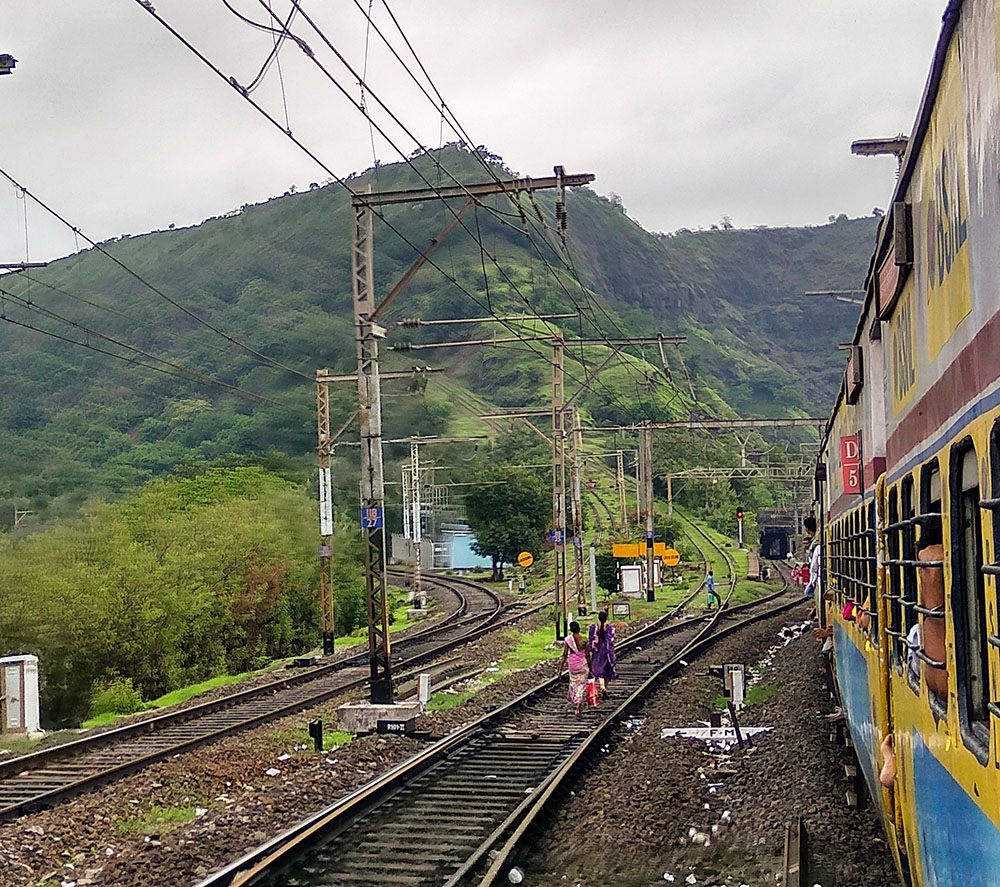
With the final piece of puzzle falling into place, I was literally doing a countdown to the trek when Tejas called me up. Something had turned up at the last moment and he couldn’t make it the next day. Before this, he had missed a trek only once and from what I knew, he wouldn’t have backed out if he could have helped it. We even tried to move around the date but with everyone busy in the coming week, it was impossible. So the Gang was now down to five, including me.
Trek day:
The plan was to board the 11007 Deccan express, alight at Thakurwadi station, walk along the tracks to Tunnel 29 on the DN line, hike up to the cave and come back along the same route after exploring the service tunnel. Manish was the first to board the train from Dadar at 0712 hrs while the rest of the gang except me, boarded from Thane. I reached Kalyan junction at a quarter to 8 in the morning & no sooner had I stepped on the platform that the PA system warned commuters to stay away from the platform edge. A minute later, the 12128 Mumbai-Pune Intercity express hauled by WCAM-2P #21885 whizzed by the station in no time.
A Kasara bound local train followed the Intercity express before the Deccan Express sauntered onto the platform at a quarter past eight, pulled by a WCAM-2P (#21879).
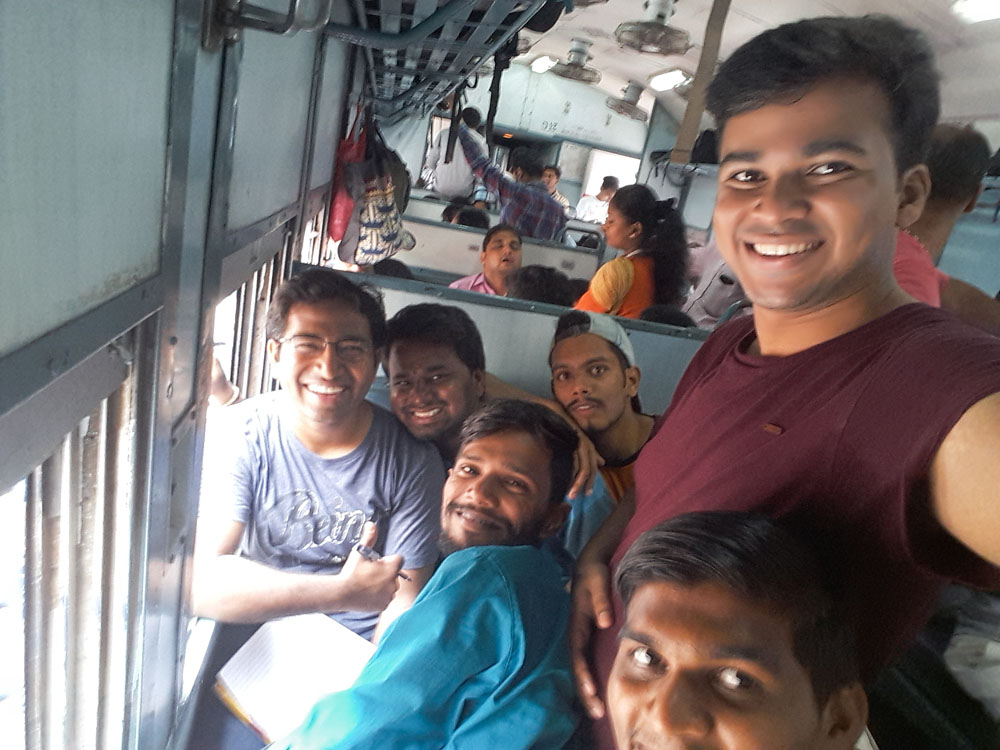
I boarded the train amidst much jostling and tried to find a familiar face in the crowd. Imagine my surprise when I saw not four, but five of them smiling back at me! Sitting by the window and sporting the widest grin of them all, was Tejas! Turns out that after a lot of back and forth, He decided to come for the trek after all but since it was very late in the night, he got in touch with only Abhishek and together they pulled off a fast one on the rest of us. Poor me being the last one to board the train, was also the last one to know!

 Original Comic: Cartoonstock.com
The Express soon accelerated out of the city and the hill ranges replaced the town’s high rises. The first mountain to greet us was the peculiar, square massif known as Chanderi followed by the trio of Nakhind-Vikatgad-Matheran. I managed to click a few pictures before the burgeoning suburb of Neral again obscured the base of the lovely range.
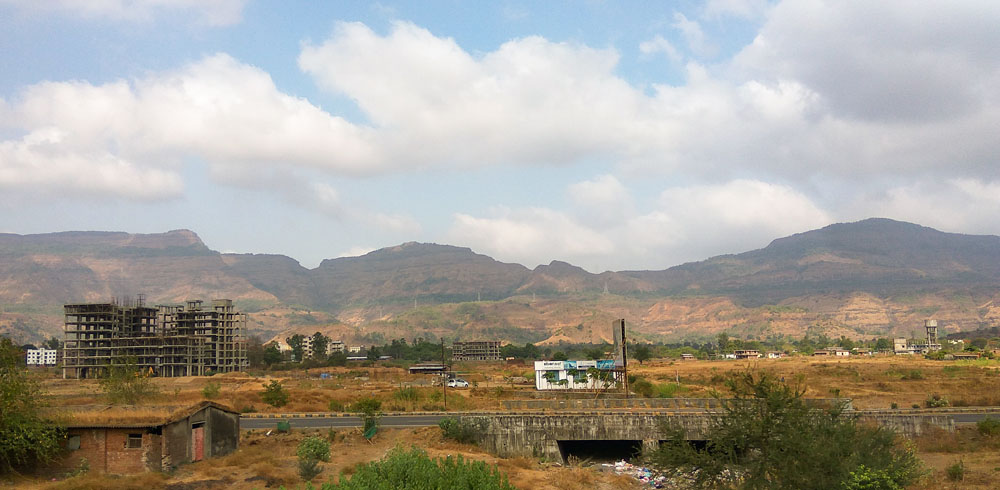
We cruised
into Karjat a few minutes past nine where the aroma of its famous
coconut chutney allured us into buying Vadas! If you haven’t already
tried Karjat’s vada, jot it down as the #1 thing to do the next time you
shuttle between Mumbai & Pune! 
The morning
had been an unusually cool one with the temperature hovering around 26
degrees- something we seldom experience on the western coast in peak
summer. We remained sceptical of the clouds until Karjat but when the
Sun didn’t come out even after we passed it, we started imagining us
climbing to the caves in the unseasonal rain- struggling against the
heavy winds, lashing our faces with thousands of tiny, needle-like
droplets!  (In case this reads like the perfect description of torture to you, I
am guessing you haven’t trekked in Sahyadri in the monsoon YET. What are
you waiting for?!? Go on! Do it and you ‘ll know why we love it!)
(In case this reads like the perfect description of torture to you, I
am guessing you haven’t trekked in Sahyadri in the monsoon YET. What are
you waiting for?!? Go on! Do it and you ‘ll know why we love it!)
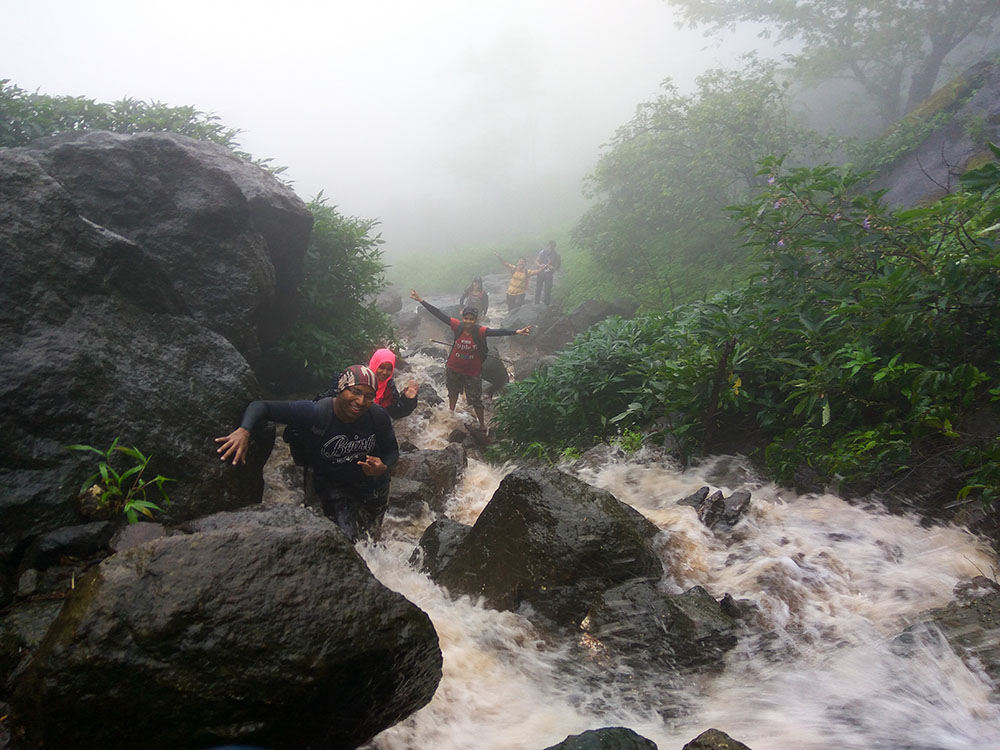
Alas! It didn’t take long for the Sun to dash our foolish hopes. The overcast sky cleared up as soon as our train started climbing uphill beyond Palasdhari and we could literally feel the temperature rising with each passing minute.
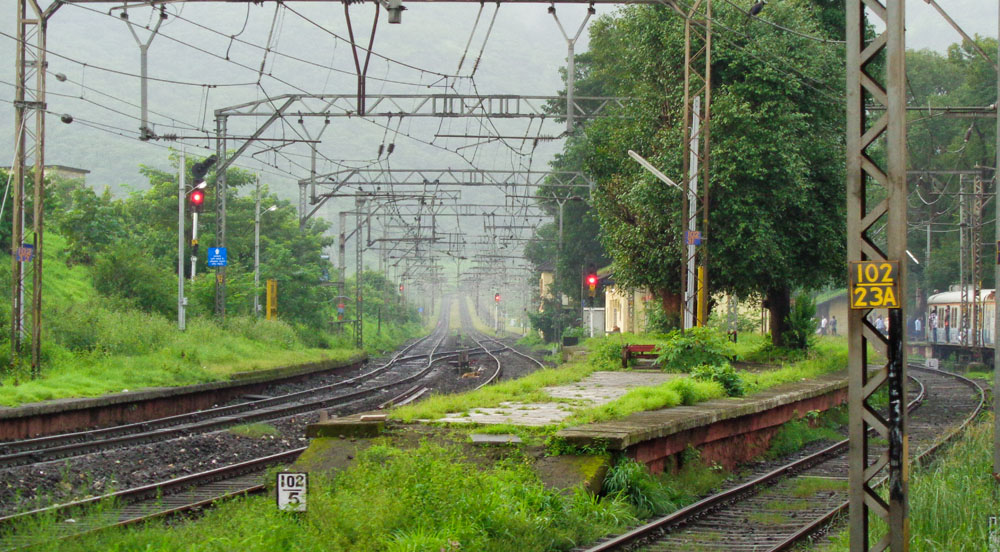
The plains quickly transformed into the steep valleys of Jamrung & the drastic change of landscape, unlike the gradual one that happens while travelling by the painfully slow Neral- Matheran narrow gauge railway, is difficult to put into words. It feels like someone chips away a barely noticeable piece of the picture every time you enter a tunnel only for you to realise you are staring at a completely new picture when the train suddenly emerges amongst the hills.
When the third line split and turned west at the Jamrung Cabin, we got up from our seats and slithered through the gangway crowd to stand at the door. A couple of long curving tunnels later, the train emerged between a narrow piece of land in the east and a hill on the other side. It slowed down to a crawl as we approached a small hamlet by the railway line and we knew our destination had come- Thakurwadi.
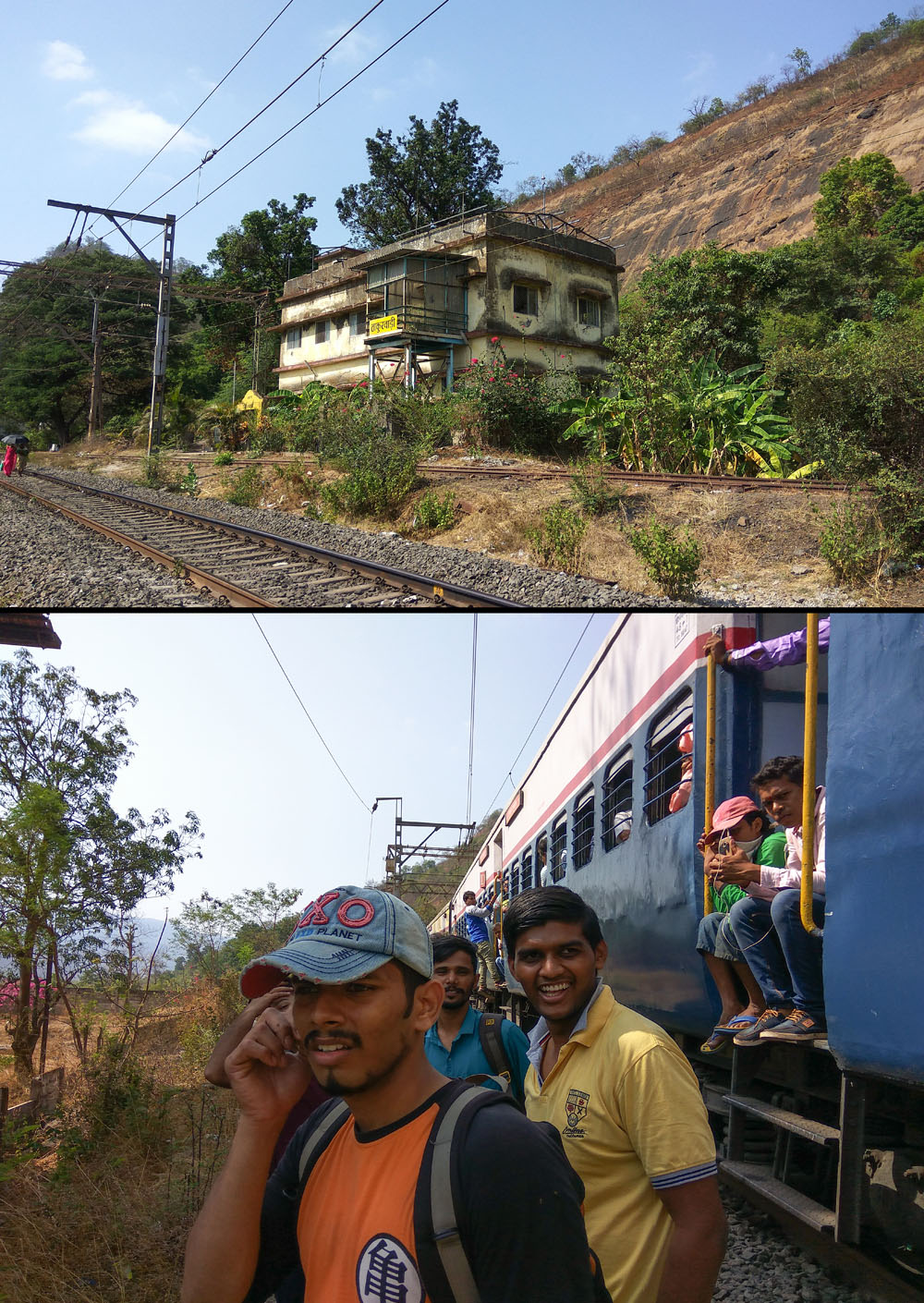
I had read
that the train stops at Thakurwadi station (TKW) for a couple of minutes
but to my surprise, the halt was less than a minute long! If you are
part of a large group, I would suggest splitting up at multiple doorways
to make sure nobody has to ride up to Monkey Hill against his/her wish!
The WAG 7 banker triplet flexed their muscles to help push the train and we crossed over to the Station Master’s office near the MID (bidirectional) line. An unused line split from the MID line and went uphill- the Catch Siding!
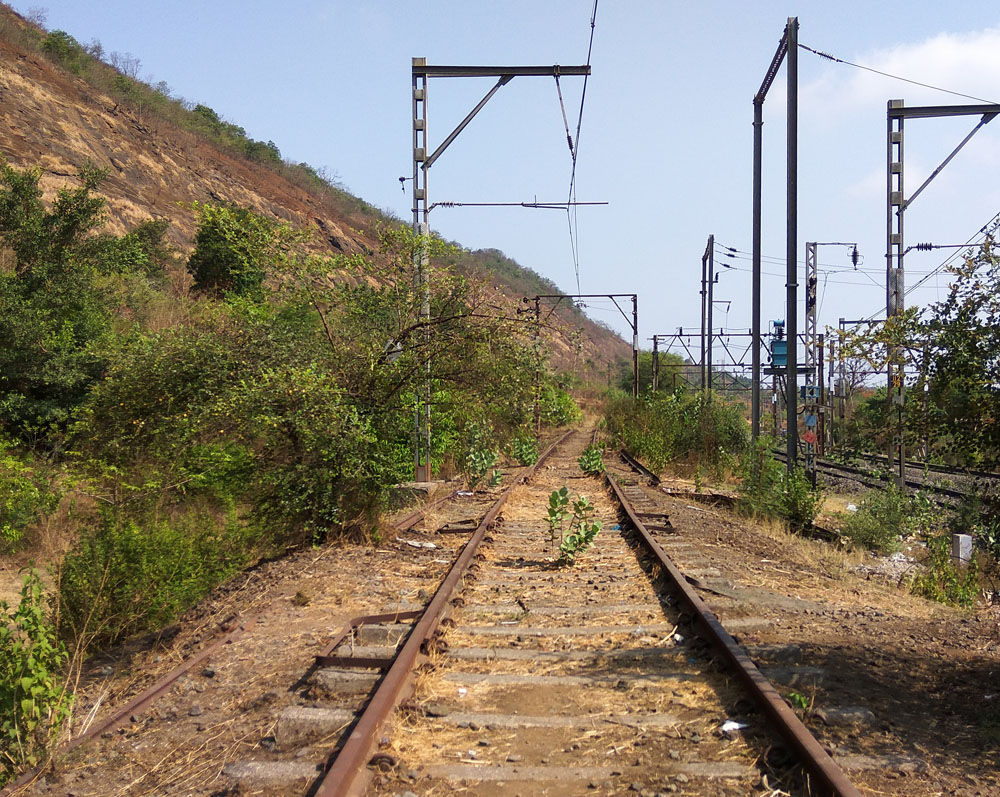
I was clicking pictures of the siding when a trio of light WCAM-3 bankers appeared round the corner. My friends, taken aback at the sudden appearance of the locomotives out of nowhere, confused the siding with the main line and jumped onto the latter! Thankfully, they realised their folly in a split second and hopped right back with the bankers still a safe distance away.
The startled voices though, brought out the Station Master. Frowning down on us from the balcony of his first floor office, he asked us what we were doing in this part of the Ghat. I told him all about our plan and he scanned us carefully to make sure no funny business was going on. His steely gaze must have found whatever he was looking for, ‘cos he smiled and told us that we should consider climbing up to the caves from the UP line of Nagnath cabin and return to Thakurwadi by the DN line. That way, we would be walking against the railway traffic for the entire hike, which is obviously safer than constantly having to look over your shoulder for a sneaking train.
We thanked
him and walked a few metres to join the join only trail going west (in
the hill’s direction). It led us to a series of steps made from
irregular rocks and the adventure had begun! 

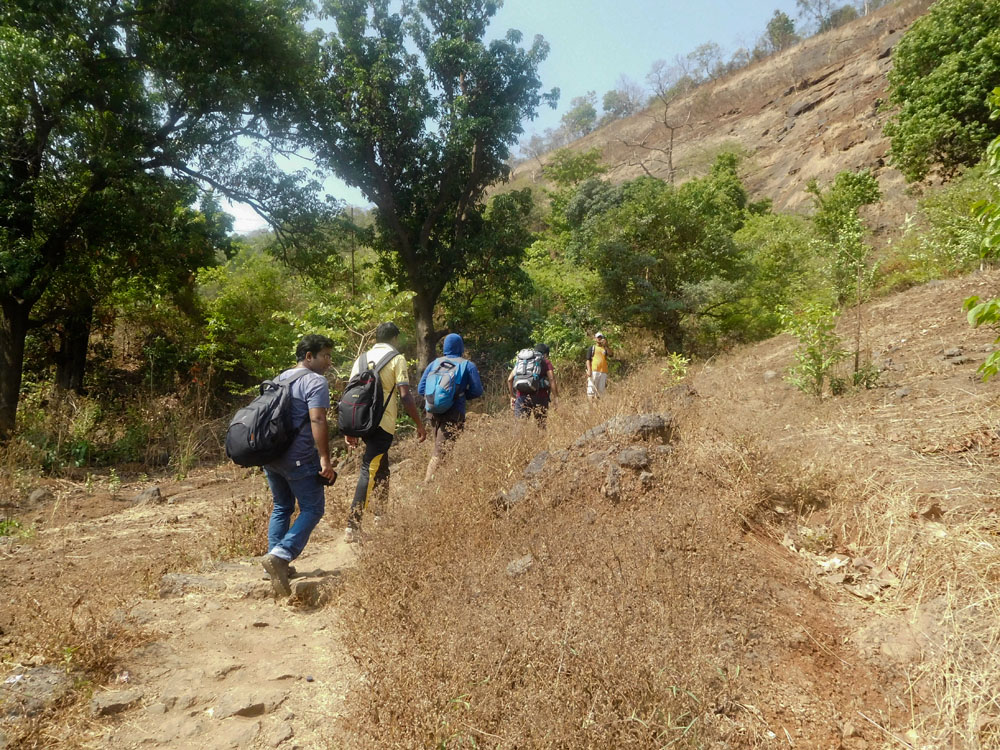
We got a final glimpse of the railway line from the bushes before the trail took a U-turn to leave us facing the hill again. A few more steps and we were staring at a partially blocked opening in the base of the hill- Service Tunnel.
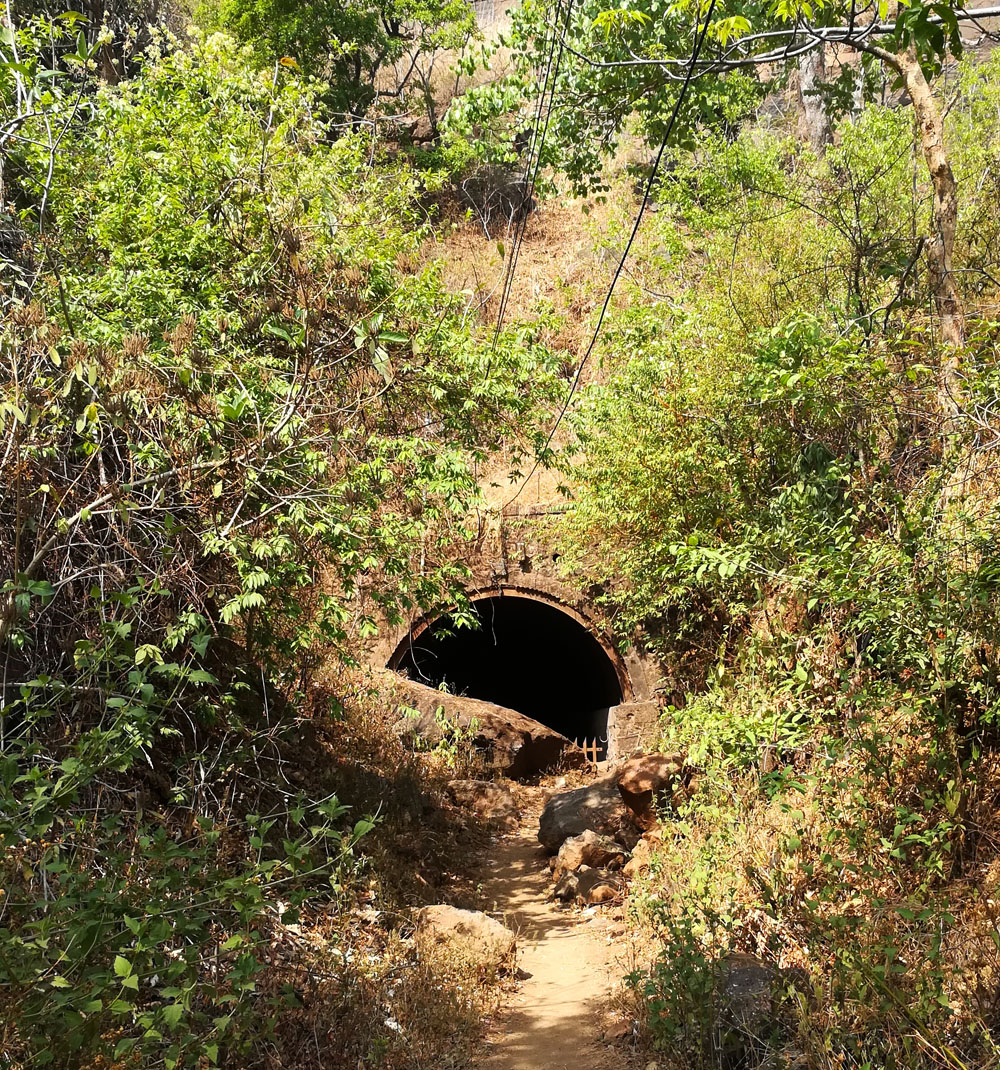
CAUTION: 25 Kv AC insulated lines run along the walls of the service tunnel. Hence, one should refrain from touching or going too close to the walls.
The sight of
a partially blocked tunnel barely 100 metres from the heavily
frequented Railway line made us feel like some explorer privy to a
hidden treasure! (Yeah fanciful thinking, I know )

Even though the straight-as-an-arrow design ensures natural illumination even in the middle of the tunnel, it is advisable to keep a torch handy before entering to prevent tripping over the missing chunks of concrete floor.
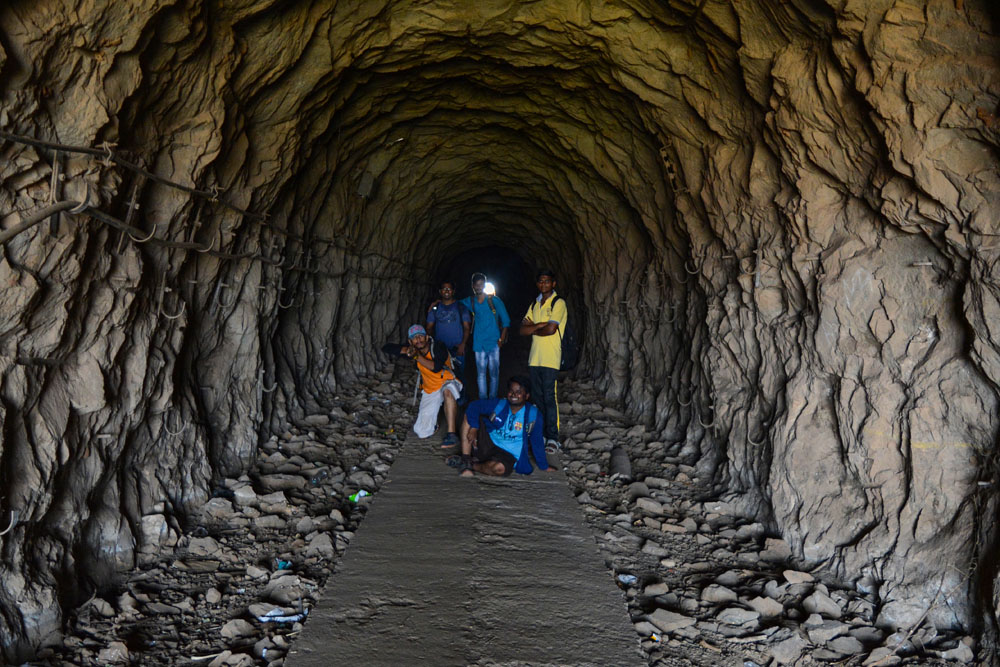
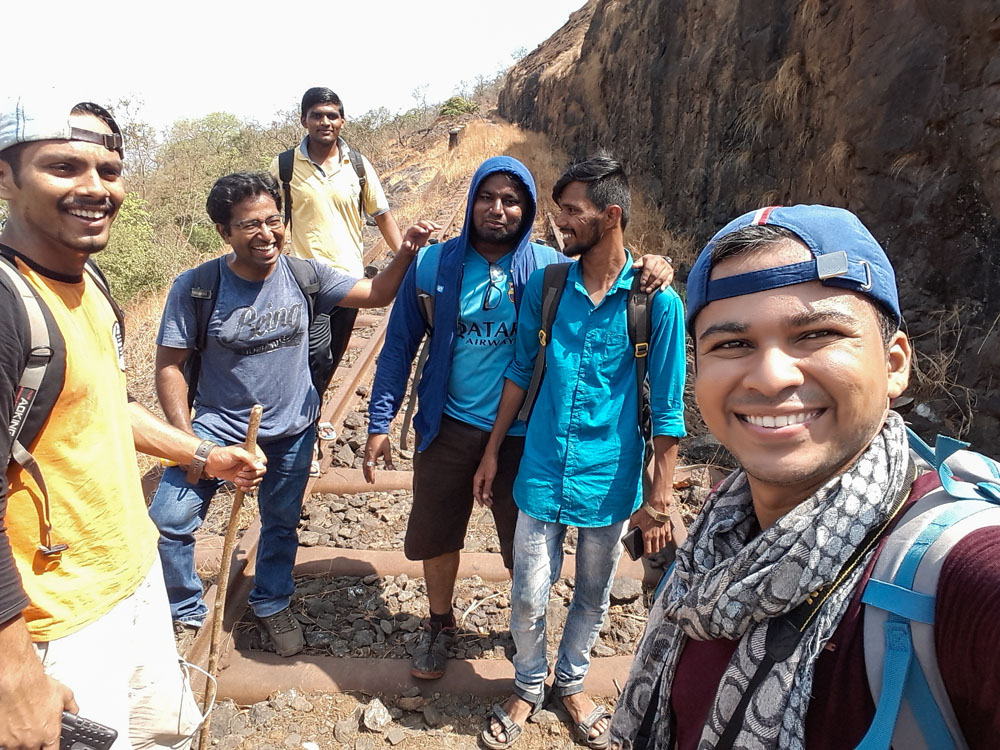
It took us 10 minutes to cross the barely 250m long tunnel as we made the most of our visit by clicking a picture in every imaginable pose! While the Thakurwadi side is partially blocked, the Nagnath side of the tunnel opens into the sky. Well, not literally but very close!
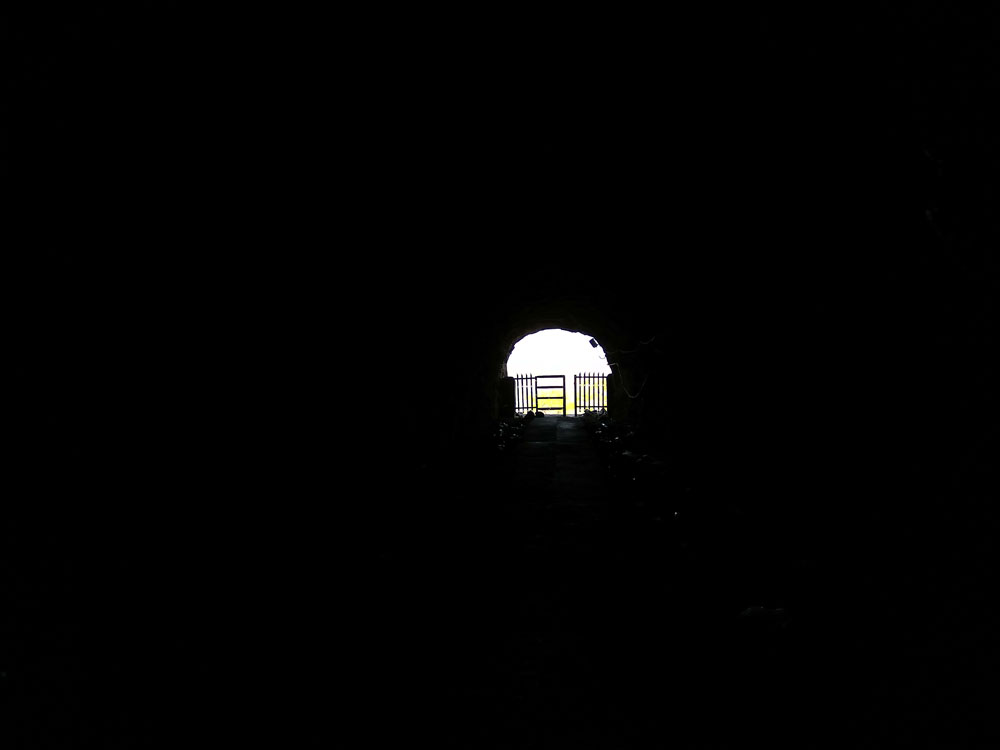
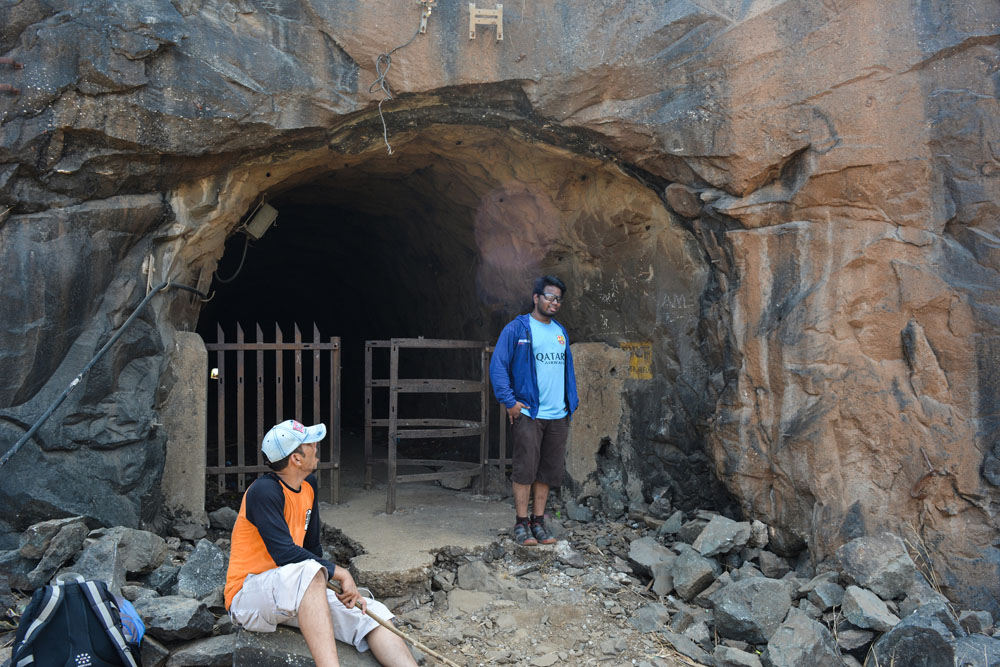
The Nagnath catch siding rises to a max elevation of about 350m and the tunnel opens up close to the highest point, thus giving an excellent view of the siding’s gradient as well as of Nagnath cha Dongar and Behran plateau in the distance.
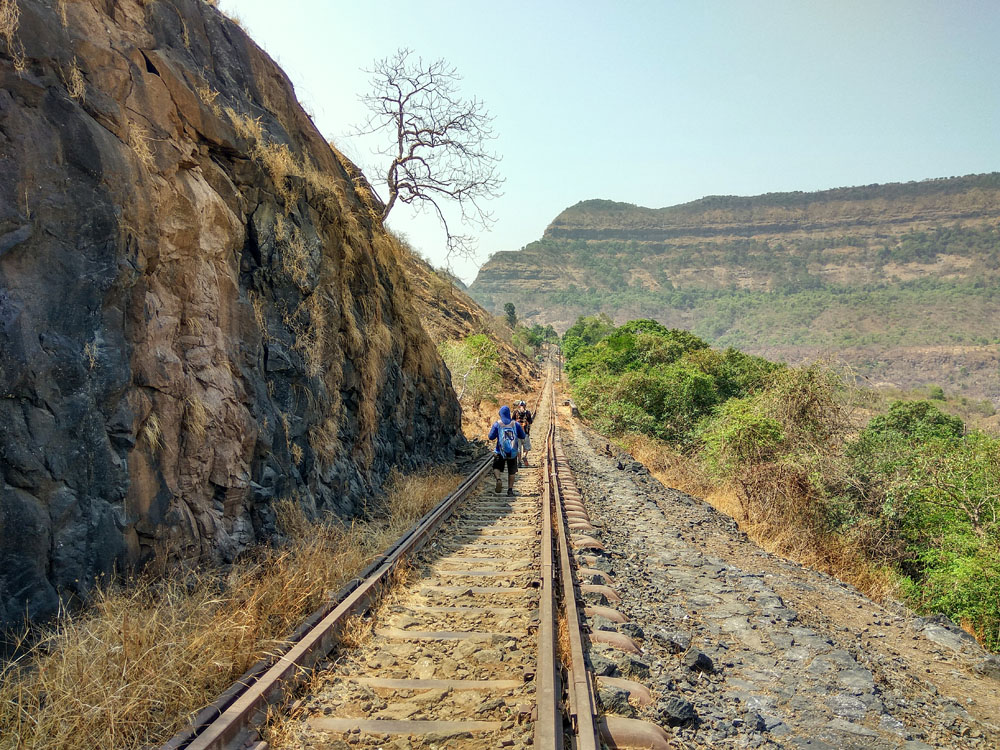
From an aesthetic point of view, you ‘ll be hard pressed to argue against the spectacle that is Nagnath Catch siding. However, from a Railfan’s perspective, the Thakurwadi catch siding has history on its side with the last documented incident of a runaway train in the Ghats recorded on the Thakurwadi line back in ’93 making it part of the folklore. You can read more about it here (scroll to the bottom of the page)
Info: The Nagnath line was conceptualised for easing congestion on the old lines running through Thakurwadi following which the UP line of Thakurwadi turned into a MID line catering to traffic in both the directions.

Coming back
to the trek! A couple of light WCAM-3 bankers did the mandatory brake
test near the Cabin before speeding past us as we approached
intersection of siding and UP line. I saw a young man quietly going
about his work on the main line. Even though the Thakurwadi station
master had given us a few pointers about the trail from Nagnath side, I
thought it ‘d be better to ascertain the exact point of diversion with
the guy. He seemed a bit apprehensive initially, but that’s
understandable cos it isn’t everyday that a bunch of guys turn up asking
you about a cave in the mountains. He eased up as the conversation went on and we ended up speaking about a variety topics including his native place!
We often meet good Samaritans during treks who go out of their way to help us and we make it a point to click a picture of/with them. Naturally, we asked him for one as well but he was surprised that firstly, someone wanted to click a picture of him and on top of that, was asking for permission to do so!
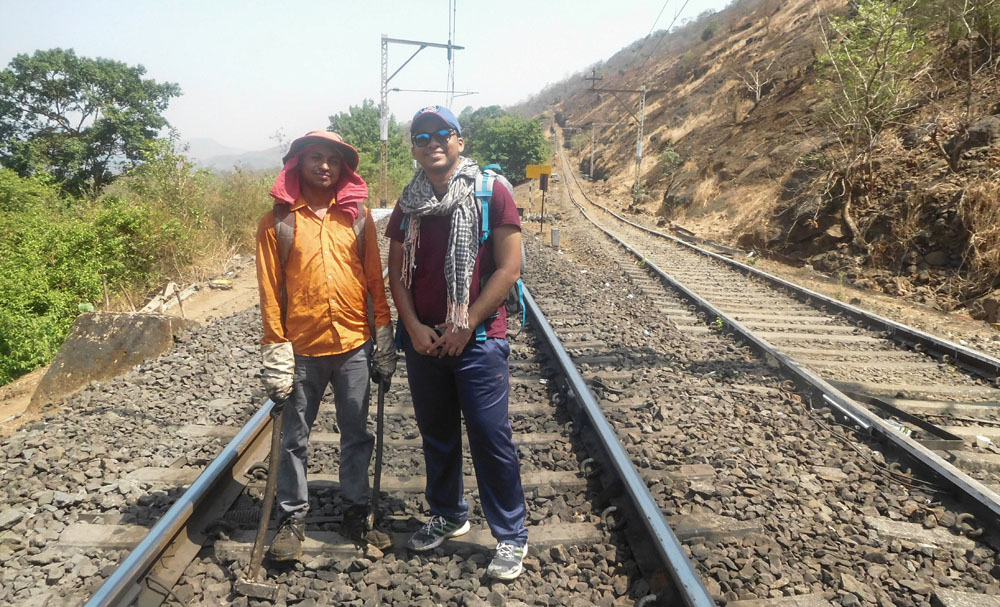
Incidents like these only help us understand the chasm between our worlds. On one hand, we fret over choosing the happiest looking picture to share with the digital world while we drift out of that very emotion in real life and on the other hand, we have folks like our friend here, for whom, being photographed was reason enough to be happy!
If you ever
come across Gangmen (now called track maintainers) doing their job, take
a moment to walk up to them and strike a conversation. More often than
not, you‘ll find them warm and helpful. They are the unsung heroes of
Railways who put their own life on the line to make sure people like us
can have a safe commute. Try it & see for yourself how putting a
smile on their weary, greased faces brightens up your dull day
Back to the trek! We continued walking along the tracks, looking out for any sign of a trail that climbed uphill in the east direction. One can see the small village, Umbervira, a little below the tracks on the right through which numerous trails pass including one to the suburban station of Kelavali (CR).

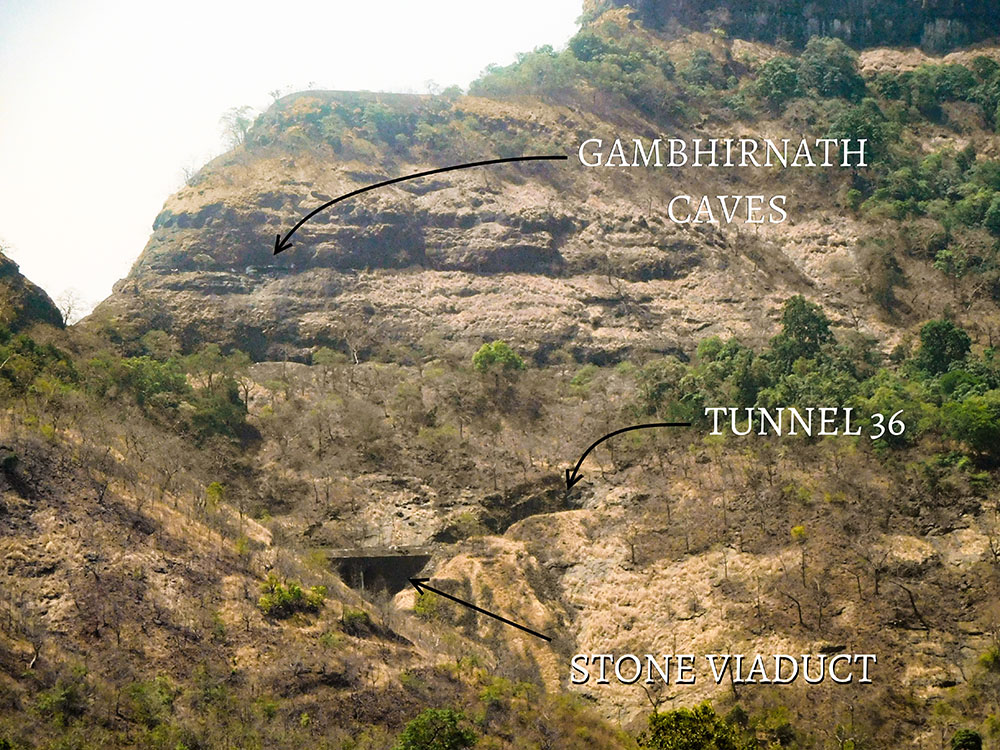
Then came the first set of Railway tunnels of our hike- number 30, 31 & 32.

The 341 m long Tunnel 32 was the longest tunnel we went through during the entire hike and being well aware of the dangers of complacency inside a tunnel, we decided upon a convention. Even though Refuge points are carved inside the tunnel at regular intervals and are the safest option, sometimes you‘ll have to just stay put at your position. Therefore, we agreed to stick to the outer curve of the tunnel to prevent another Thakurwadi-like incident. Despite the presence of bulbs in certain sections, large portions of the tunnel were pitch-black and that coupled with our silence, made us hyper sensitive to sounds around us.

We slacked off after crossing the majority of tunnel’s length and were 30 metres from the southern end when I heard a low, distant horn of a locomotive. Not wanting to take a chance by going for the exit, we quickly sprinted to a big refuge point on the left side despite it being only about 10 metres from the end. We waited for half a minute but there was no further sign of an approaching train. Manish walked out to look at the entrance of tunnel 36 across the viaduct and Abhishek too, walked out to touch the rails to check for vibrations (Warning: this is not a surefire sign of an approaching train, as you ’ll read in a while). Both of them emphatically declared that no train was coming and with no good reason to think otherwise, the rest of us moved out and then we heard it- the unmistakable rumble of a heavy train charging towards you at a great speed.

To know how what happened next, read Part 2!
All rights reserved © 2016 – present Nomadosauras.
Content (including images) not for reproduction in any form, partial or otherwise.
Read complete disclaimer- Terms Of Use.
Cheers!
Keep Trekking
Trek to Gambhirnath Caves-II

This is Part 2 of the Railfan Trek to Gambhirnath caves of Bhor Ghat. To read Part 1, click here.
Quick Recap: We were exiting Tunnel 32 when we heard the unmistakable rumble of a heavy train charging towards us at a great speed.
We darted back into the refuge point and the same instant a WAG-7 (#27132) appeared out of tunnel 36, hauling a rake of BCNA wagons.

The Goods train took a good minute to pass us and melt into the tunnel’s darkness while we wondered about what could have happened if we hadn’t been alert.

As you have already read, a small viaduct made of stone lies between tunnels 32 and 36, (unofficially) known as the Gambhirnath Viaduct. The caves were clearly visible now but there was still no sign of a trial. We could make out a flat patch of land over the tunnel but with no visible way to reach it, we contemplated climbing an easy 10m slab of rock (50-degree incline with a rough surface and no scree at all!) on the left side of the track. But it must be impossible in monsoon! Surely, there had to be another way up and we were determined to find it.
Tejas and Manish started scouting the area on the right of the track while the rest of us looked around the exit of Tunnel 32.

Down in the valley, I could see some village women going home with a stack of firewood on their heads and I thought how sad it is that people living so close to the city still have to rely on firewood for cooking purposes. Right then Tejas called out from the top of tunnel 36 and signalled us to climb up along the path he had taken. We promptly scrambled up the scree-laden slope to find a family of three sitting near a faint trail coming from the southwest.

The middle-aged man, taking a break from cutting wood with his wife and son, told us that the trail leads to Khopoli (a hike of about two hours according to him) and the one from Nagnath cabin climbs up the mountain somewhere before the entrance of tunnel 30 to traverse all the way to the col of Nagnath cha Dongar. Which meant we had made a way from the right side of tunnel 36 when there was none to begin with! Errm.. not for the first time!

We could see the actual trail leading to the col from north but dense shrubs made it difficult to make out where it started from and again, we hadn’t been able to spot it from the tracks despite the best of efforts. I am guessing the path we took shouldn’t be too difficult in monsoon either and hence, while making the map, I have marked it instead of the proper trail.
We joined the Khopoli trail and proceeded in the cave’s direction. It was exact noon and the heat was well-nigh unbearable! Patting ourselves for sticking to a small hike instead of risking dehydration by going for a long one, we took a break to sip some electrolyte water before continuing. The trail soon led us to a traverse covered with scree, about 20 metres below the cave along a horizontal crack in the mountain. The traverse itself is not exposed but slipping down into the shallow valley was not exactly top of our list. We crossed it carefully to reach the col where the other trail joined ours.

Col is the lowest point between the two hills of Nagnath cha Dongar. The Gambhirnath cave complex is located on the southern hill while a small Ganesh idol stands at the base of the rocky northern hill.
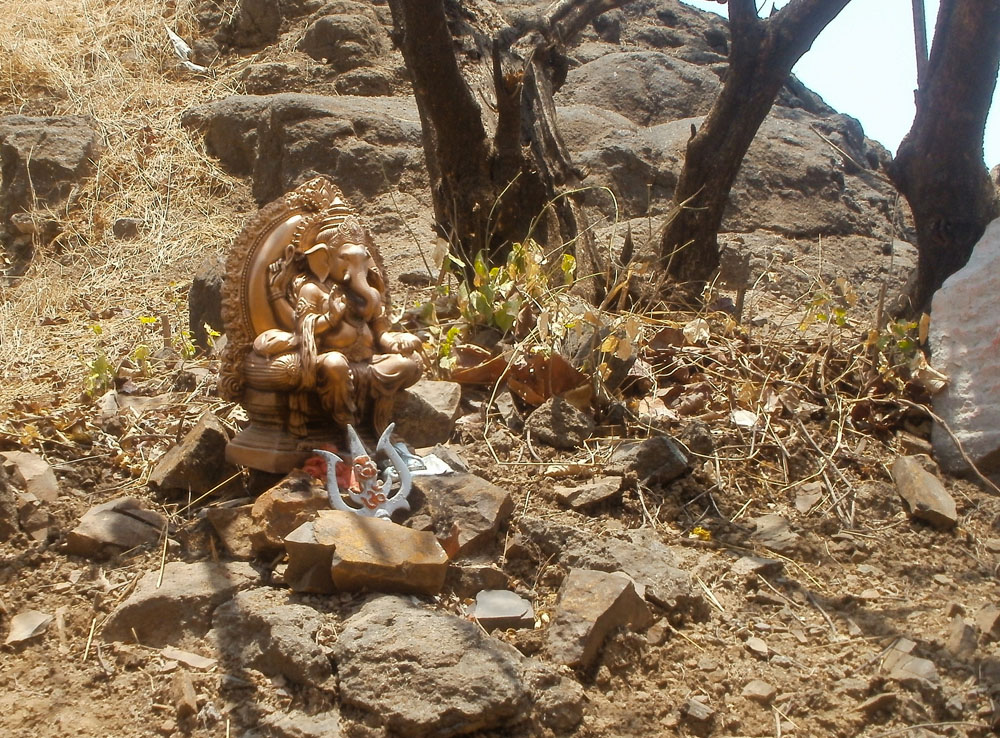
Beautiful winding steps carved in the rock of the southern hill led us to the entrance (a bell hung on a metal arch) of the cave complex. There’s a temple of Nagnath carved in the rock on the left of the entrance.

We decided to visit it later and went straight along the carved path to find a small cave with a Shivling inside it. Further south, a makeshift roof made up of metal and asbestos sheets shields the entrance of the biggest cave from the Nature’s elements.
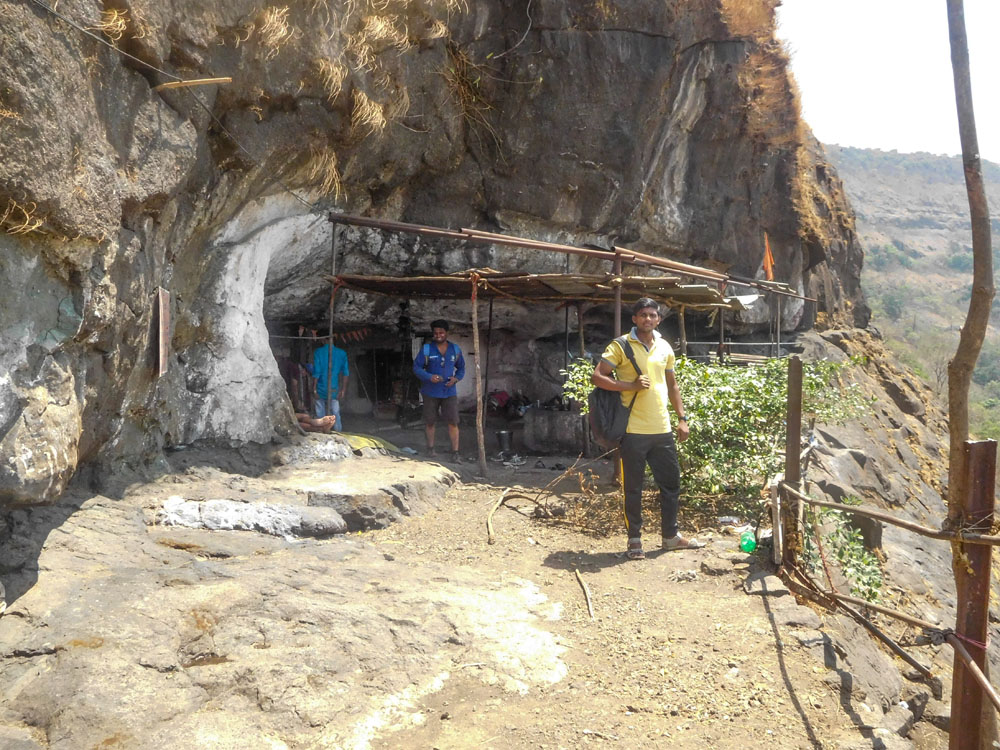
A group of six intoxicated young men, residents of Khopoli and staying there since the previous night, greeted us. The priest was nowhere to be seen and whether the holy place was a one off stop for a night of intoxicated revelry or if it had unfortunately become the go-to place for people to spend their days of drunken stupor, I do not know. Even though the other group did not bother us, the possibility should be considered and due measures be taken while planning a trip to the caves.
Regrettably, this has become a common sight around Sahyadri and I am sure if you are a regular trekker, you too must have come across it. Not only is it disrespectful to reside in places of worship in an inebriated state but they are inadvertently putting other’s lives, besides their own of course, at risk by undertaking an activity like trekking that demands utmost alertness. Unfortunately, it looks like only a tragedy can knock some sense into these folks.
Anyways, coming back to the trek! A mesh fence with a door on the right side protects the cave (from the marauding monkeys).

A chamber carved in the left wall of the cave has steps that lead you to a water tank (with supposedly potable water) about four feet below the opening.
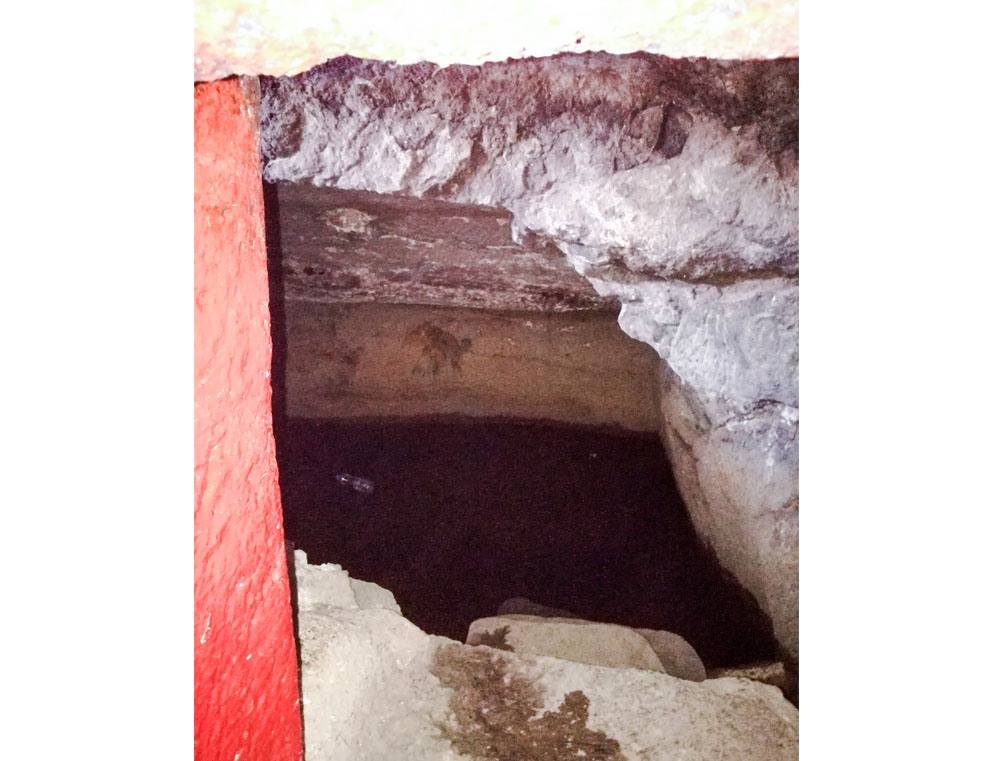
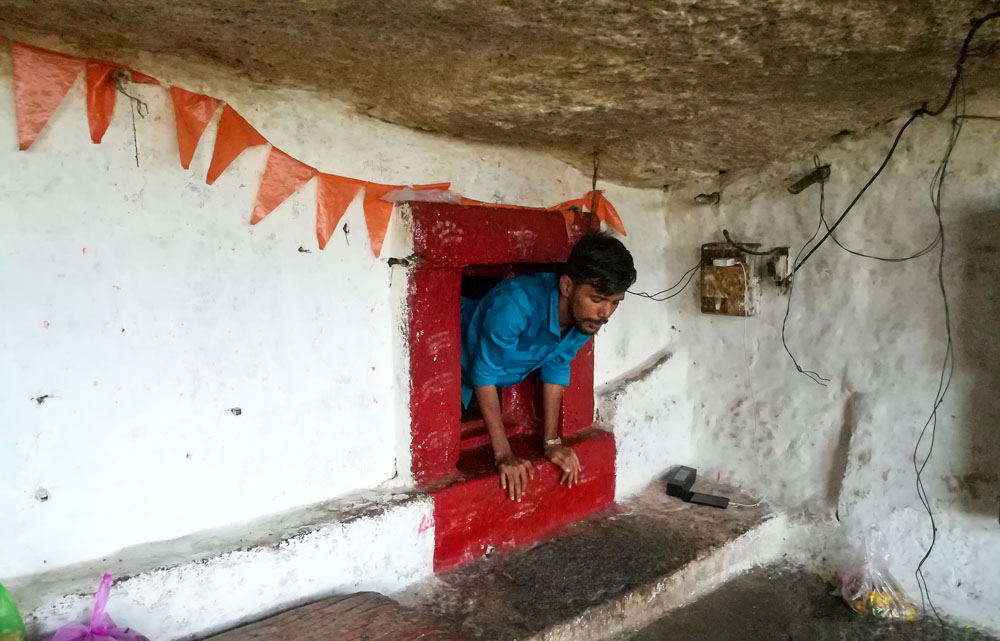
On the right side of the cave is a cavity used for storing huge utensils, presumably belonging to the priests. The major attraction though, lies in the centre of the cave- a 2×2 feet wide opening in the wall that leads you to a barely 4 feet tall chamber.
I went in head first through the opening and the sudden transition from bright sunlight to the dark interiors of the chamber made me grope my way to the floor. Once my eyes adjusted to the dim light, I noticed the white coloured walls of the chamber, faintly illuminated by the amber glow emanating from an even smaller opening in the farthest corner. The opening, barely two feet high, led me to the innermost chamber of the cave.
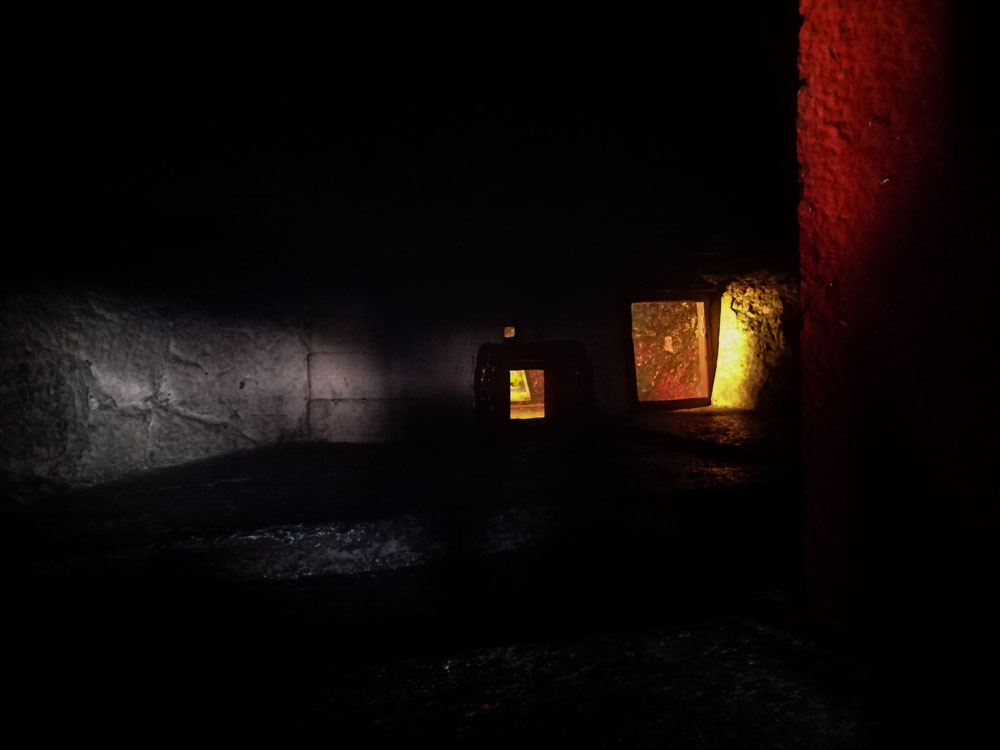
The chamber, painted in red save for a small square cavity in the middle of the opposite wall, was smaller than the outer one. An oil lamp was placed at the bottom of the soot covered cavity & its glow only added to the aura of the place. In the middle of the cavity, carved out of the cave wall as if standing on a pedestal, was the idol of Gorakshnath, looking surreal with its white coloured eyes standing out starkly against the black colour of its surroundings.
Now to the traditions around the Idol. Apparently, printing or publishing pictures of the idol of Gorakshnath is prohibited and hence, I have desisted from posting them here. I hope you‘ll excuse me for that.
I paid my respects and crawled out to let the others in, after which we sat in the outer chamber but came out soon as the lack of ventilation coupled with the strong vapours from the lamp made it difficult to spend any more than 10 minutes inside it.
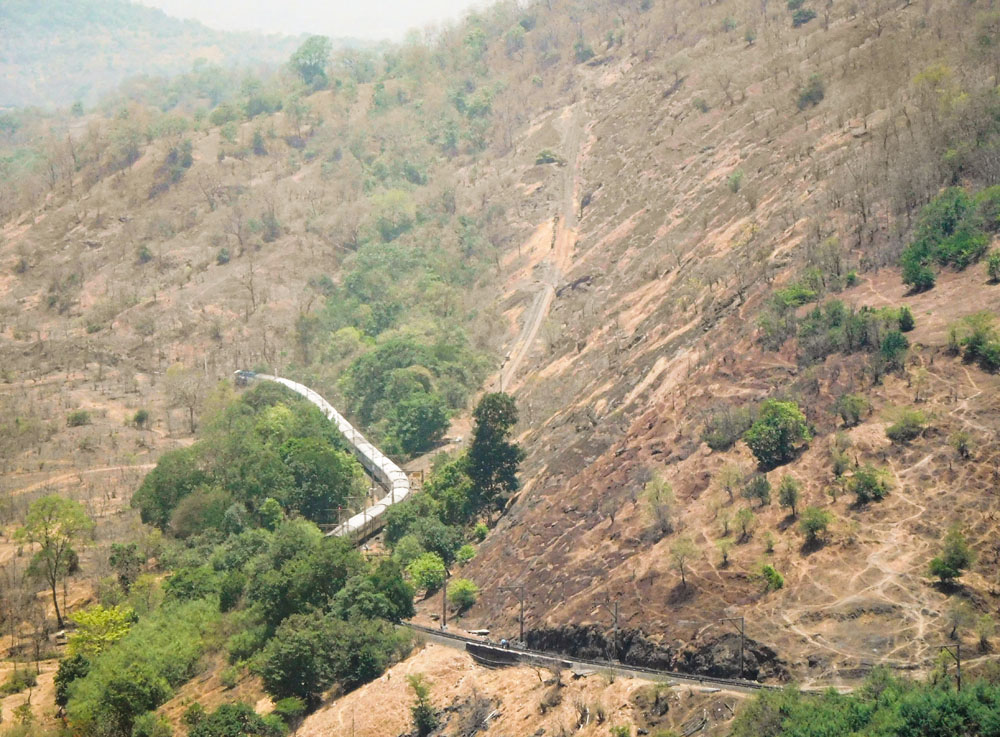
With no monkey in sight, we spent a peaceful hour having our lunch (Abhishek for one must have been relieved- he lost a Tupperware tiffin to a monkey on Vikatgad last year ). Several trains and bankers passed by the Nagnath line before I managed to snap a pair of WCAM-3 bankers entering tunnel 32.


While I was busy trying to frame another express waiting at the Nagnath cabin signal, Krunal noticed a small sculpture on the northern hill across the col. I turned the digicam on the hill to get a better view using its zoom and voila! The sculpture was a Shivling!
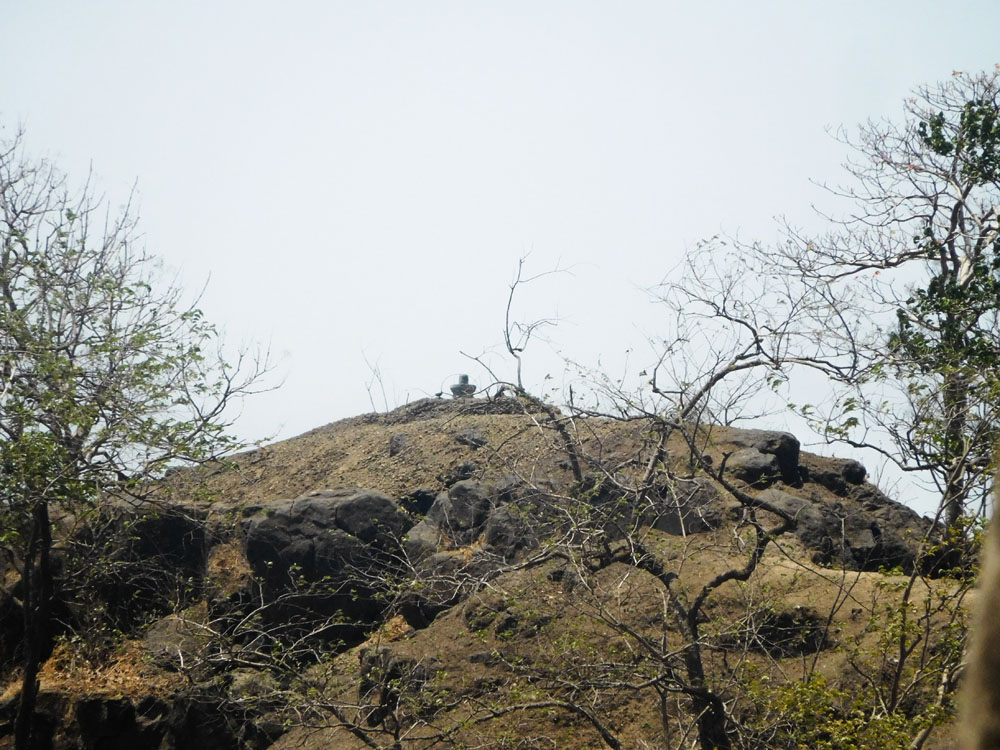
Now, if there was a sculpture, there also had to be a way to it! We looked at the hill from the metal arch and there it was! The hint of a trail going straight up the hill from the col. So the hike was not going to be without its share of rock climbing after all!
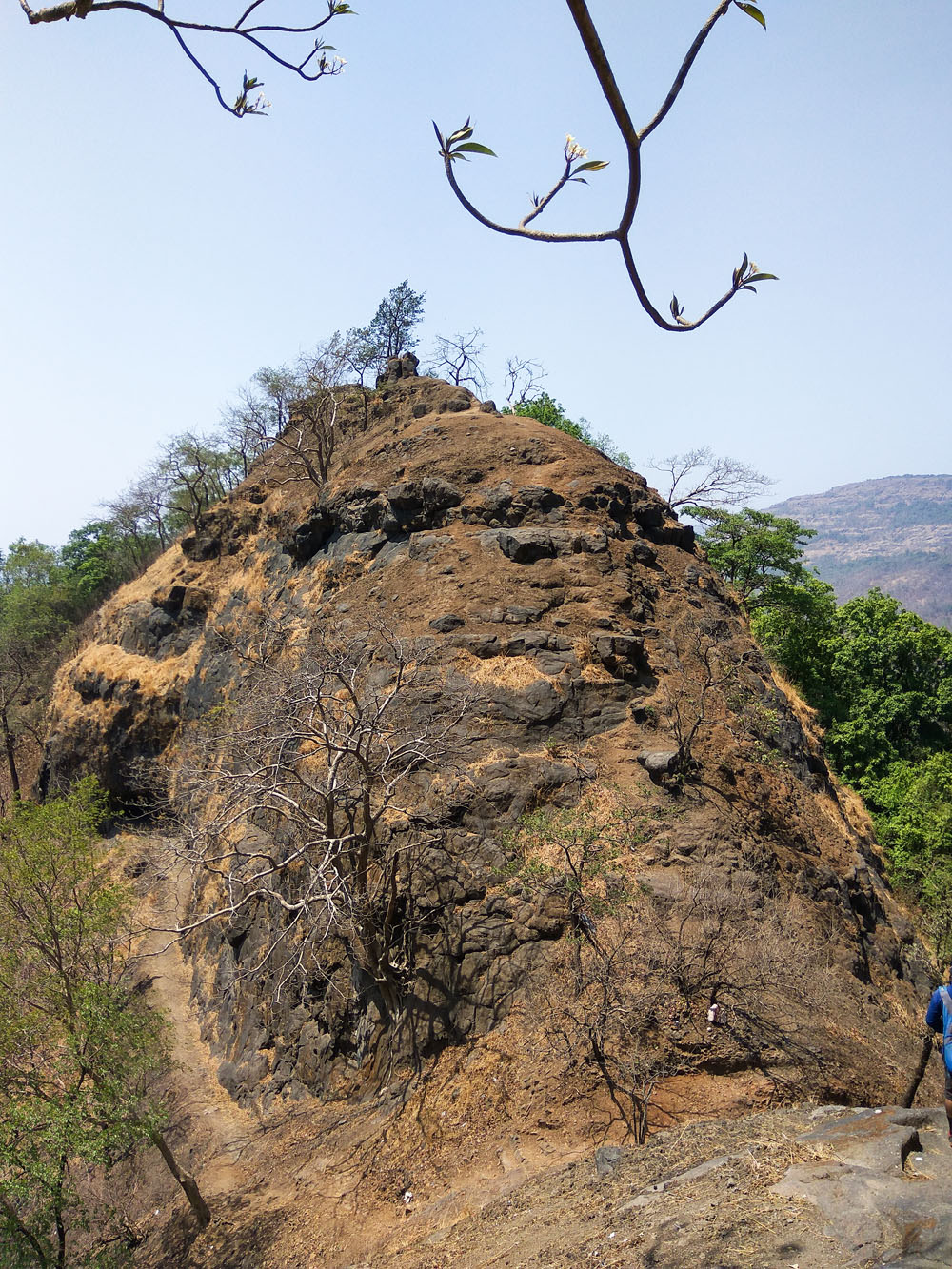
We quickly wrapped up our belongings and left for the northern hill after visiting the Nagnath temple.
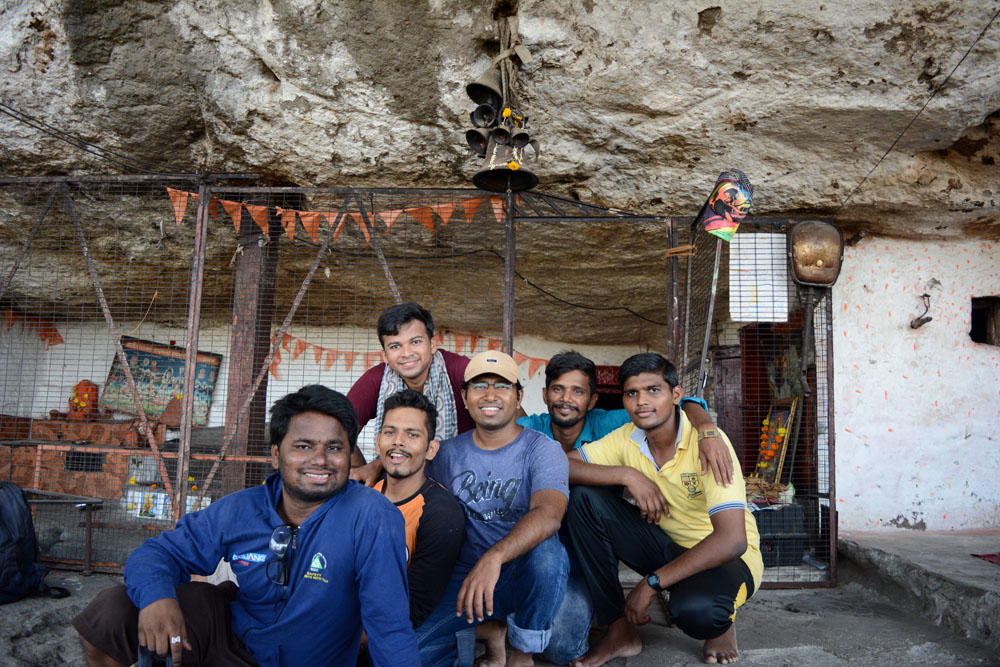
A small open space near the temple provides a panoramic view of the twin Rajmachi forts across the valley in the east- Manoranjangad and Shrivardhangad.

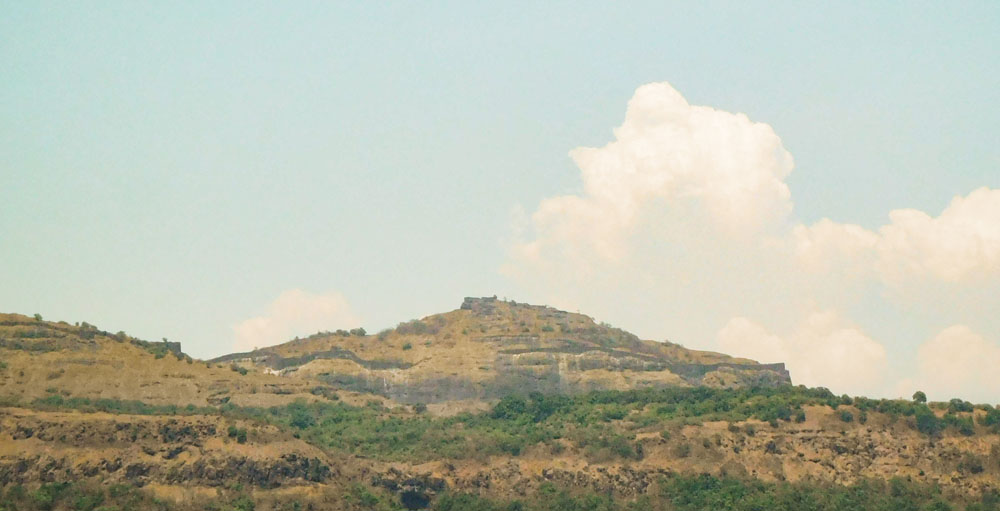
Once at the col, we understood the reason behind the lack of a proper trail. Rocks jutting out of the hill face, steep drop on both sides and scree all over meant very few people must have attempted it.
Note: We never overestimate our skillset and only attempt climbs that we know can be pulled off reasonably safely. If you, or anybody in your group, is in doubt about their ability to tackle a certain section, step back and analyse. Proceed only if you are prepared to mount a rescue in the worst-case scenario or better still, help is available at a short notice. After all,
“The mountains will always be there, the trick is to make sure you are too.”
– Hervey Voge
We weighed the risks and decided to continue. The slope of the hill coupled with the lack of proper holds meant we had to climb on all fours at times.
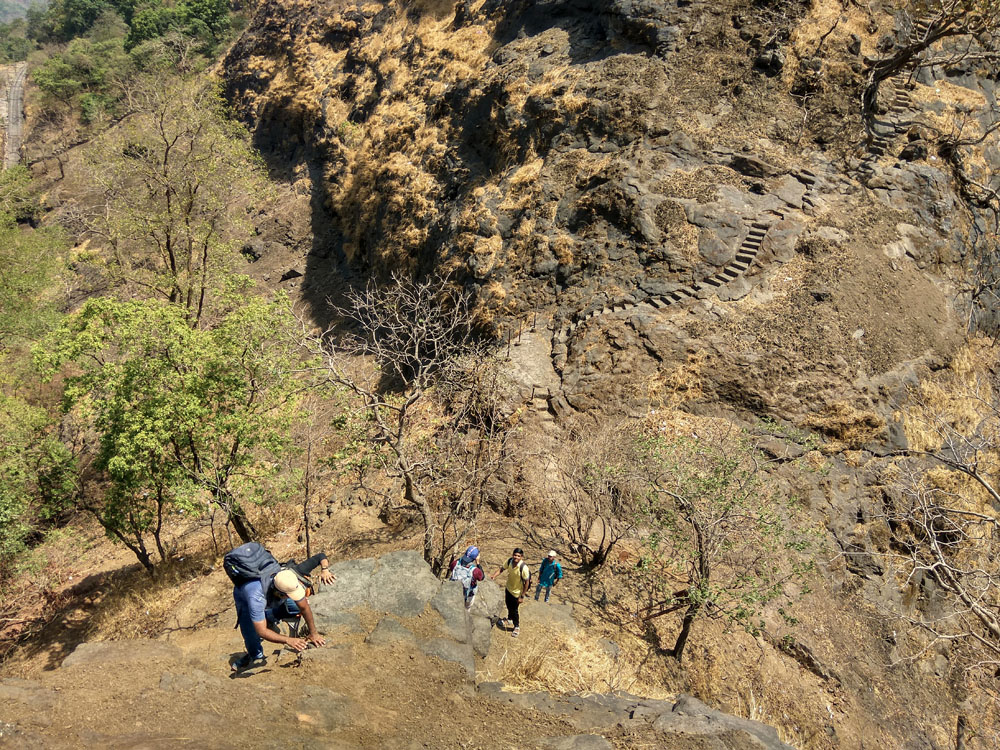

Barely a minute of climbing later, we were staring at a tree standing right in the middle of the hill with a slanting path on its right. Traverse over a near vertical 50 feet drop with nothing to break your fall? Check.

Shardul went first, followed by Me, Manish, Krunal and Abhishek. It was easy except for one tricky step where we had to reach out to a flimsy branch of the tree to get an additional hold.
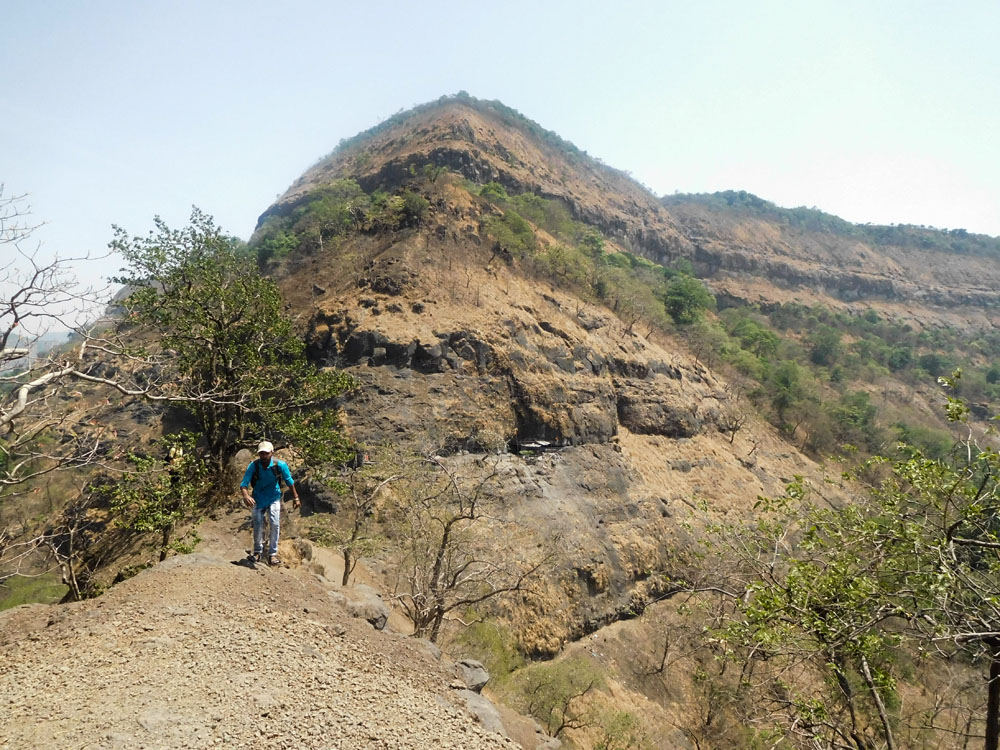
And there it was! Shivling along with two other sculptures- Of Nandi, the bull and Ganesh!
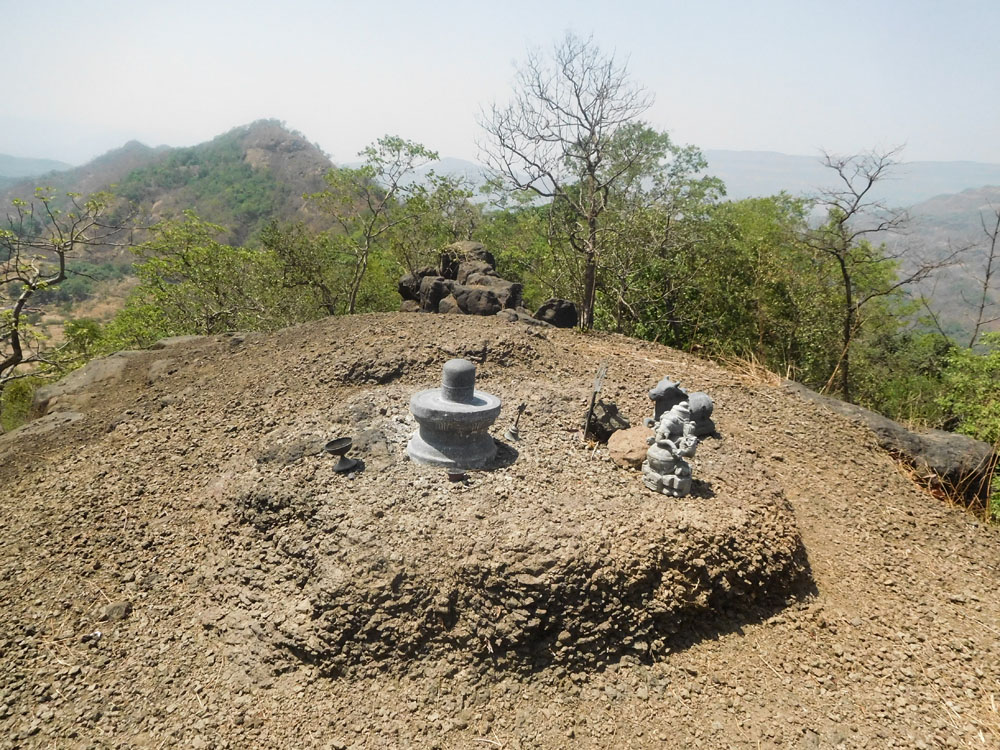
Part of the allure of peaks is the amazing view it affords! And such was the beauty around us that it took us a minute to realise Tejas wasn’t with us!
He certainly hadn’t stayed back at the col. We called at the top of our voices but got no answer. A thousand thoughts raced through my mind in the fraction of a second and we were about to head back to look for him when he answered!

A few moments later, he appeared round the tree and everybody heaved a sigh of relief. No.. No! we weren’t worried about Tejas if that’s what you are thinking! He was carrying the DSLR! The thought of losing the best camera of our gang sent shivers down our spine… body’s aching all the time… Goodbye everybody.. oh wait.. that’s Bohemian Rhapsody!
As is the norm, the descent was more difficult than the ascent and it took us almost double the time to reach the col than it took us to climb the peak.
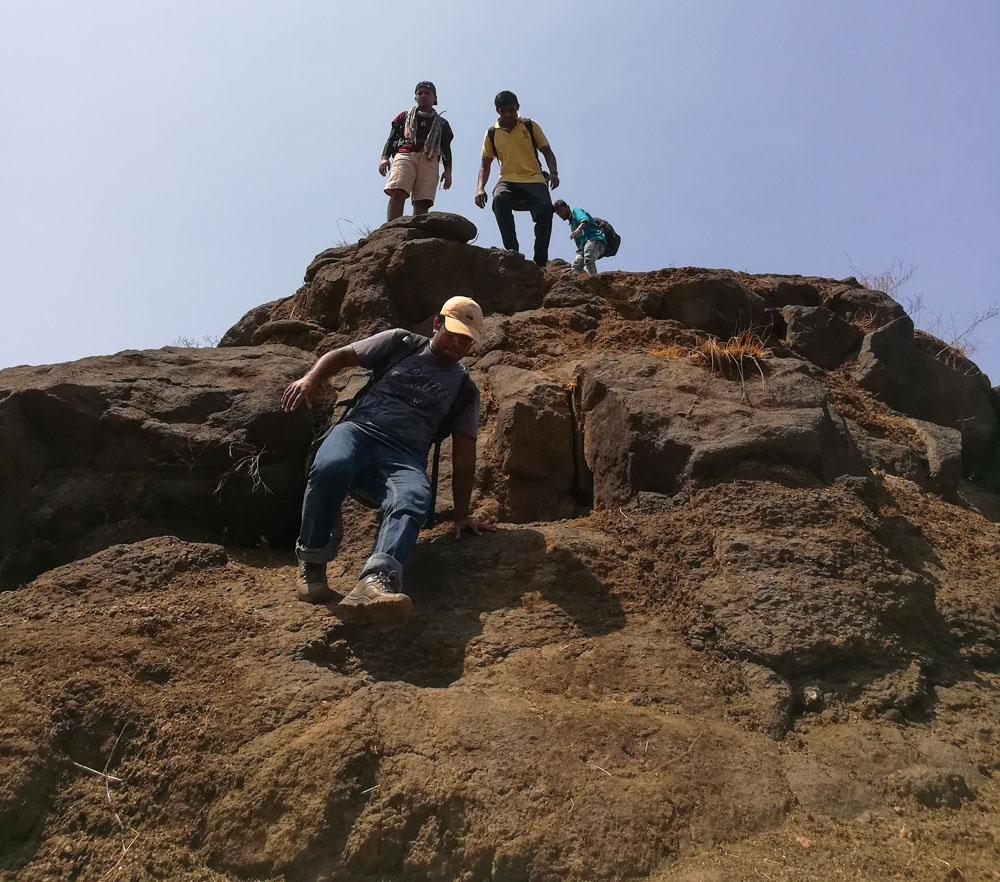
Now it was the time to explore the Thakurwadi line trail! We turned east from the col and descended steeply to join a zigzag trail that passed underneath a fallen tree.

With trees in full bloom along the trail and the forest canopy providing respite from the harsh afternoon sun, we covered ground quickly.
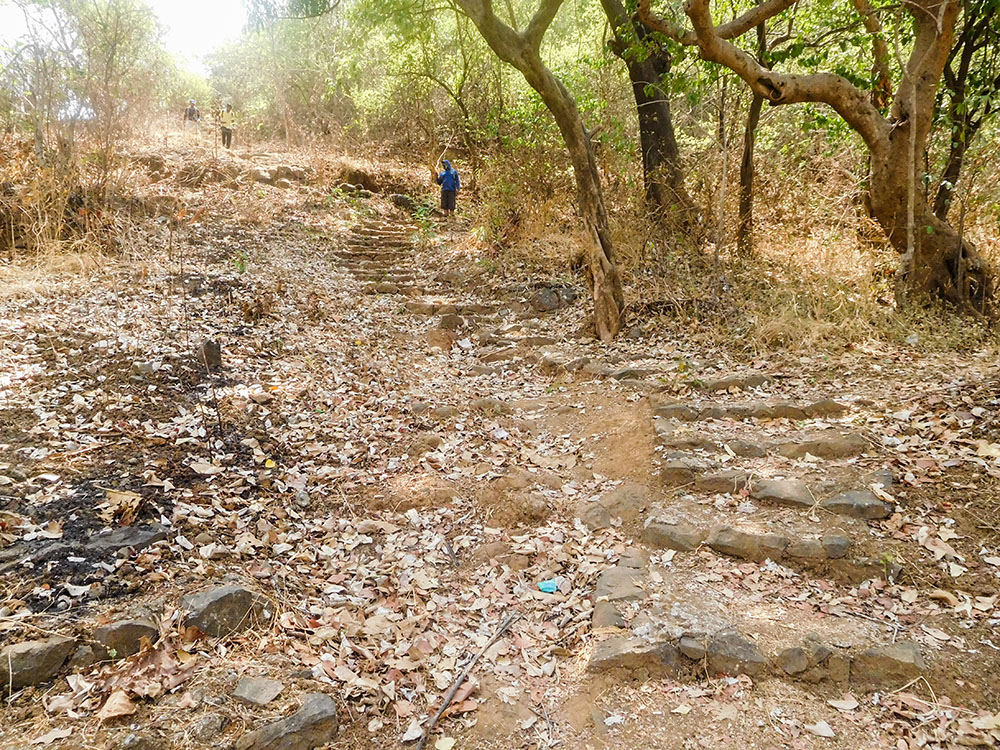
Another set of steps, not unlike the ones to the service tunnel, took us to the southern end of Tunnel 29 in another 10 minutes.
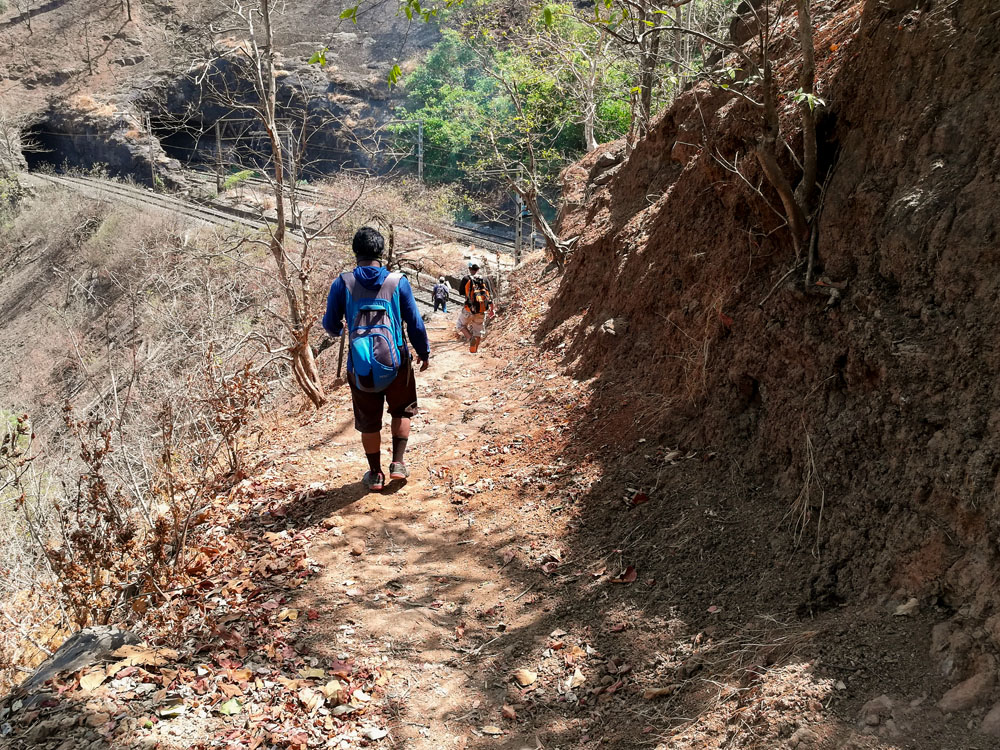
There’s a board placed near the tunnel indicating the trail to the cave complex. After clicking a few pictures of the surroundings for the blog, we decided to rest a little near the tunnel entrance before continuing to Thakurwadi.

We should have known that our treks rarely have a quiet moment and no sooner had we settled down, a shrill horn warned us of an approaching train. Even though we were sitting on the DN line and any train would have entered the tunnel from the other end, we didn’t want to take a chance and waited anxiously by the wall. What followed this shall remain amongst us but suffice to say that Abhishek ended up with a deep gash on forearm for no fault of his as the train passed safely from the adjacent tunnel!

A very sharp curve, flanked on either side by high walls leads to the northern end of tunnel 29.

It is one of the more dangerous points of the hike as the train isn’t visible to someone inside the tunnel until seconds before entering. Four of us were waiting near the curve for Abhi and Tejas when the tracks suddenly began to vibrate. We gestured them to find a safe place inside the tunnel while we tucked ourselves in a corner just outside the tunnel. Moments later, a WAG-5 (#23086) galloped into the tunnel hauling another rake of BCNA wagons with a triplet of WAG-7 bankers helping move the tonnage from the rear.
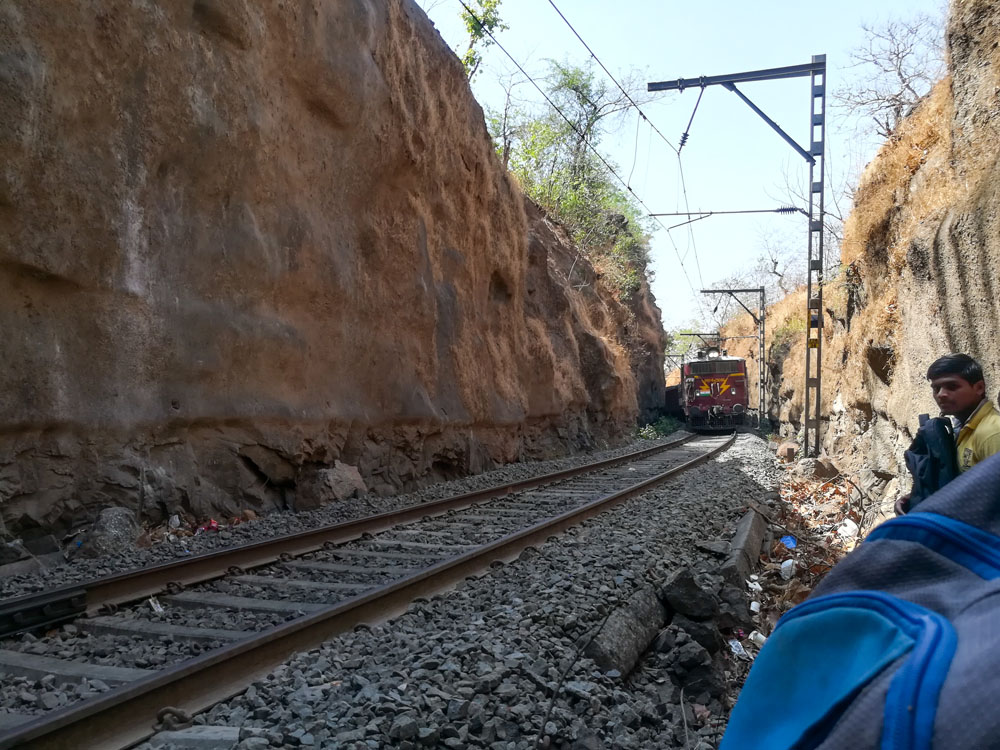
Tejas got some really good pictures of the train from the refuge point. Here’s one of them:

We made it a point after that to stay close together while walking to Thakurwadi, a distance of roughly 2 kms from Tunnel 29.

Around 1530 hrs, the 17031 Hyderabad express hauled by WDP-4D (# 40312) streaked towards Lonavala on the DN line.
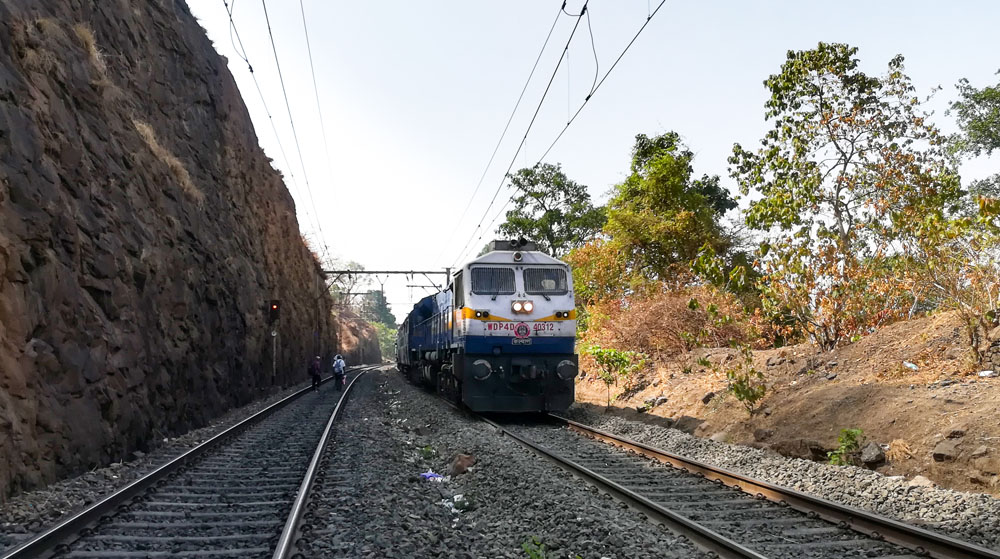
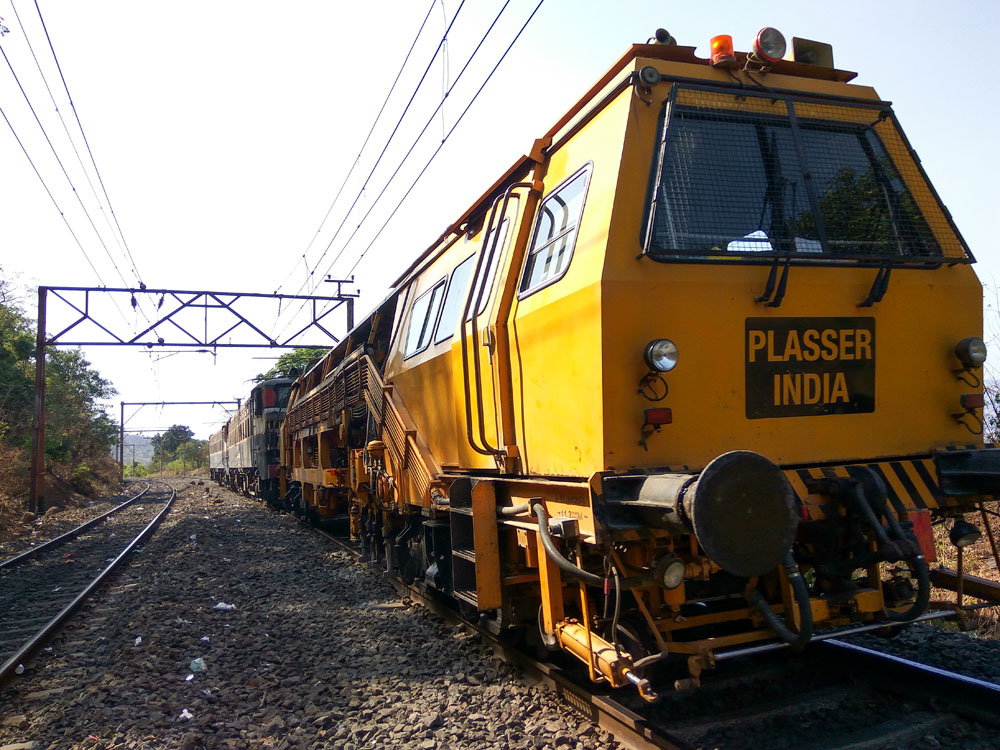
Followed closely by a pair of WAG-7s pushing a Plasser track maintenance machine.
We reached Thakurwadi cabin around 1600 hrs to find 15 odd people already waiting for bankers. The UP traffic slows down considerably between 3 to 5 pm and people wanting to reach Karjat from TKW/NNCN generally travel by standing on the banker’s buffers. We knew that chances of boarding a banker with 15 people were almost nil and it made better sense to head to Nagnath line and try our luck with the bankers there if not the Indore express.
With that in mind, we dragged ourselves onto the trail one last time but the effects of hiking all day in the sun started telling on us. Barely making it to the service tunnel, we crashed near the entrance to get some rest when we saw the silhouette of a man carrying something from the Nagnath end. That we almost pounced on him when we realised he’s Tea-cum-Coffee-cum-Chocolate milk vendor goes without saying!

Every hike teaches you something new and this one taught me that a piping hot cup of chocolate milk in the midst of jungle is pure bliss!
With our fatigued body rejuvenated by the break, we crossed the tunnel with a spring in our step and quickly descended to Nagnath cabin. The Nagnath station-master was kind enough to let us replenish our depleting stock of water and told us that a pair of bankers was about to reach the brake test signal.

We hurried down to the signal and 5 minutes later, a couple WCAM-3s turned up and the benevolent locomotive pilot let us board the cab of the trailing banker.
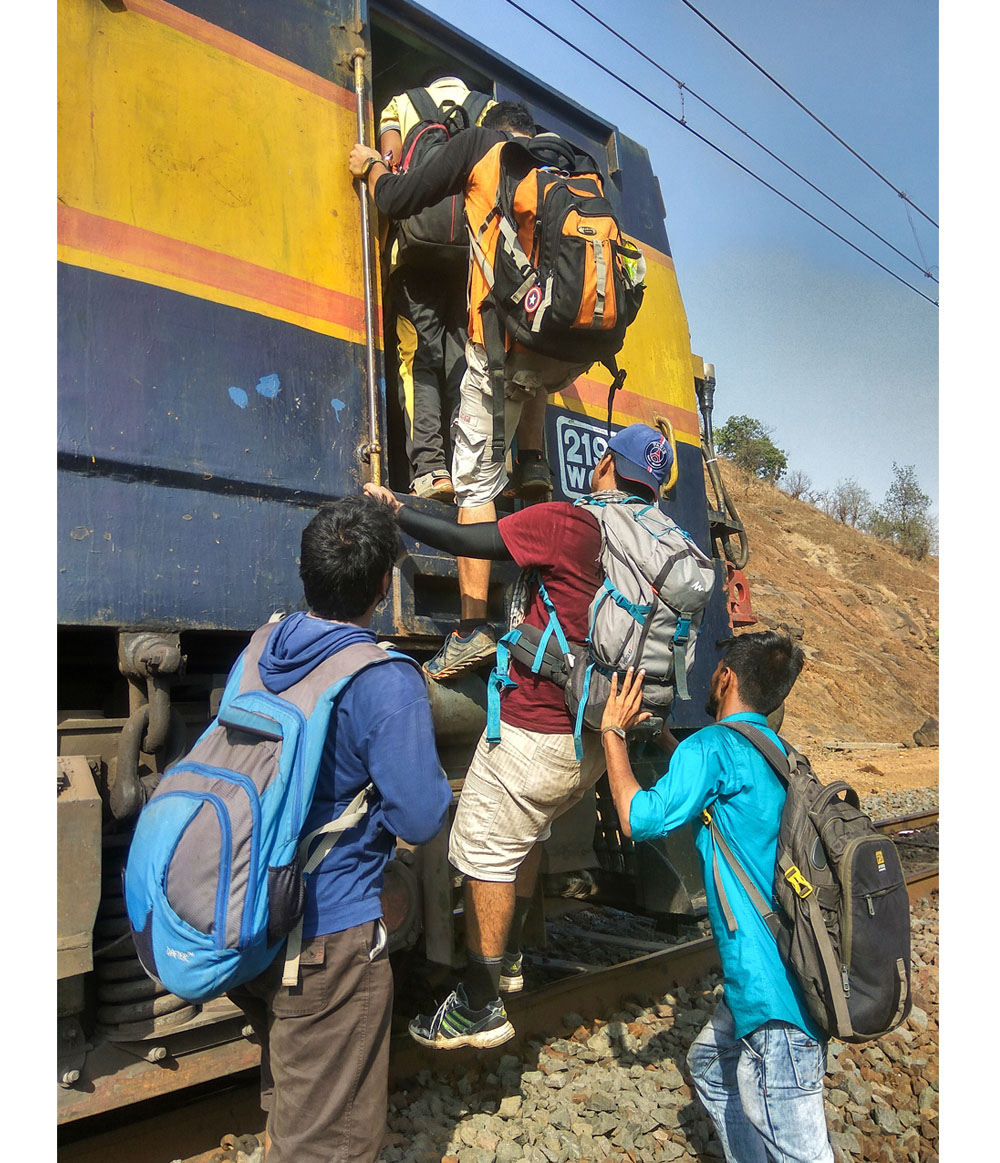
When you have been trekking with someone for a long time, you learn to make out what your partner is thinking from the tiniest of gestures. Watching Manish smile after boarding the locomotive cab, I knew he was recollecting last year’s Hadsar incident when we had returned in the back of a tempo after missing the day’s last bus to Junnar!
The locomotives cruised downhill at a speed of 50 kmph to reach Karjat in 20 mins flat.
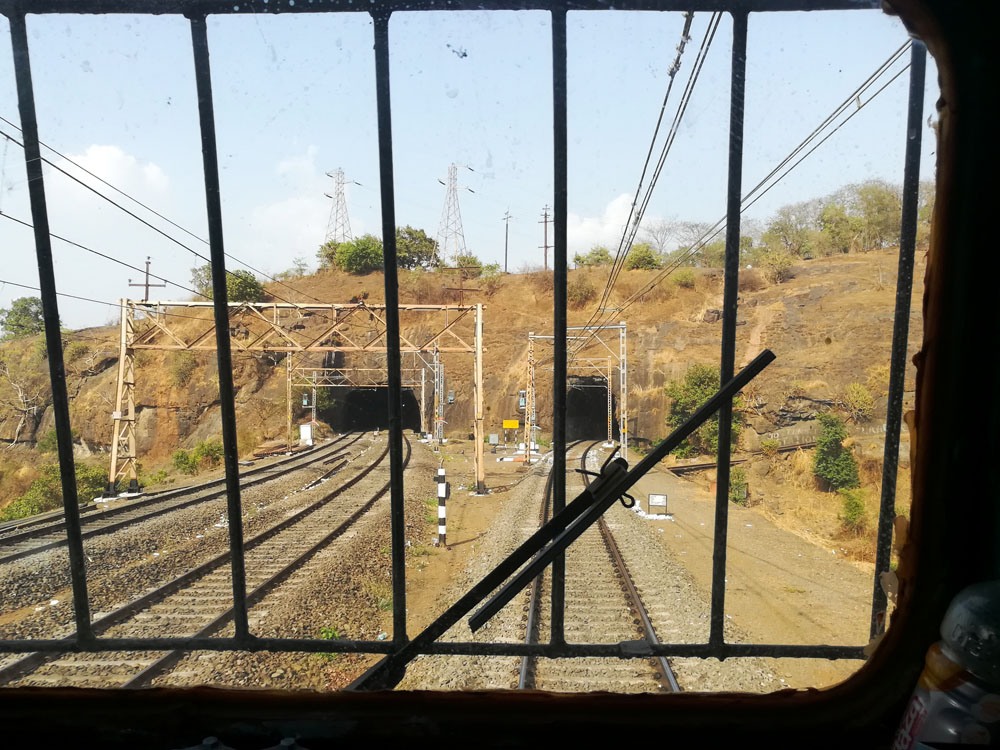
Thanking the pilot once again for putting up with us, we alighted and walked over to the platform #3 to board a local train for CST.
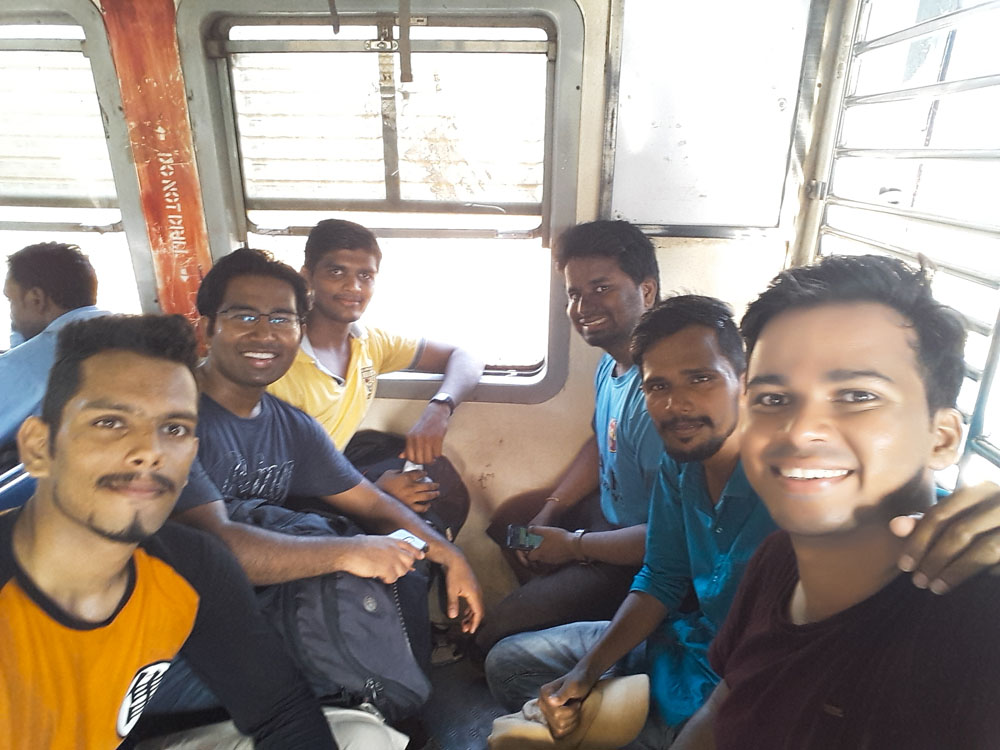
After exchanging pictures, we got down to the business of finishing the stuff that had survived our onslaught during lunch. When even that failed to satiate our hunger, we alighted at Thane for an early dinner before heading home. That the food was nowhere near as good as we had been promised (I am looking at you, Shardul ) is a story for another day.
The long
ride back home gave me plenty of time to think about the day’s events. A
worthy hike had finally brought down the curtains on another Season Of
Mountains but I was sad, as everybody is, when something they cherish
comes to an end. I tried to take heart from the fact that this season
had been, by far, the most epic of all with its impromptu hikes,
multi-day treks and near fatal experiences. And I had almost resigned
myself to spending the rest of the summer completing the long pending
blog posts when a lightning flashed in the distant sky.
The clouds were hovering in to make up for the morning’s betrayal, ready to unleash a torrent of summer rain.
And a new Season was beckoning me…
NOTE:
- All the pictures used in this post have been clicked by me or my friends, unless stated otherwise.
- The information provided in this post is for informational purposes only. Any reliance you place on such information is therefore, strictly at your own risk. For full Disclaimer and Content (including Images) Policy, click here -> Terms of Use.
All rights reserved © 2016 – present Nomadosauras.
Content (including images) not for reproduction in any form, partial or otherwise.
Read complete disclaimer- Terms Of Use.
Cheers!
Keep Trekking


No comments:
Post a Comment