शिवशौर्य ट्रेकर्स सोबत नरवीर शिवा काशिद आणि नरवीर बाजीप्रभु यांची सध्याची पिढी मोहिमेत दरवर्षीप्रमाणे याहीवर्षी सहभागी होईल .
तसेच श्रीदत्त राऊत यांच्याशी पावनखिंडीच्या इतिहासावर मुक्त चर्चा.
इतिहासाबरोबर सामाजिक बांधिलकी जपण्याची "शिवशौर्य ट्रेकर्सची" परंपरा आहे त्यानुसार मुक्कामात शालेय विद्यार्थांना शैक्षणिक साहित्याचे शक्य असेल तसे वाटप केले जाते. आपल्यालाही आम्ही आवाहन करीत आहोत की तुमच्या घरी नुसतेच पडून असलेले शैक्षणिक साहित्य उदा. पेन्सिल्स, पेन, वही, चित्रकलेचे साहित्य, खेळणी, गोष्टीची पुस्तके आवर्जून आपल्या ग्रामीण विद्यार्थांसाठी घेऊन या. आपला हा ट्रेक संस्मरणीय असेल.
आजीव सदस्यांना ट्रेक फी : रु. 1200/- असेल
मोहिमेतील कोणत्याही दोन विद्यार्थीनींना शिवशौर्य ट्रेकर्स तर्फे 50 % सवलत असेल.
पन्हाळगड पर्यंत येण्यासाठी तसेच विशाळगडाहून परतीच्या प्रवासाची सोय या बाबत आयोजकांशी चर्चा करावी.
नाव नोंदणीची अंतिम तारीख 10 जुलै.
मोहिमेत जागा शिल्लक असल्यास 10 जुलै नंतर ट्रेक फी : रु. 1500/- असेल.
1) ट्रेक फी भरल्यानंतर आयकार्ड साठी स्वतःचे नाव, मोबाईल, रक्तगट, पूर्ण पत्ता, घरातील एकाचा मोबाईल, जन्मदिनांक आणि स्वतःच फोटो 7039 650 454 (सौरभ) या क्रमांकावर whatsapp करावा.
2) शिवशौर्य ट्रेकर्स सर्वच गड किल्ल्यांचे पावित्र्य राखण्याचा प्रयत्न करते त्यामुळे सदर मोहिमेत कोणत्याही प्रकारचे व्यसन करू दिले जाणार नाही.
3) 'आवश्यक साहित्य' आणावेच लागेल अन्यथा तुमचीच गैरसोय होईल.
4) मोहीम प्रमुखाच्या सूचनांचे तंतोतंत पालन करणे बंधनकारक आहे. सदर कार्यक्रमात काही बदल करावयाचे झाल्यास त्याचे सर्व अधिकार मोहीम प्रमुखाचे असतील.
5) सदर मोहिमेत काही आपतकालीन परिस्थिती उद्भवल्यास किंवा सहभागी सदस्यास काही दुखापत झाल्यास शिवशौर्य ट्रेकर्स संस्था जबाबदार असणार नाही.
6) नाव रद्द करायचे झाल्यास 10 जुलै 2016 पूर्वी रद्द करून भरलेली पूर्ण फी परत मिळेल. 10 जुलै 2016 नंतर नाव रद्द करायचे झाल्यास रु. 1300/- कोणत्याही कारणास्तव परत केले जाणार नाहीत.
7) निसर्गात फिरताना कचरा, प्लास्टिक वाटेत टाकू नये.
 स्वतःच्या सामानाची जबाबदारी तुमची स्वतःची राहील.
 वरील आठही नियमांची सहभागी सदस्यांनी नोंद घ्यावी.
मोहीम कार्यवाहक - गुरुनाथ मयेकर 9869 08 49 12 (whatsapp Number)
मुंबई- अमित - 9320 755 539 / गुरुनाथ 9869 084 912
पुणे- स्वप्नील चव्हाण - 7798 39 6664
ठाणे- सौरभ 7039 650 454
नाशिक- योगेश शिरसाट - 9970626269
नागपूर- मोहन बेडेकर -8600 004 696
A/c. No. 60134804616, IFSC Code : MAHB0000318, Branch Code : 000318
A/c. Name : SHIVASHOURYA TREKKERS
बँकेत शुल्क भरल्यावर 9320 755 539 या क्रमांकावर लगेच कळवावे.
शुल्क प्राप्त झाल्याचे SMS मधून लगेचच कळवले जाईल
PANHALA TO PAWANKHIND HISTORICAL RANGE TREK”🚩
Date:
24/25 June 2023
08/09 July 2023
22/23 July 2023
Event Details –
Activity type: Trekking
Total distance: 52.00 km (approx.)
Difficulty Level: Easy.
Endurance Level: Medium.
Chatrapati Shivaji Maharaj was under siege of Siddi Johar on Panhala fort from 2nd March 1660. The siege lasted long and all food stocks had finished and made things difficult for Shivaji Maharaj. It was impossible to defeat the 30000 soldiered troop of Siddi. Shivaji Maharaj with some 600 mavalas decided to escape to Vishalgad, 65 kms away. It was Ashadi Pournima, with heavy rains falling.
Shivaji Maharaj informed Siddi that he would surrender hence Siddi troops were little careless. Taking advantage Shivaji Maharaj escaped frm Panhala. He wasn’t safe till he reached Vishalgad. Some how Siddi’s troops spotted Shivaji Maharaj escape, he immediately sent horsed troops behind him and they got hold of Shivaji Maharaj, who was later brought to Siddi’s camp. But it was Shivaji Maharaj game plan; person whom they had caught was not Shivaji Maharaj, but Siva Kashid who was immediately killed. Siddi somehow came to know that Shivaji Maharaj was on his way to Vishalgad, and so sent troops behind him. Shivaji Maharaj knew that Siddi’s troops were following him. Baji Prabhu, Shivaji Maharaj loyal sardar decided to stay in Ghod Khind with 300 mavalas, a col were mountain ridges near Vishalgad unite and was the only way to Vishalgad then. Baji with his 300 mavalas had guerilla warfare at Ghodkhind and held the Siddis troops there. They fought bravely till their death. It was only after Bajiprabhu heard the canon fire indicating safe reach of Shivaji Maharaj at Vishalgad, he gave his life. It was 21 hour continuous journey from Panhala to Vishalgad. Story didn’t end here; Shivaji Maharaj had to fight his way to Vishalgad. Vishalgad is a fort difficult to conquer, difficult to lay siege. Also even if siege was laid, one would have enough time to escape to Konkan. Siddi was building siege on Vishalgad, but Shivaji Maharaj with his diplomatic trick made Adil Shah bring back Siddi Johar.
Itinerary
•Day 1 – 23 June 2023
– Travel to Kolhapur Overnight Journey – (Dadar –Mumbai / Swargate – Pune)
We will arrange travel from mumbai pune to kolhapur by gov & private bus with extra cost.
•Day 2 – 25 June 2022
05:00 am – Reach Kolhapur bus depo and freshen up & Break-fast
06:00 am – Travel towards Panhala
07:00 am – Visit Veer Shiva Kashid Samadhi
08:00 am – Visit Veer Bajiprabhu Deshpande Smarak & explore Panhala fort
09:00 am – Decent from Pusati Buruj, Turukwadi, Mhalunge Village, Mhasai Pathar- Kumbharwadi, Chapewadi, Mandlaiwadi, Karapewadi
05:00 pm – Reach at Karapewadi, Freshen up. evening Tea, Group Discussion.
08:00 pm – Dinner & Stay at Karapewadi.
•Day 3 – 25 June 2023
05:30 am – Wake up Call and freshen up & tea, Breakfast
07:00 am – Decent from Karapewadi, Ambewadi, Patewadi, Sukumacha dhangarwada, Mhasavade, Pandherpani, Pavankhind
11:00 am – Reach at Pavankhind Pay Tribute to Veer BajiPrabhu Deshpande.
01:00 pm – Lunch at Pnadhrepani
02:00 pm – Travel toward Vishalgad
03:00 pm – Reach Vishalgad & Explore
05:00 pm – Start returm journey.
💸EVENT COST💸
Rs – 1600/- Ex Kolhapur
Mumbai Pune to Kolhapur travel cost extra.
We will arrange travel from mumbai pune to kolhapur by gov & private bus with extra cost.
Registration will be done only after Payment confirmation.
Please follow the given procedure to register for event through E-transfer.
1. Call Shiledar’s and confirm the availability of seat.
2. Transfer the money to “Shiledar” Account.
3. Send your Name, Age, Blood Grp Address, Mobile No & Screen shot of payment on What’s App – 9022556690
___________
PAYMENT DETAILS –
Shiledar Adventure India
HDFC Bank, Juinagar – Navi Mumbai
Current Account –
A/c No. – 50200044689652
IFSC Code – HDFC0003953
Google Pay/Phone Pay No – 9022556690
___________
🔺 INCLUSIONS:
▪︎ Kolhapur to Kolhapur Transportation by Non-AC Private Vehicle.
▪︎Day 2 – Morning Tea, Breakfast, Evening Tea, Veg Diner
Day 3 – Morning Tea, Breakfast, Veg Lunch.
▪︎ Event Participation Certificate
▪︎Certified & Experienced Guidance of Team Shiledar.
▪︎First aid kit.
🔺EXCLUSIONS:
Anything which is not mentioned in the Inclusions
🎒THINGS TO BE CARRIED:
▪︎Photo ID card
▪︎Carry a personal set of utensils like spoon, plates, and cups/mugs.
▪︎3 litters of water & ORS, Electoral/Tang powder/Glucose-D.
▪︎Carry Some ready to eat food (plum cakes, biscuits, chikki, fruits, dry fruits)
▪︎Torch with extra batteries.
▪︎Full sleeve Trek T-shirts and Full Trek Pant.
▪︎Jackets/Raincoat
▪︎Cap Towel Extra Pair of clothes
▪︎Bedding. Please Take Sufficient bedding for Rest.
▪︎Camera, Mobile etc. (Optional)
▪︎Good trekking shoes, extra pair of socks
▪︎A haversack to put in all the things.
▪︎Good to have stick for support.
🔺 RULES/NOTE:
▪︎Smoking Cigarette, Chewing Tobacco & Consuming Alcohol Is
Strictly Prohibited During the Trek. If found will be expelled from the
group.
▪︎Do not shout and make noise during the trek and carry your waste with you without throwing it elsewhere.
▪︎Trekking
is an adventure game. If you are injured or have an accident during
this period, you responsible for yourself. Organizers will not be
responsible for this.
▪︎This is an adventure activity where we will
go to a village in mountain area and stay there and eat local food. So
please don’t expect luxury and absolute comforts.
▪︎The leader’s decision will be final and binding.
▪︎Shiledar Team reserves all the right to change/deviate/cancel the plans without prior notice.
▪︎Telephonic confirmation for booking is mandatory; if unable to contact us then send a text message and we will call you back.
🔺 REFUNDS OR CANCELLATIONS:
▪︎If cancellation is done prior to 15 days of outing 75% will be refunded.
▪︎If done prior to 10 days of outing 50% will be refunded.
▪︎After that, no refund will be provided.
▪︎If
the event is cancelled due to unforeseen circumstances, participants
have the option to adjust the paid amount with any forthcoming event or
ask for a complete refund.
___________
📞 Feel free to contact if there are any doubts or questions in Mind. 📞
9022556690 / 9004615001 / 9004715001
For More details join What’s App Grp –
___________
Availability is first come first serve basis. The last day of confirming is 2 days prior to the event date, but please book your seats as soon as possible to avoid any disappintment.
#शिलेदार
#ShiledarAdventureIndia
Moving Towards The Goals…!
⬛ For Booking & Inquiry Contact –
📲 9022556690 / 9004615001 / 9004715001
________
Team @shiledar_adventure_india
________
https://www.facebook.com/events/1423979555035444/
About Panhala Fort: History
Panhala fort, also known as Panhalgad, is located in Panhala, 20 kms from Kolhapur, Maharashtra, India. It was built between 1178 and 1209 CE by the Shilahara ruler Bhoja II. The structure and history of this fort are great attraction for tourists and travel enthusiasts. The history of Panhala Fort can be traced back to more than 359 years ago. It is well known for the battle of Pavankhind.
Even in those times, it was of strategic importance due to its location which overlooks a pass in the Sahyadri mountain range. It was a major trade route from Bijapur in the interior of Maharashtra to the coastal areas. You must consider this trek if you are looking for trekking near Kolhapur.
Panhala Fort History
In 1659, Shivaji (popularly known as Chatrapati Shivaji Maharaj, the great Maratha king) seized Panhala from Bijapur by defeating and killing their General, Afzal Khan.
In May 1660, to win the Panhala fort back from Shivaji, Adil Shah II of Bijapur sent his army under the command of Siddi Johar to lay siege to Panhala Kolhapur. The siege continued for 5 months, at the end of which all provisions in the fort were exhausted and Shivaji was on the verge of being captured. There was no other option left than escaping from Panhala fort. Read more to learn about the amazing Panhala Fort History.
Also Read: Who destroyed Martand Temple of Srinagar. It was mentioned in Kashmir Files movie.
Battle of Pavankhind and the great escape
Shivaji sent a message to Siddi Johar that he is ready to a have meeting with him. This made Siddi’s army to relax a bit considering the siege would soon end. But on the other hand Shivaji had planned to escape from the Panhala fort alongwith his soldiers. This news somehow fell on Siddi’s ears and he sent his men to capture Shivaji’s decoy but little did he know that there would be a twist. Isn’t Panhala Fort history intriguing? Wait, there is more…
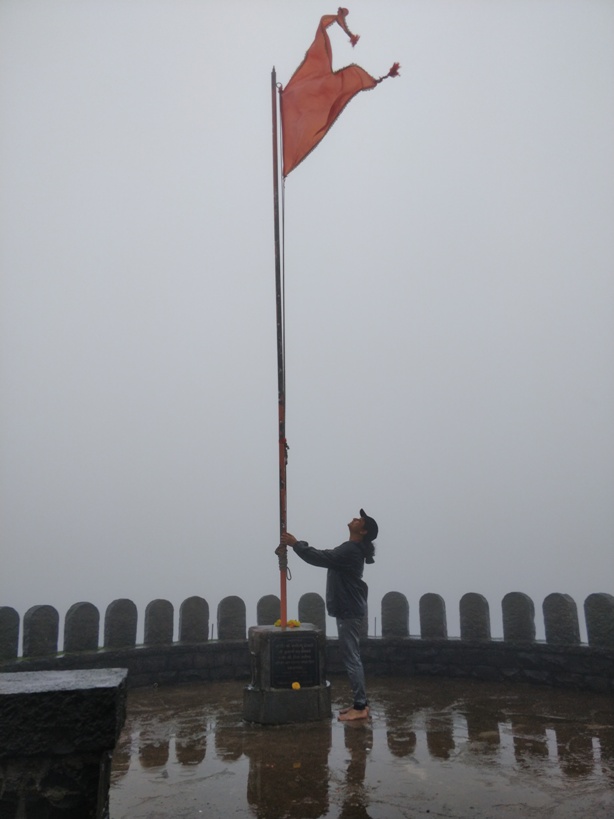
Twist in the tale – Panhala History
Panhala Kolhapur History has some interesting twists and turns. A braveheart barber, Veer Shiva Kashid (who resembled Shivaji) volunteered to disguise as Shivaji and get captured to buy time by creating confusion over identity. It was absolute suicidal decision as his real identity got revealed. This enraged Siddi Johar and he immediately beheaded Shiva Kashid. Meanwhile Shivaji got enough time to begin the execution of his escape plan. Shiva Kashid’s sacrifice and selflessness was well paid off.
Also read: The mystery of Shankaracharya Temple of Srinagar. You heard about this temple in the blockbuster Kashmir Files.
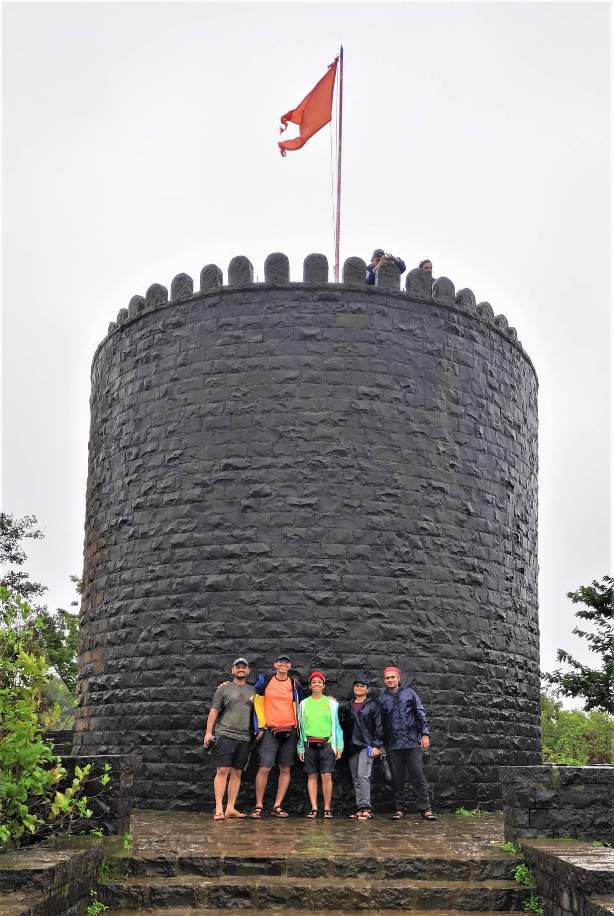
Shivaji alongwith his commander Veer Baji Prabhu Deshpande and 600 soldiers had proceeded towards Vishalgad Fort (64 km from Panhala) which would be safe haven in the existing situation.It was night of 13th July 1660 (Ashadi Pornima), it was raining heavily, but Shivaji and his men were determined to escape no matter what. Unfortunately Siddi Johar’s army led by Siddi Masood who were on the rapid pursuit almost caught up with Shivaji’s force when the destination was just 13 km away. There had to be change in plan and who knew this would create glorifying history, the ‘Battle of Pavankhind’.
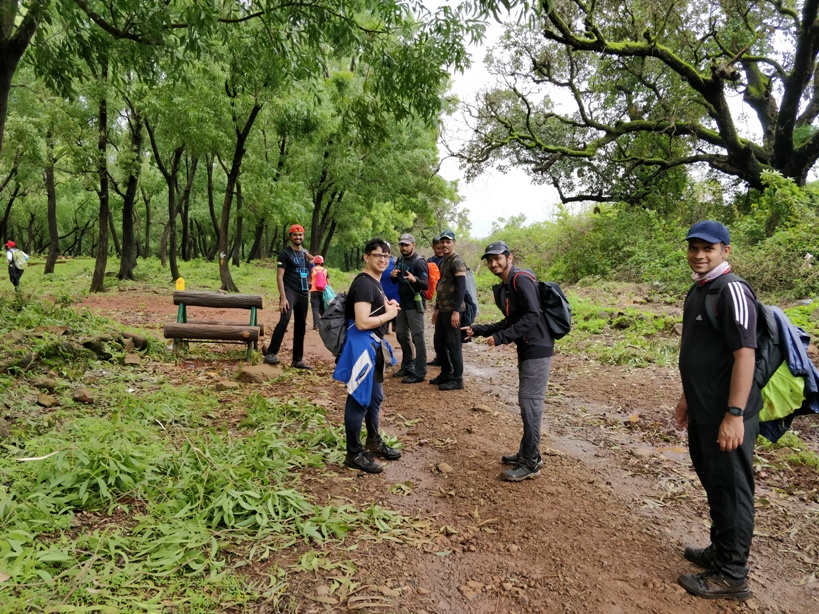
The Master plan to reach Vishalgad – Panhala Kolhapur
Veer Baji Prabhu decided to stay back at Ghod Khind (pass) alongwith with 300 soldiers and let Shivaji proceed to Vishalgad with remaining 300 soldiers. Ghod Khind was very narrow and only a few soldiers could pass at one time and this was the only way to reach Vishalgad. So the plan was to defend and keep enemies engaged at this pass until they hear the cannons fired from Vishalgad fort which would indicate that their Shivaji Maharaj had safely arrived at the fort.
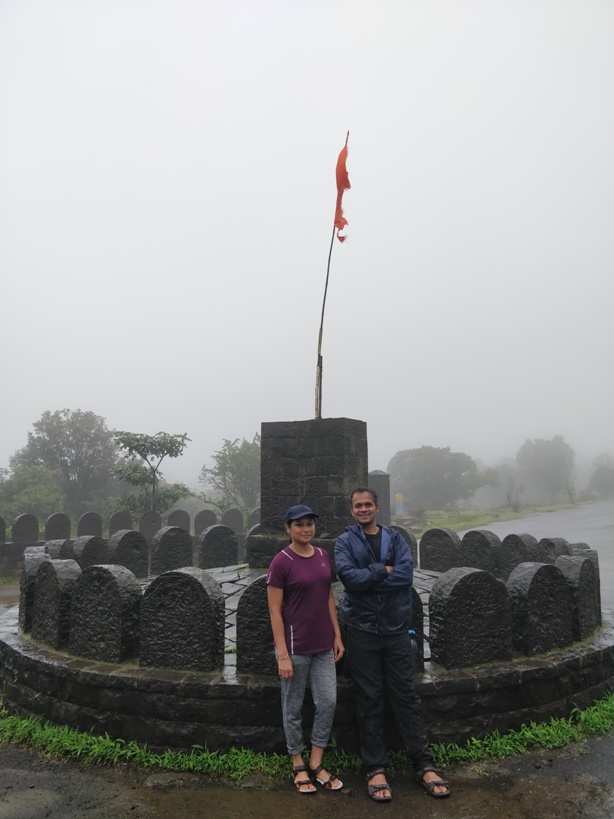
Braveheart Veer Baji Prabhu – The Guerilla warfare
It was ultimate bravery of this man Veer Baji Prabhu, who vowed to fight against 10,000 men army of Siddi Masood with just 300 Soldiers, the Mavlas (hardened mountaineers from Mavla region). This is why it is said to be the bravest war 0f 300 soldiers against an army of 10,000 soldiers.
The battle was fought by Shivaji’s force using guerrilla warfare tactic. It lasted for almost 5 hours but the already exhausted Mavlas (after walking almost 50 km in the muddy terrain and dense dark forest, bruised by the thorns) showed extreme determination & fought fearlessly.
Veer Baji Prabhu kept motivating the Mavlas not to give up. He took his last breath only after hearing the cannon fired from Vishalgad fort, he now knew his Maharaj was safe. Panhala Fort History is indeed intriguing.
Why Ghod Khind was renamed as Pavankhind
Only few Mavlas survived who retreated and escaped in the forest. The Ghod Khind was subsequently named as Pavankhind (holy pass) by Shivaji in the remembrance of Veer Baji Prabhu and his Mavlas who sacrificed their life for him.
This escape which started on the rainy night of July 13,1660 (Ashadi Pournima, full moon day of Ashadha month as per Hindu calendar which falls in June-July month) witnessed heroism, bravery and sacrifice for generations to narrate and feel proud about what Chatrapati Shivaji Maharaj has left behind for us.
Panhala – Pavankhind Mohim (mission) – Battle of Pavankhind
In remembrance of this historical event i.e. the ‘Battle of Pavankhind’ every year during June- August, several Shivaji lovers/trekking enthusiasts treks through the same escape route from Panahala to Pavankhind to Vishalgad.
Panhala- Pavankhind trek details
Below are the details of the Panhala Fort trek based upon my own experiences. I was privileged to undertake the same route taken by heroes from yesteryear. This guide will inspire you to go one this less talked about trek in the Sahyadri range near Kolhapur, Maharashtra.
Base village and destination – Places to visit in Panhala
The trek starts from Panhala and usually ends at Pavankhind. Further it extends till Vishalgad fort depending upon the availability of time and energy.
Trek Distance and Duration – Panhala to Pawankhind Trek
Day 1: Approx 50 km from Panhala Fort to Pavankhind ( 12-14 hours trek)
Day 2: Approx 13km from Pavankhind to Vishalgad Fort (3-4 hours)
Endurance Level– High
Difficulty Level – Medium
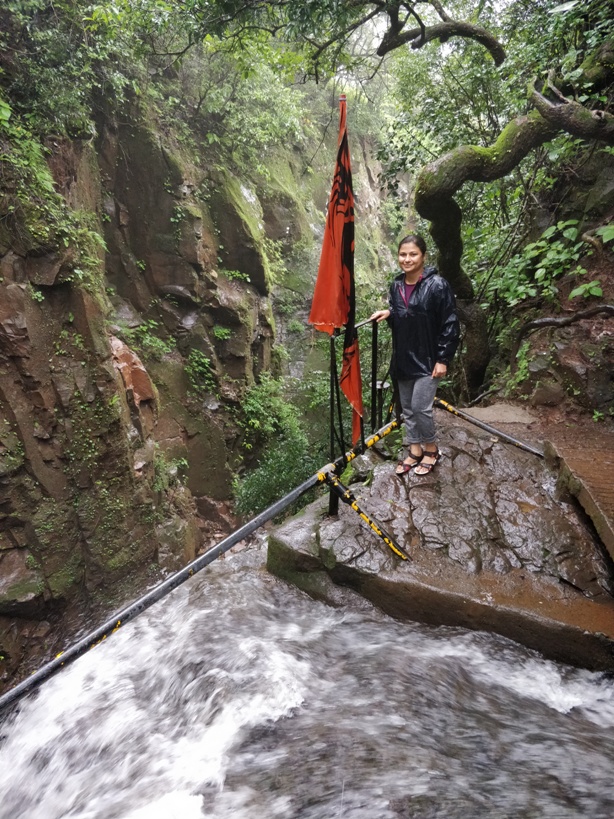
My Panhala Fort trek experience in monsoon
I went on Panhala Pawankhind trek from 13th July to 14th July. I had read about Panhala-Pavankhind Mohim in Shikharvedh’s (Trekking group in Mumbai, led by Jagdish Patil) event lists. This group has been organising the mohim since last 11 years consecutively. Later I got to know the story behind the mohim and was keen in joining the trek few years ago but due to some reasons I couldn’t.
In the month of June, next year when the monsoon began in Mumbai, I casually discussed about this trek with my then fiance who is now my husband. After few days he sent me event details of the trek which his friend had forwarded and it happened to be of same Shikharvedh group which I referred above.
We finally gave in and decided to go for this trek, the mohim. Sometimes, it can take upto a year for the best of things to happen. Isn’t it? For us it was our first long distance trek, an opportunity to get to know each other well. We didn’t realise at that of point that we were about to revisit the history.
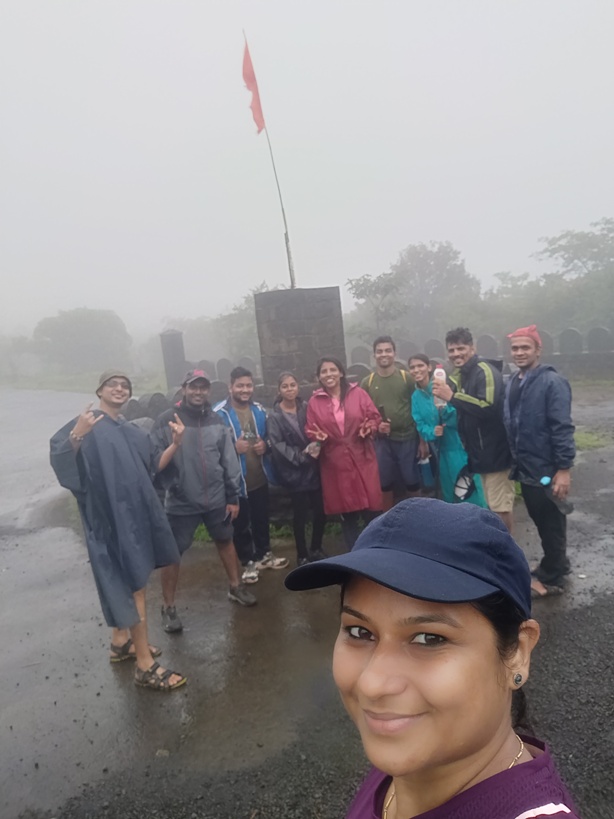
Journey began – Places to visit in Panhala
On 12th July, it was Ashadi Ekadashi, an auspicious eleventh lunar day of the bright fortnight of the Ashadha month (as per Hindu calendar which falls in June-July month) and that evening at around 7:30 pm I began overnight journey from Dadar, Mumbai, Maharashtra by private bus arranged by the trek organizer alongwith 30 other trekkers including my husband.
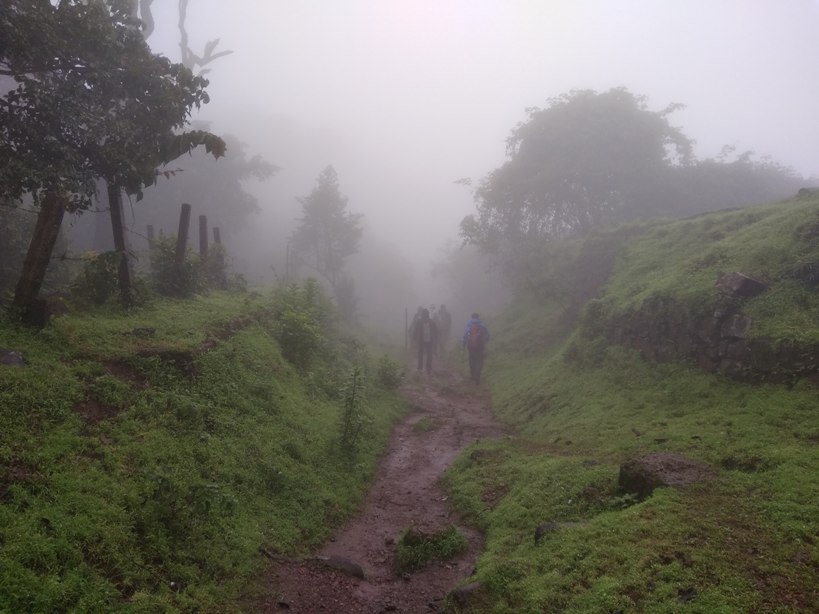
Day 1- Panhala to Pandherpani. The route runs through Turukwadi and Mhalunge village, Mhasai Pathar ( Plateau), Kumbharwadi, Chapewadi, Madlaiwadi, Karpewadi and Patewadi villages covering around 44 Km in 12-13 hours.
Bus arrived at Panhala at around 6 a.m. We were welcomed by morning mist. Frankly speaking I didn’t want to step out of the bus as it was too chilling outside, just wanted to get cozy and sleep a little more. But soon the team lead called out and asked us to freshen up and pack our day bag.
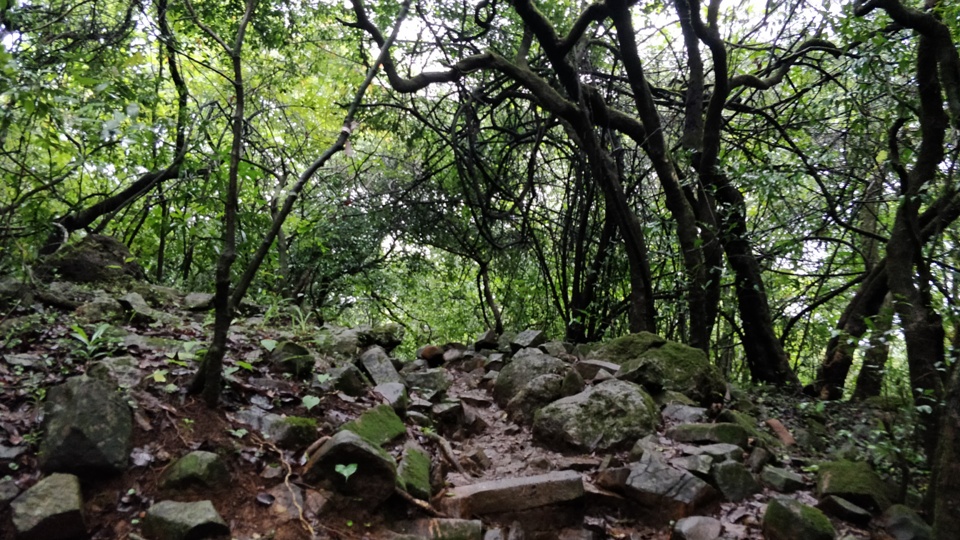
The same bus would catch us up at the end of the day at Pandherpani, so we had the liberty to carry minimum required stuffs in day bag and leave the remaining stuffs in the bus itself. I freshened up quickly and was ready with the rain gears on as it had already started drizzling and I knew it would continue.
Starting point of Panhala Trek
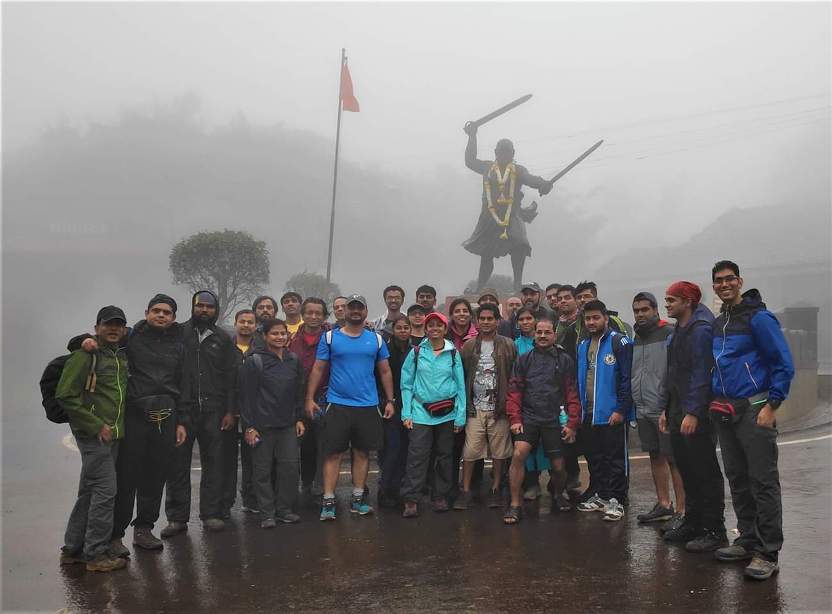
The trek’s starting point was ‘ Statue of Veer Baji Prabhu Deshpande’ located at the centre of Panhala fort. This statue to me was epitome of valour which filled me with abundant enthusiasm, as if I was preparing for some war, no kidding. The slogans of Jai Shivaji Jai Bhavani reverberated through the air and history played a flashback before our eyes. We moved on to make our own personal histories.
After, we moved a little further, we gathered at one place at around 7:30 am. After a brief introduction round we prepared to descend from the Pusati Buruj (bastion).
CROSSING WATER BODIES – THE TRICKY PART
After half an hour’s descend we had reached a small village Turukwadi. After walking a few distance on tarred road, we started walking through farm fields. Then came a bit tricky part, we had to cross one field area which was full of water and reach the edge of the field. With the help of stones placed manually by group members, we successfully crossed it by carefully stepping on the stones one by one.
Reaching Mhalunge Village
Once that little tricky task was over came, we proceeded to the ascend that would take us towards Mhalunge village. It was little tiring. I always find first few kilometers of trek bit tiring which mostly makes me think whether I will be able to complete the trek or not, am I capable or not.
But that feeling starts vanishing as I proceed. Keep going is the only mantra then, because you know what’s waiting for you ahead and for that you are ready to push yourself. In this case the massive Mhasai Pathar ( Plateau) was waiting for me to embrace it.
Braving the rain and wind
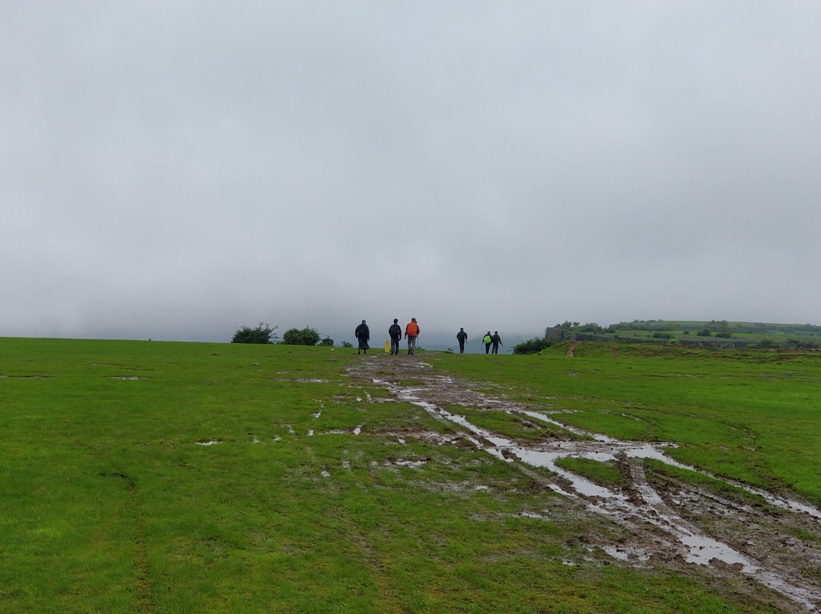
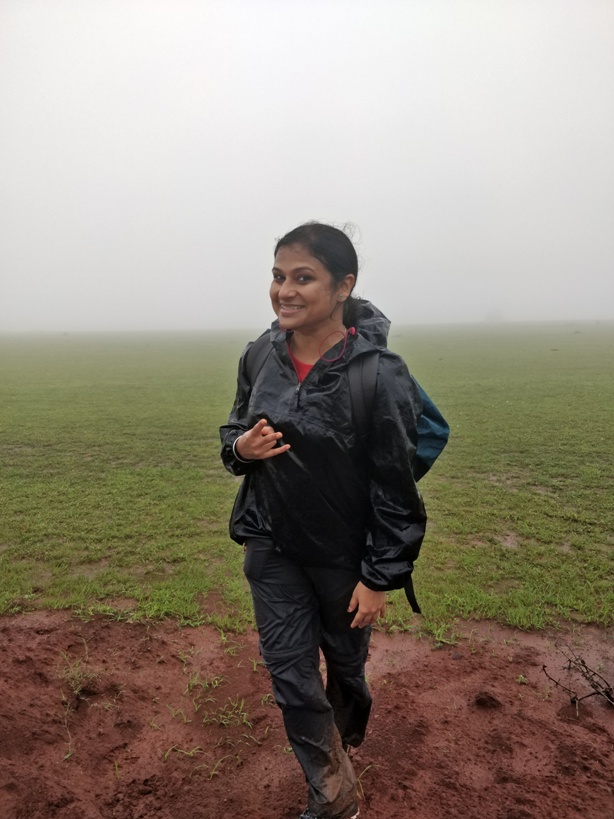
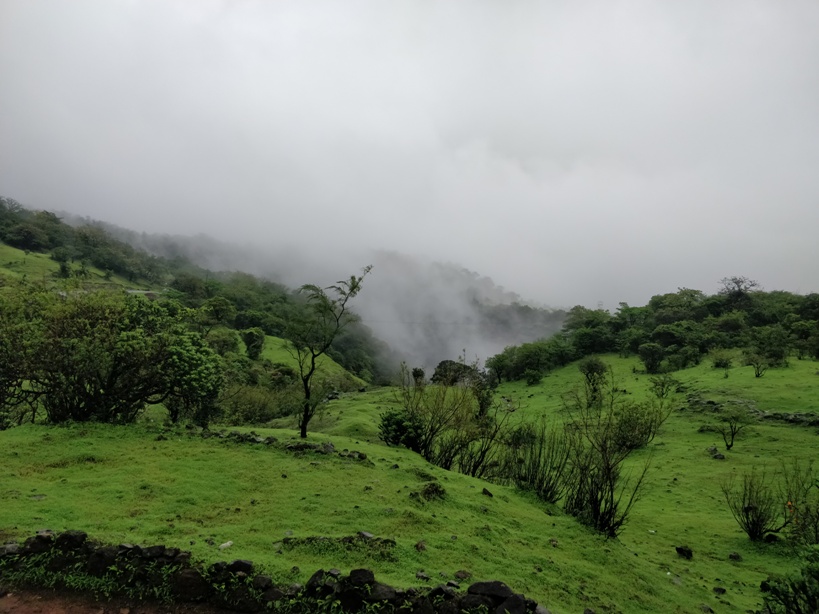
I went crazy the moment I stepped on the Mhasai Pathar plateau. It was breezy and raining heavily by the time we arrived. The breeze was making us move ahead automatically. All the trekkers were scattered at the plateau. Raincoat was not in place, cap wouldn’t stay on my head, all attempts to save myself from getting wet were in vain.
Arriving at massive Plateau called Mhasai Pathar
Somehow my husband and I found the opportunity to stop and take video of the beautiful Mhasai Pathar Plateau full of lush greenery, swaying trees and little white flowers which had just started blooming. We captured few pictures on our mobile at the risked of it getting wet.
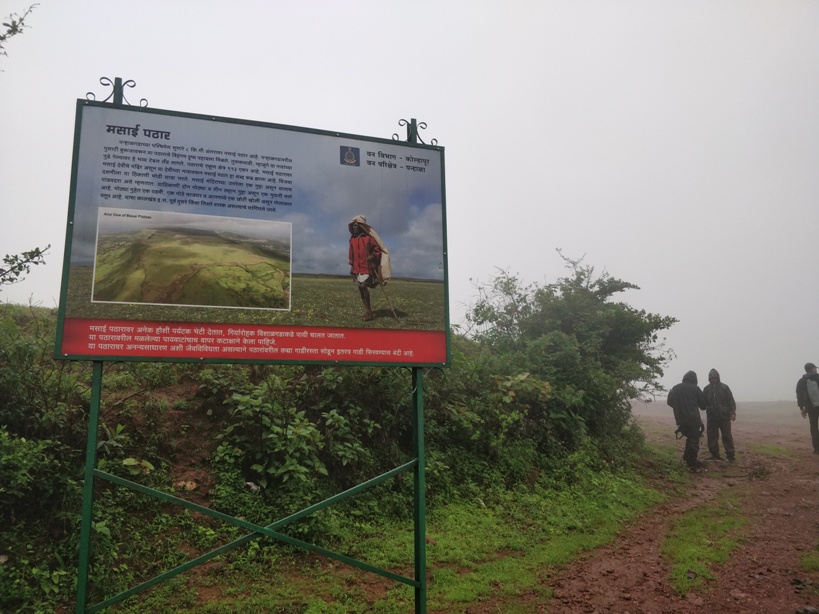
After all you don’t want to lose the chance of cherishing those memories in future through pictures and videos. We were running around like kids, jumping and splashing water on each other.
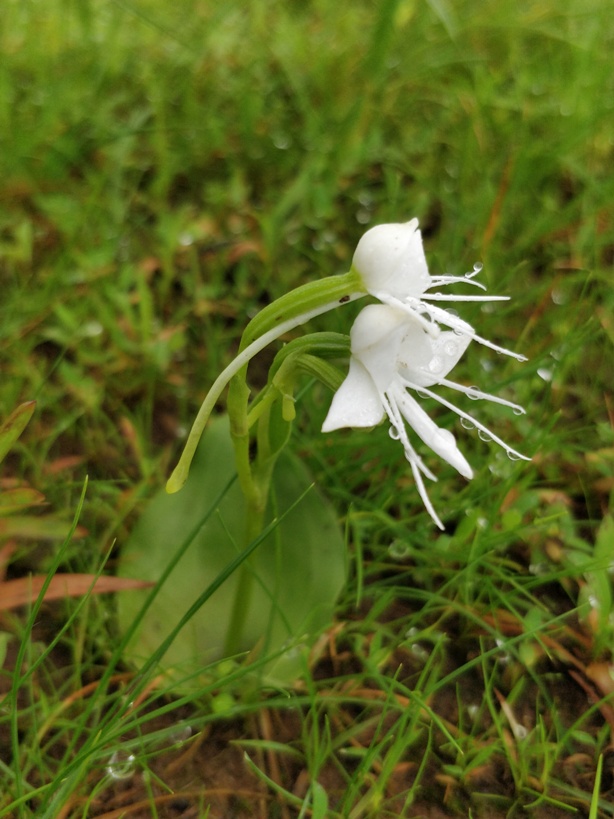
Breakfast At the temple
Very soon we realised we shall lose out on time if we stay there longer, so we started walking fast to reach the next gathering point that was the temple which is located at the other end of the plateau. When we reached there, the Hindu temple was hardly visible from far due to fog and rain. We had completed 11 km by then, so we deserved to have breakfast that we had carried the previous evening from home.
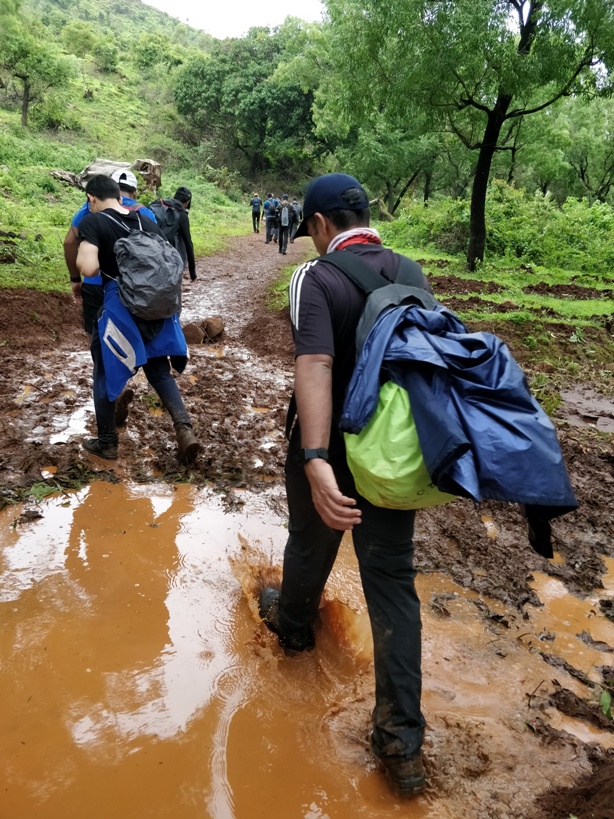
Lunch at Karpewadi
We resumed the trek after that most need break of half an hour. Within 40 min we reached Kumbharwada and another 40 min walk through small forest area covered with Nilgiri trees took us to Chapewadi.We collected our packed lunch from one of the villagers and proceeded towards Mandlaiwadi and next was Karpewadi. We reached Karpewadi at around 1pm.
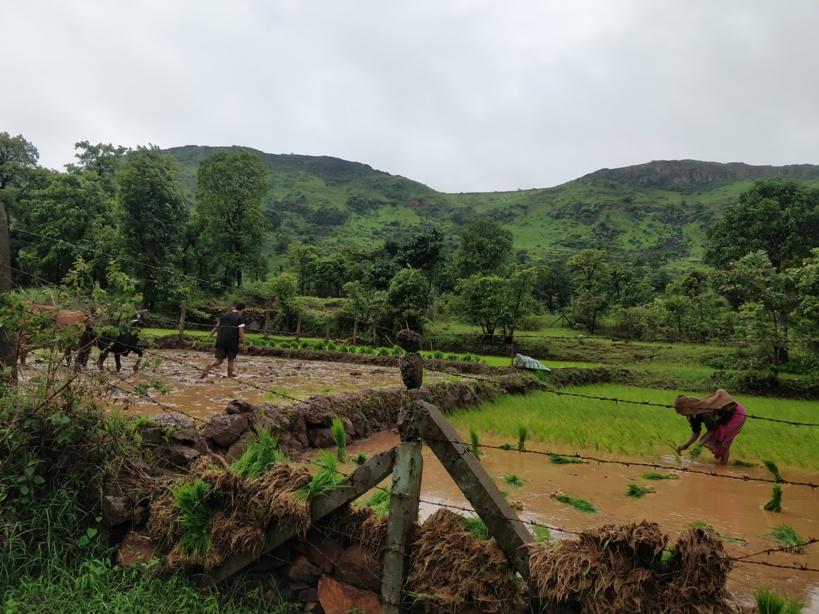
The beautiful village stopped me in my tracks
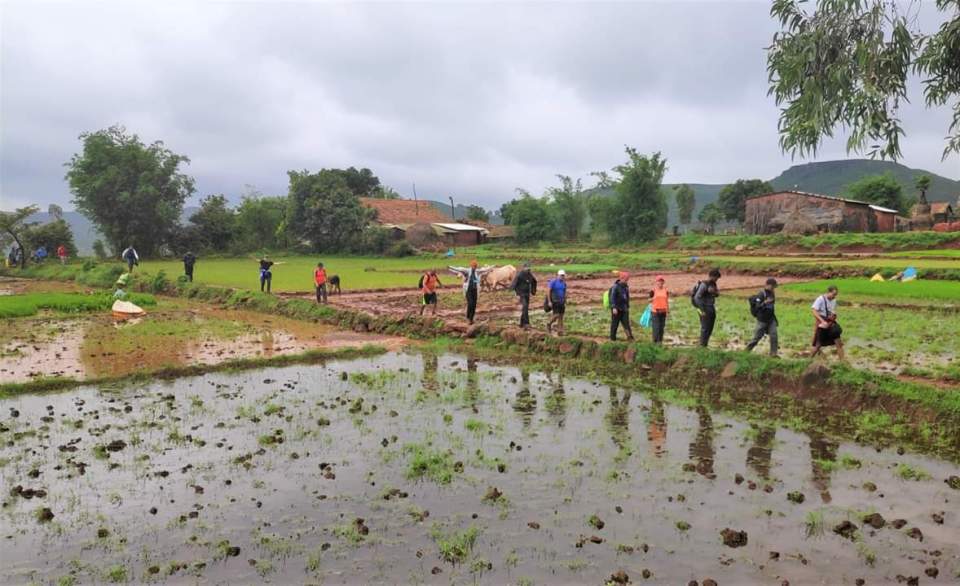
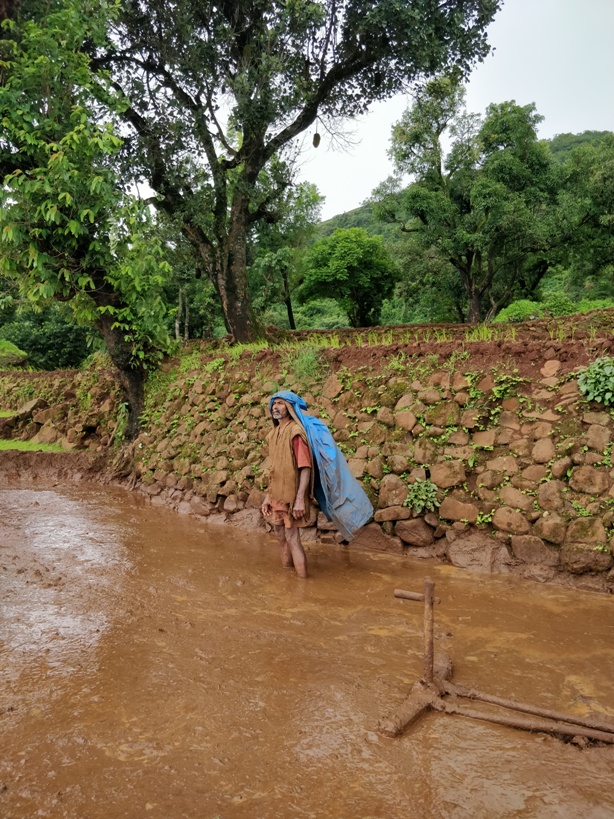
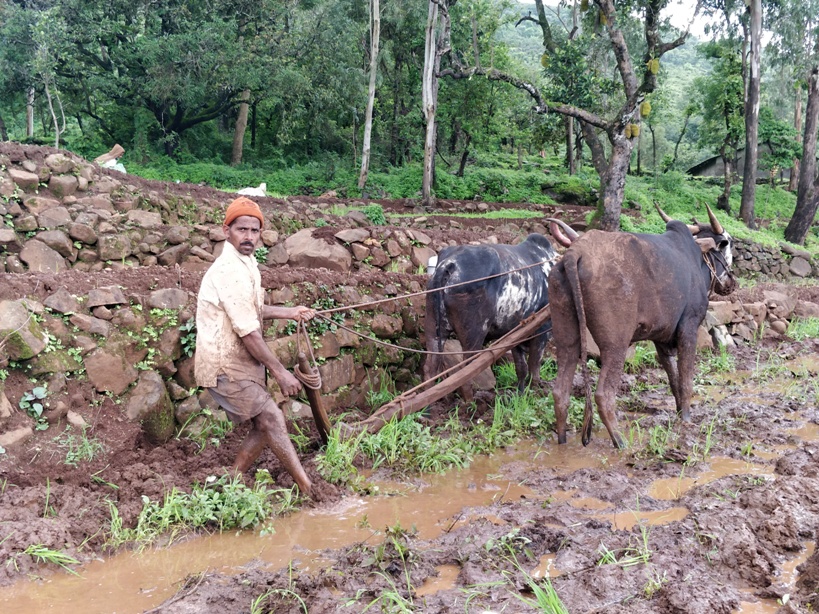
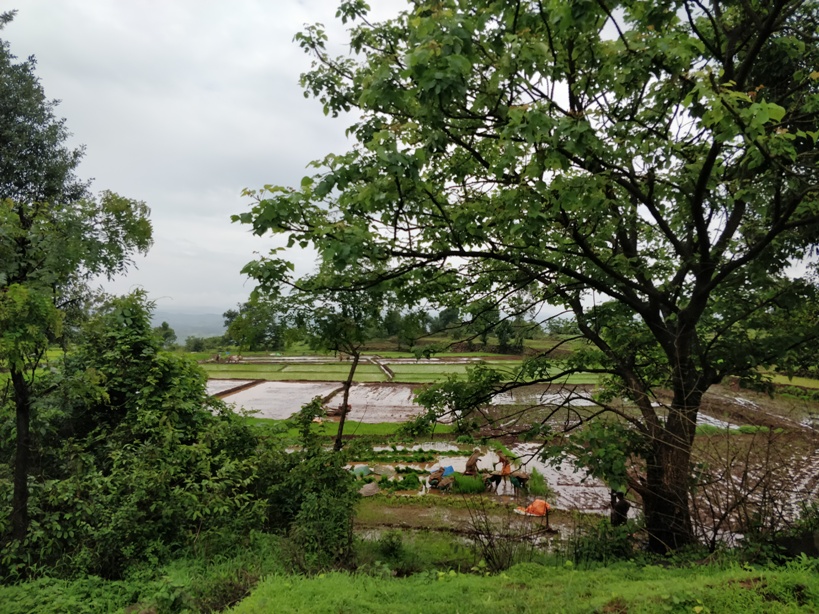
Enroute, we arrived at a quaint village area where I couldn’t hold myself to halt and just be there and enjoy the beauty of that place. Everything what I could see around was so eye pleasing, the greenery, the farms, the farmers happily working in their farms. Some were ploughing their fields with the help of cattle, some were transplanting paddy saplings in organised manner. Even while it was raining heavily, they were merely covering themselves with a village style poncho on their head and back. Despite the flurry of activities, there was a certain peace in that moment!
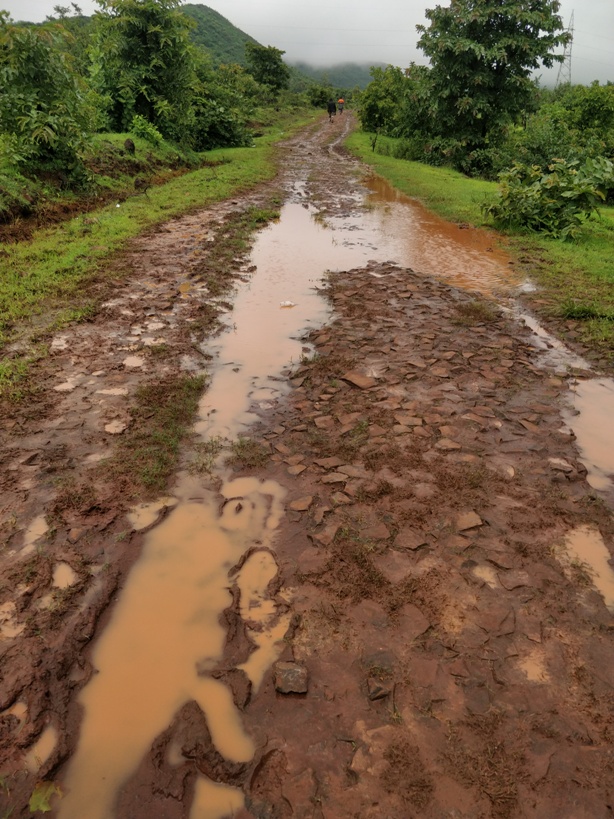
An Annual Pilgrimage
Bidding farewell to the villagers we moved ahead. Our next destination was Patewadi which was approx 8-10 kms stretch.In between we had our lunch, relaxed for a while and continued the trek.
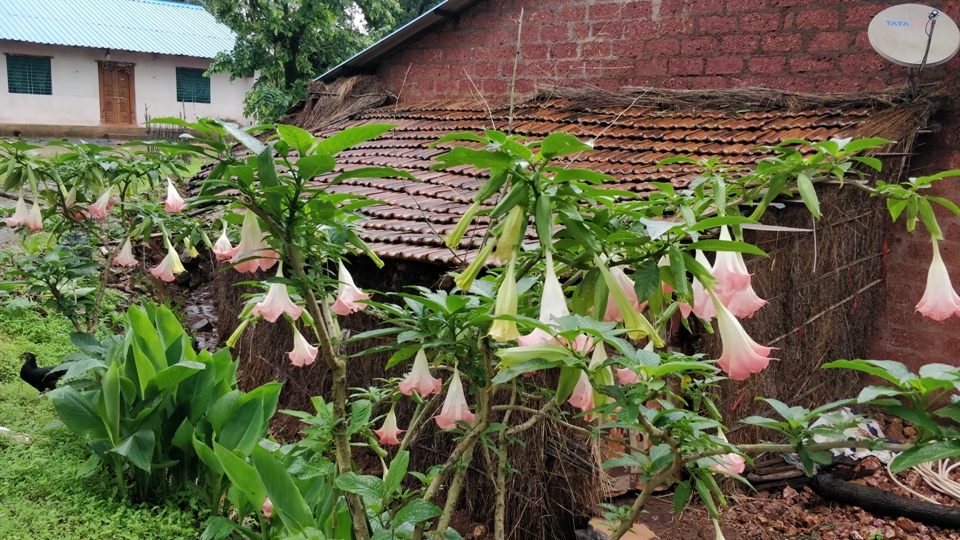
There were other trekking groups as well and also few Shiv premi ( Shivaji lovers) for whom this mohim is an annual pilgrimage. Some of the devotees had even got their young enthusiastic kids along with them.
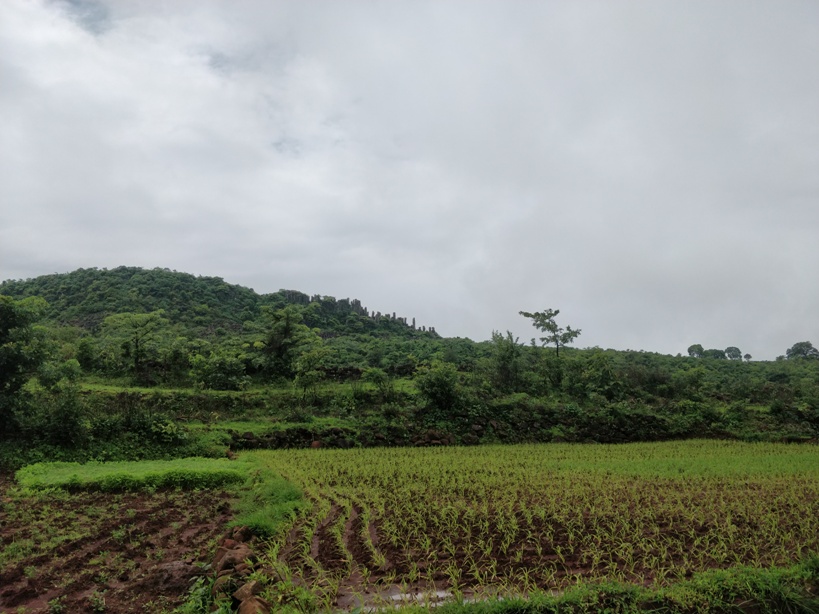
Some of my co trekkers knew a lot about this mohim, some had been doing this since 4-5 years so they had their own experiences to narrate. I was awestruck just by hearing the stories and imagining the kind of difficulties Maharaj and his troop must have faced more than 300 years back. I took pride in walking the same path although the difficulty level was not the same, of course.
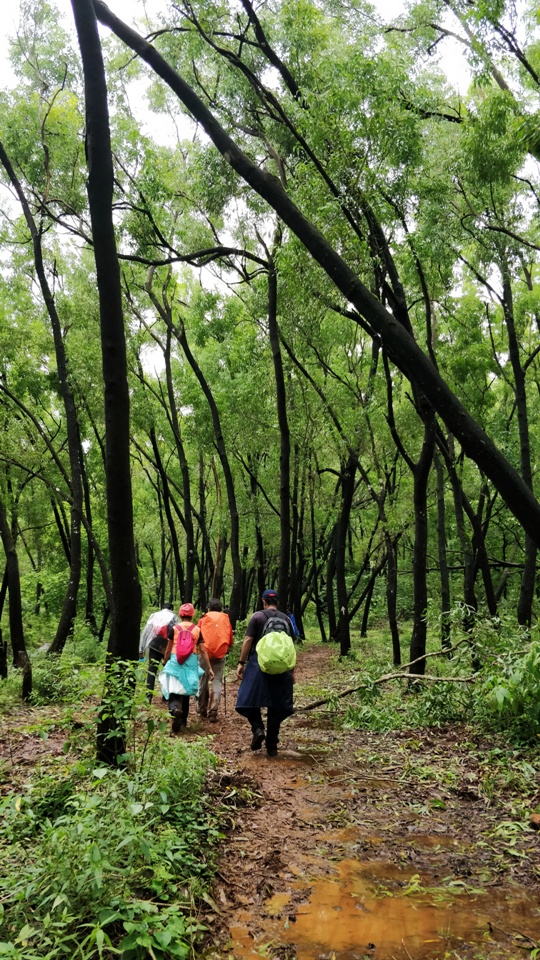
Trek in Sahyadri through the forest
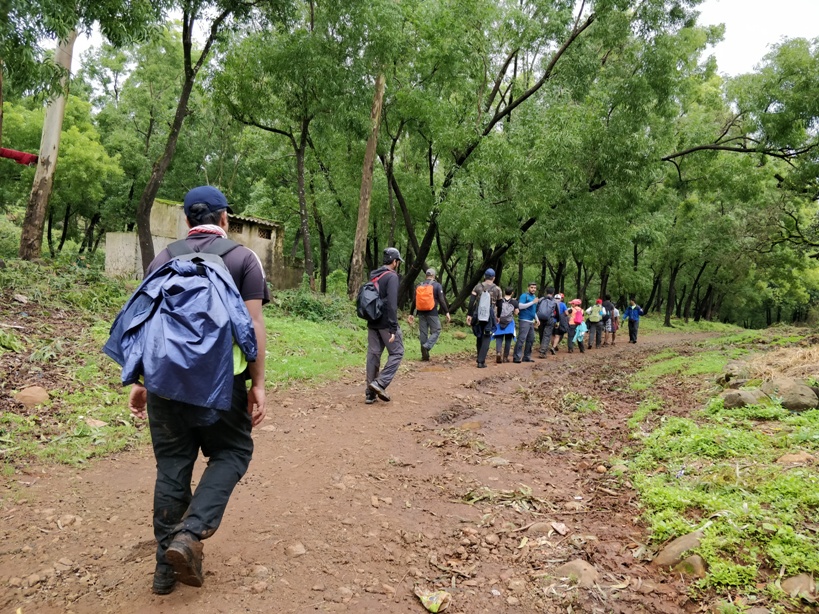
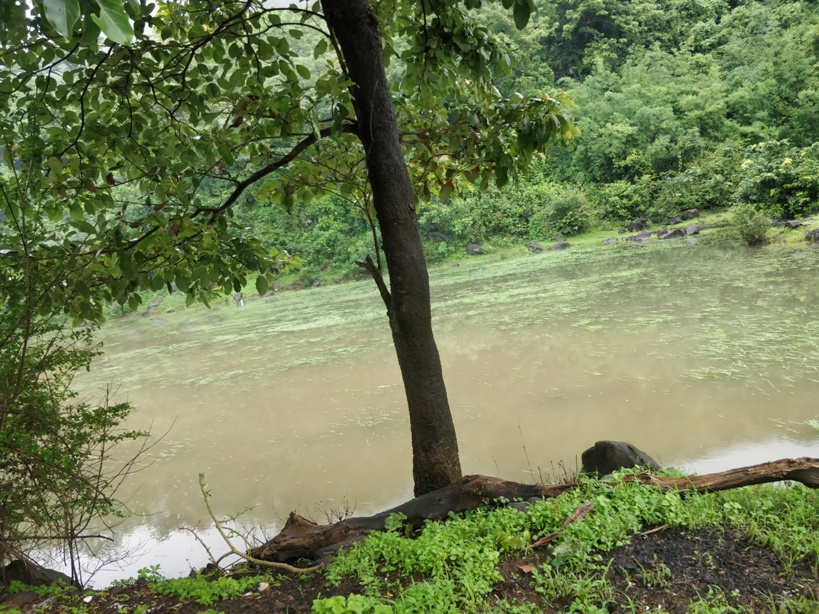
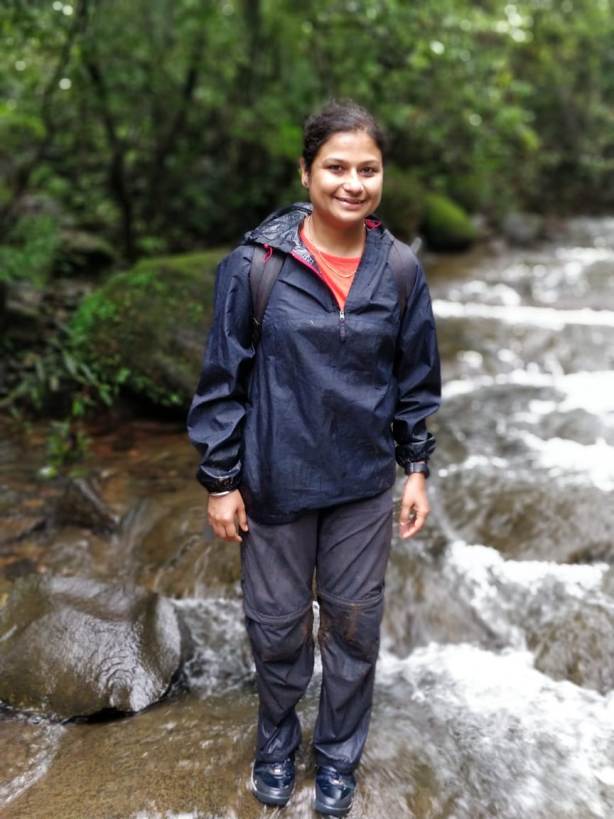
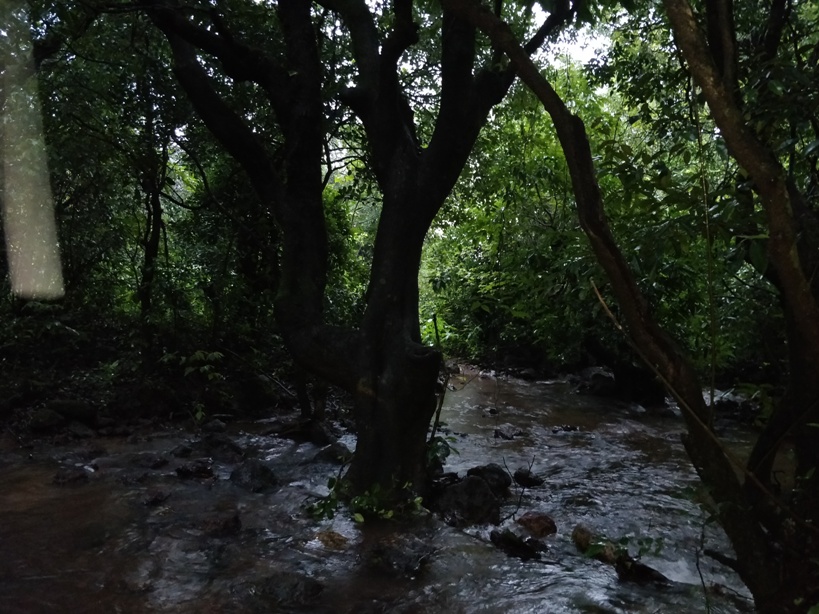
Walk through the jungle was rejuvenating though it was not that easy as we had to go through muddy patches and cross flowing water bodies here and there. One good thing was that it had stopped raining by then. We had completed 34 kilometers, but didn’t have much time to sit and pat our backs for this accomplishment because we still had to cover 10 more kms and it was already 4 p.m. We had to cross more of the dense forest and at dusk it would get extremely dark, thereby, increasing our difficulty level.
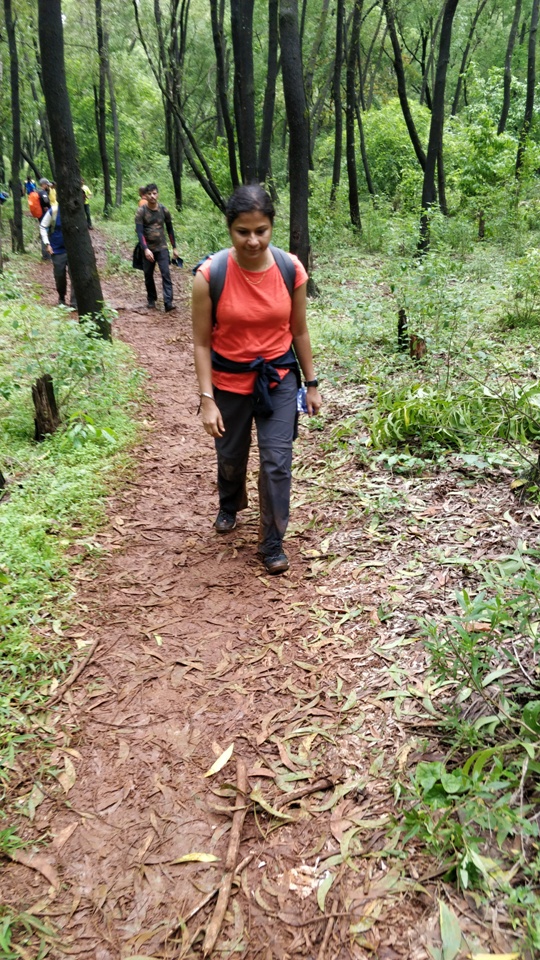
Panhala Fort Trek – A difficult trek in Sahyadris
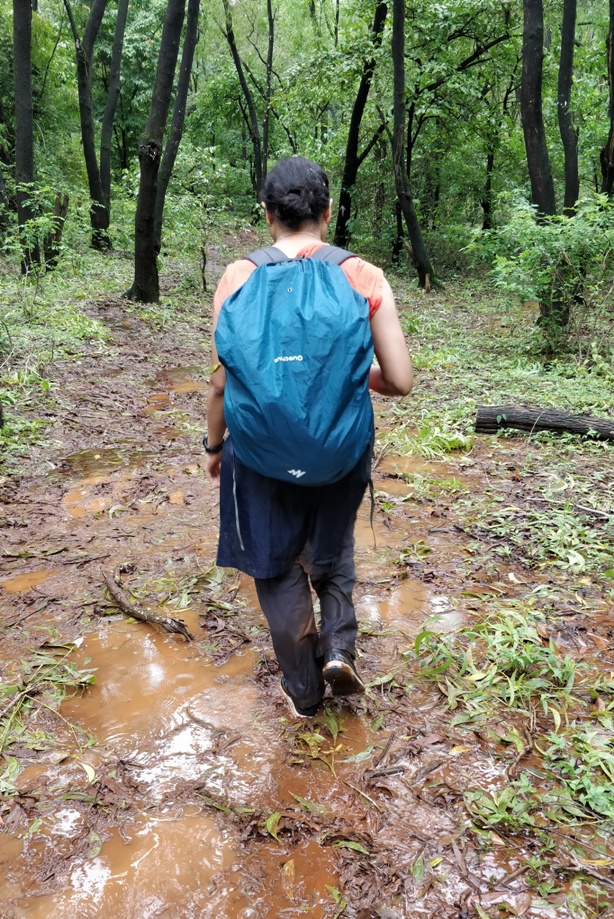
The muddy patches were quite deep as it had rained heavily during the last few days and even on the day we trekked. Although scary, it was fun for me but not so much for everyone else as I saw some trekker’s shoes giving up their last breath. You need to have proper water resistant and strong trekking shoes for this kind of monsoon trek suitable for forest terrain.
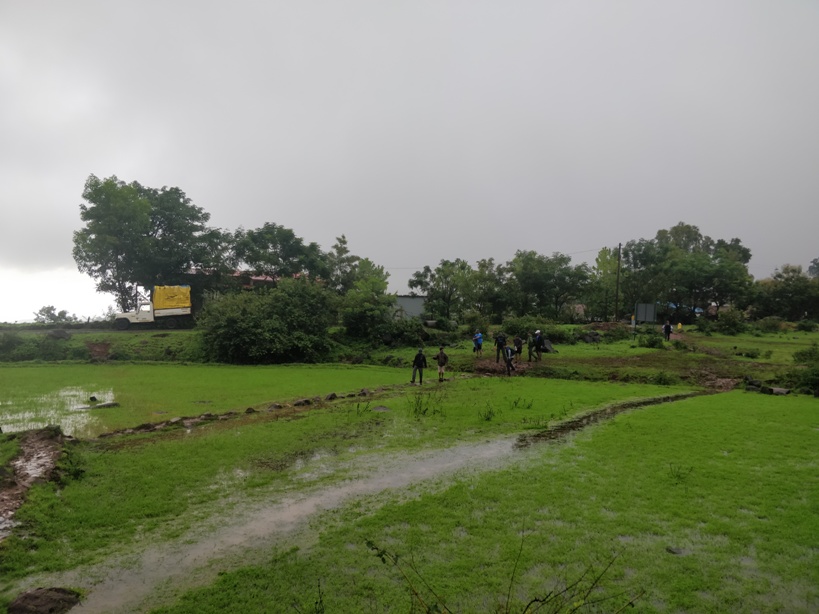
Moreover we had walked for almost 9-10 hours and shoes had already started biting, some got blisters on their toes, rashes on the thighs. I did not face these issues but my legs were paining severely and body had exhausted after such a long walk through rough terrain, dipping legs inside the mud and pulling it back every now and then. It required a lot of energy.
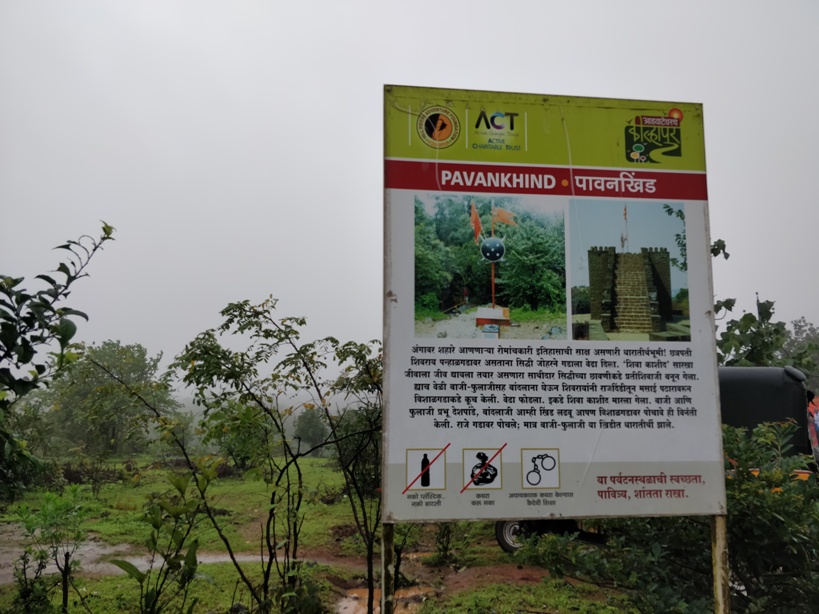
Night Trek in the dark: We didn’t give up
But at this moment there was no desire to give up as going back to the previous village was not a good option. Somehow we had to reach our last village of the day i.e. Pandherpani. We had carried torches with us that helped us during last few kms through the sleepy village. At certain places the path was confusing so we had to wait for few co trekkers to gather and then proceed. At last we were out on tarred road, which, much to our relief, were the last 6 kms.
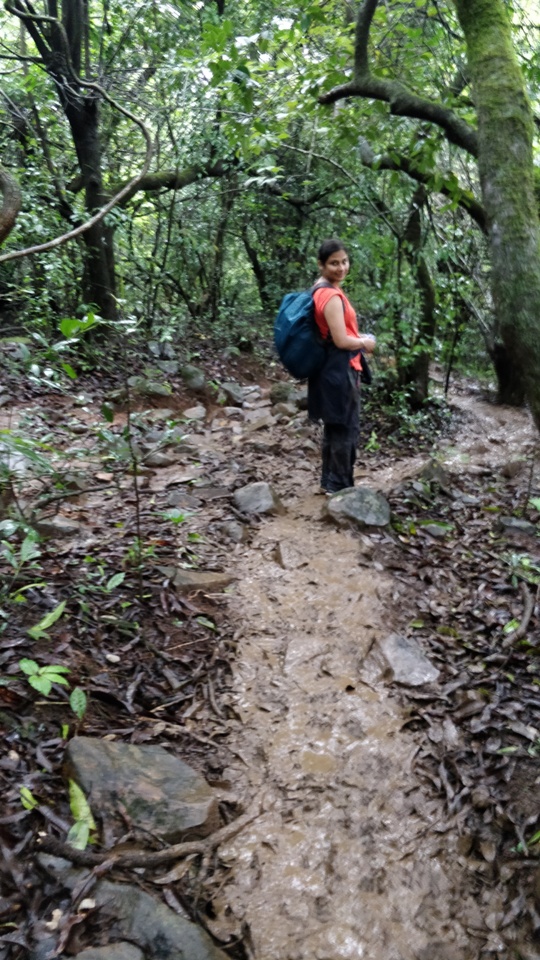
Arriving at Pandherpani
Our initial plan was to visit Pavankhind on day 1 itself but we were behind our schedule so we decided to do it the next day. We reached Pandherpani at around 8:30 pm after a long day of strenuous walking. Much to our surprise, there was one group who was distributing hot tea to all the trekkers. Ahh, having hot tea after such a tiring day and in the cold evening is just heaven. Need we ask for more?
Authentic home-made dinner at a local’s house
We gathered at one villager’s house where we were supposed to have dinner. When we started, all 30 of us had started together but at the end of the day, we arrived at the destination in small groups. Those who reached late were the once who faced more difficulties as they had to cover long stretches in dark.
Now it was time to enjoy the local home-made meal after a quick change of clothes which were fully drenched in water. The meal was tasty and filling. It felt so relieving.
Sleeping in a villager’s home
We moved to another villager’s house where our sleeping arrangement was done. We were all stuffed in two big living rooms one for males and other for females. I applied some ointments on my legs and back, got into my sleeping bag and slept like a child.
Day 2 – Pandherpani to Pavankhind (approx 1 hr) 6 Km trek
Pandherpani to Pavankhind (trek takes approx 1 hr. It is a 6 Km trek . Pawankhind to Vishalgad- 13 km
Next morning I woke up with utmost difficulty, still feeling pain in the legs. We had breakfast at the same villager’s house where we had our dinner and were set for Pavankhind, the most awaited one where the battle took place.
Tarred road or bus – How to reach Pawankhind or Pavankhind
It was an easy 6 kms walk on tarred roads, some opted to go by bus. Within 1 hour we were at Pavankhind at around 9 am. Just a few steps of descend took us to the sacred pass, Ghor Khind which is also known as Pavankhind. Many people ask how to reach Pawankhind aka Pavankhind. Not many know that there are two options to reach Pawankhind, i.e., bus and walk.
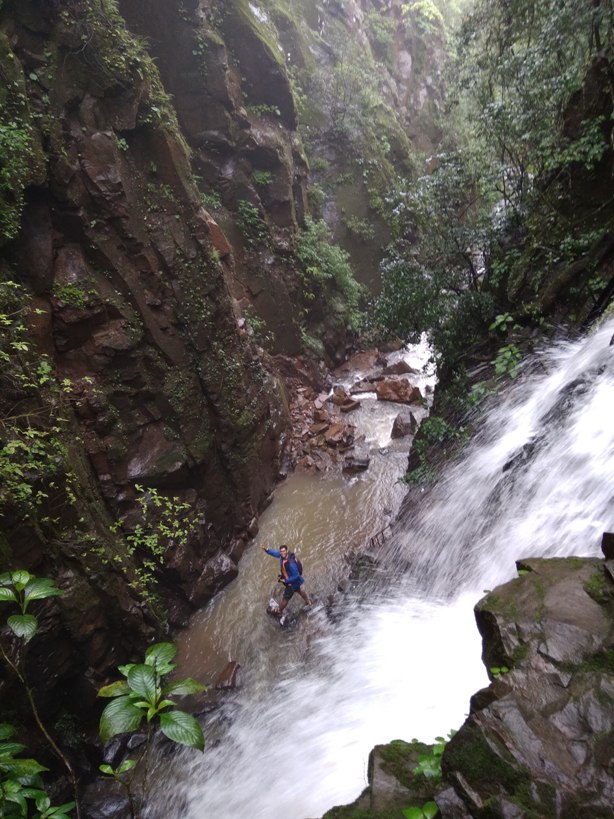
Arriving at Pavankhind: Goosebumps!
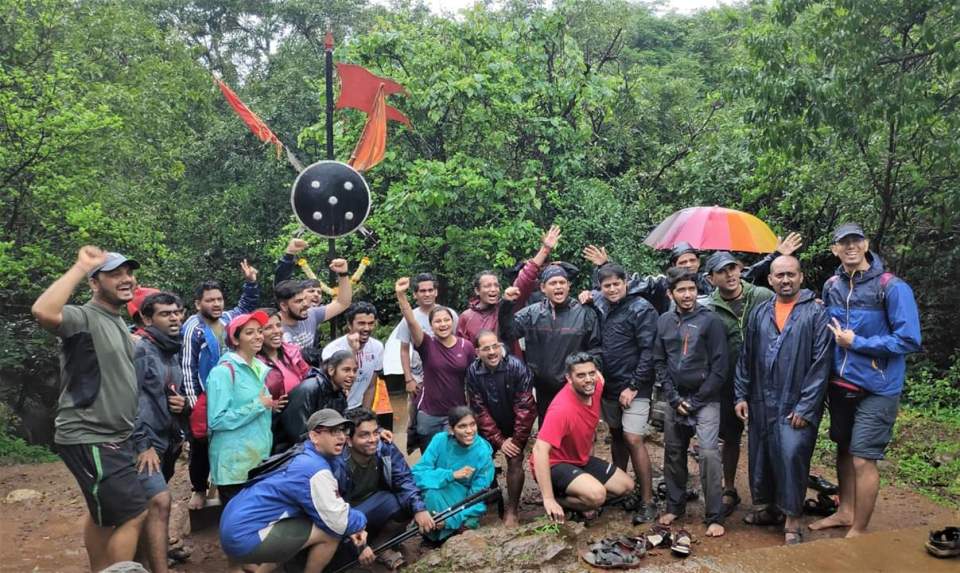
We paid tribute to Veer Baji Prabhu Deshpande’s smarak (memorial) built here. I could feel the aura of this brave man roaring with pride. This was the place where he and his fellow 300 soldiers laid their life fighting against thousands of men of Adil Shah’s army. I got goosebumps while shouting the slogans of their victory. At that moment we relived the thrilling history. Needless to say, Pavankhind is one of the most important places to visit in Panhala. All the hard work we did to reach Pavankhind made a lot of sense now.
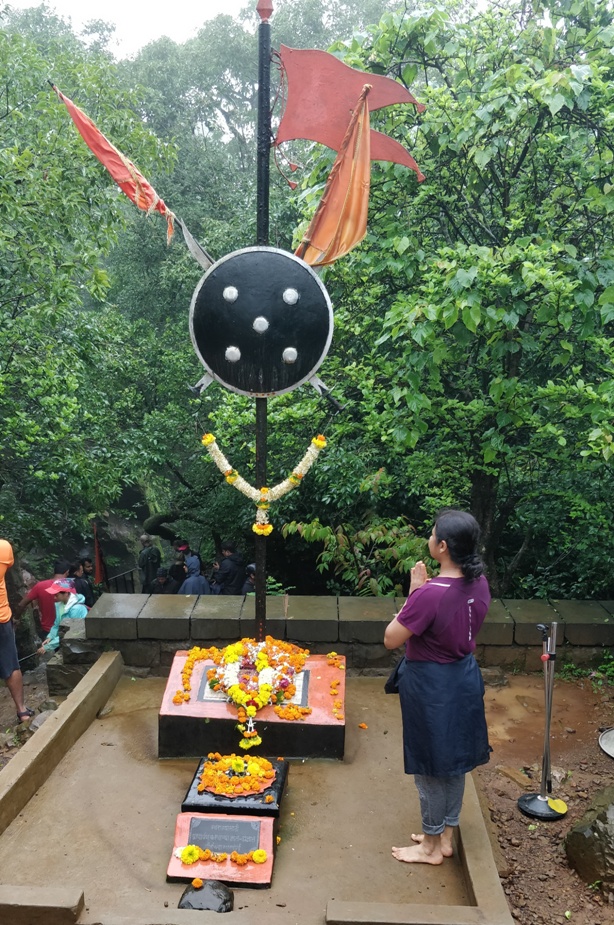
Trekking towards Vishalgadh
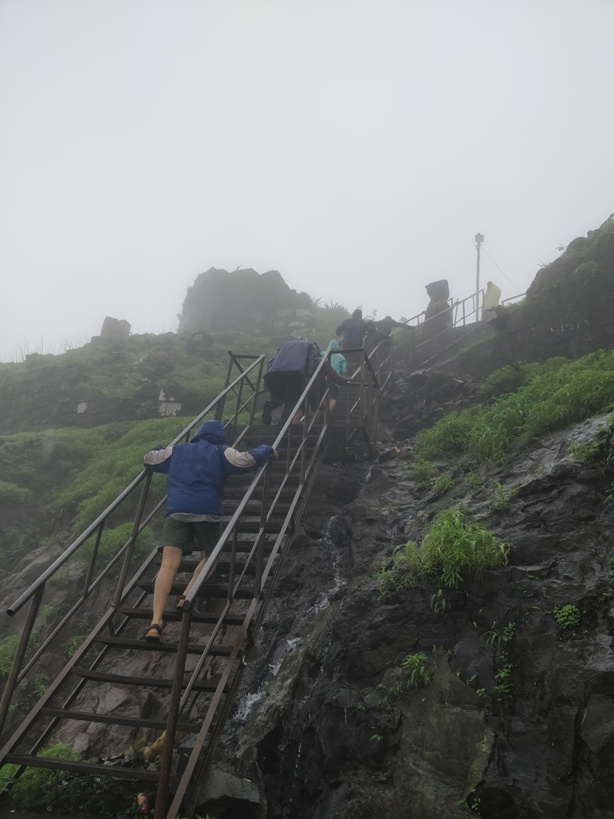
We had to head towards Vishalgad now. Due to time constraint, we went to Vishalgad fort base by bus. Climbed the steps for around 20- 30 min and we were at Munda Darwaja (gate). There were many visitors who visit the dargah located at the fort area and it was too crowded.
The area around the fort was unclean and not well maintained. There were too many shops which led to water logging and dirt everywhere.
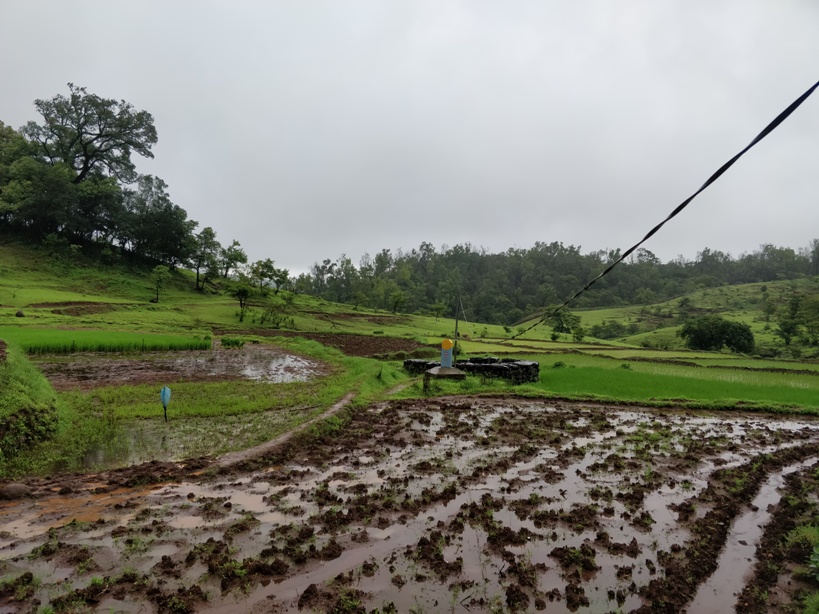
Veer Baji Prabhu Deshpande’s Samadhi
We just took a quick look of the fort and started the trek towards Veer Baji Prabhu Deshpande’s samadhi which was located away from the fort area. The route was confusing and not properly marked as hardly anyone visits there. It was a blessing in disguise as its beauty was untouched by the dirt and pollution which we saw at Vishalgad fort. It is one of the best places to visit in Panhala.
Amazing views at Samadhi – Panhala Fort what to see
The view, surrounded by greenery was mind boggling. It was drizzling and was so cool. All I desired was to just feel the fresh air and absorb the absolute beauty that nature had offered us. After half an hour’s trek we reached the samadhi, maintained silence for few seconds in the remembrance of the great warriors.
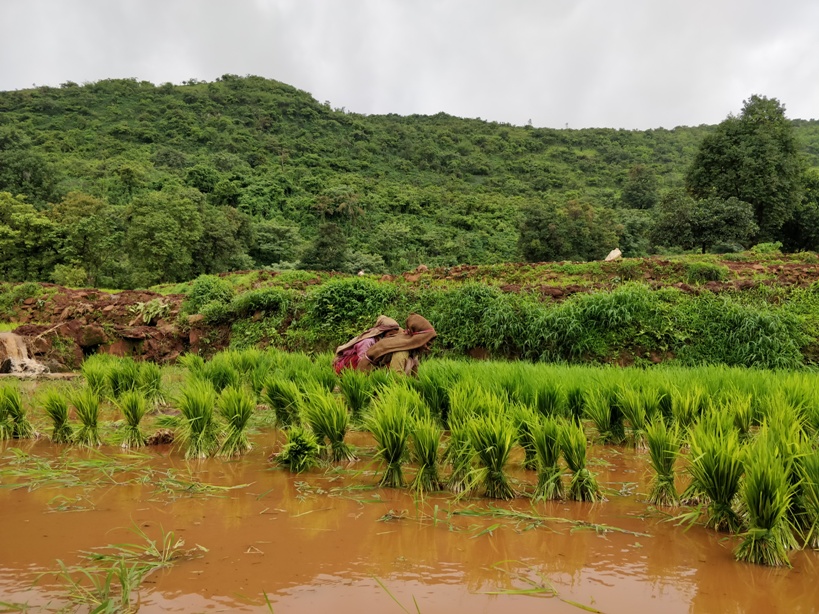
Back to Vishalgadh base and Mumbai
We were back to Vishalgad base from where we began our return journey to Mumbai by our bus. We reached Mumbai late night and that was the end of it.
Itinerary and distances
05:30 Hrs: Panhala
06:15 hrs: Descend from Pusati Buruj
07:00 Hrs: Turukwadi – 2.5 km Complete
07:45 Hrs: Mhalunge Village -5 km Complete
09:00 Hrs: Mhasai Pathar-Mhasai Temple – 11 km Complete
09:45 Hrs: Kumbharwadi – 14 km Complete
10:30 Hrs: Chapewadi – 18 km Complete
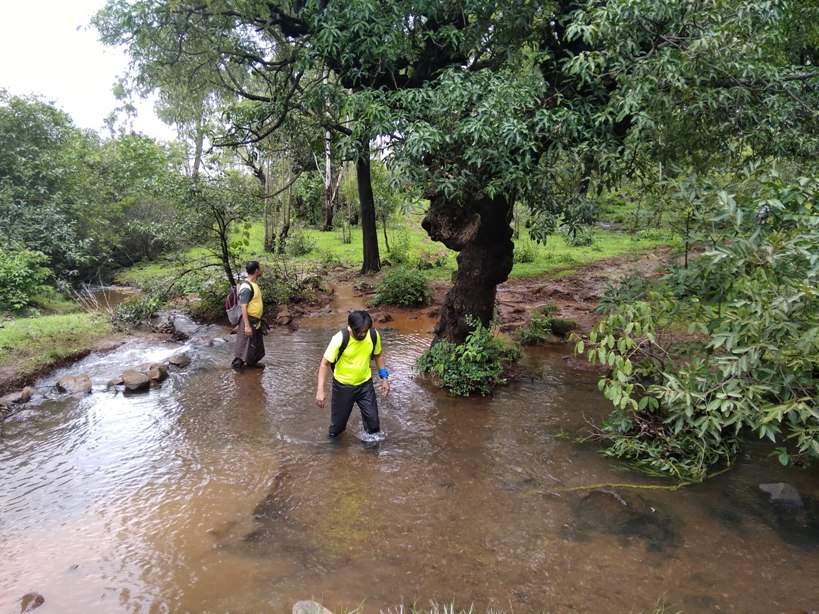
Collect Packed Lunch from local villager
12:00 Hrs: Mandlaiwadi – 23 km Complete
13:00 Hrs: Karapewadi -28 km Complete
15:00 Hrs: Patewadi – 34 km Complete
15 mins Break
18:00 Hrs: Pandherpani – 44 km Complete
19:00 Hrs: Pavankhind – 51 km Complete
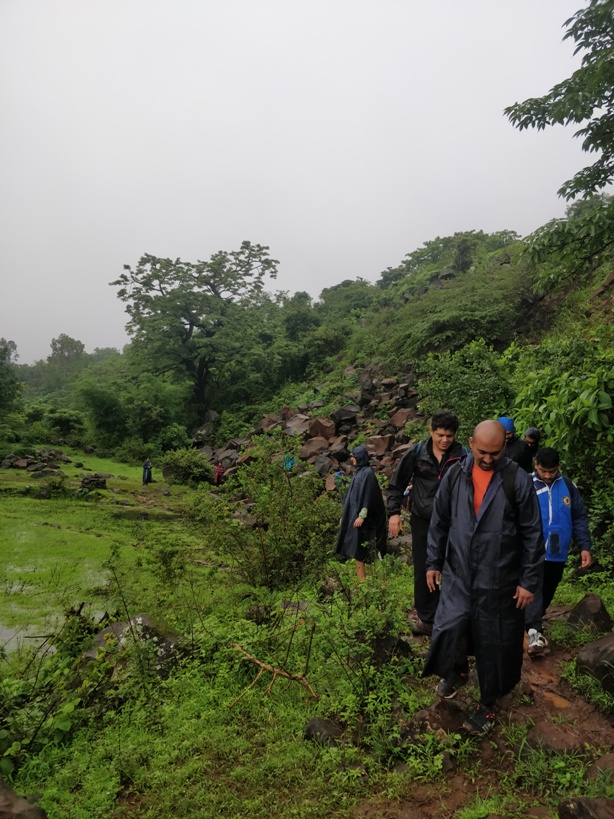
Quick facts of Panhala Fort Trek
Dinner & Overnight stay – Pandhrepani (villager’s house)
Sunday 14th July
Breakfast – Tea
07:30 Hrs: Move 2 Vishalgad by Bus / Trek (13 kms)
09:30 Hrs: Vishalgad
Explore the fort
11:30 Hrs: Move to Mumbai by Bus
Lunch en-route on the highway
23:00 Hrs: Mumbai
Cost of Panhala Fort Trek
The cost for the event was Rs. 2950 / – per head.
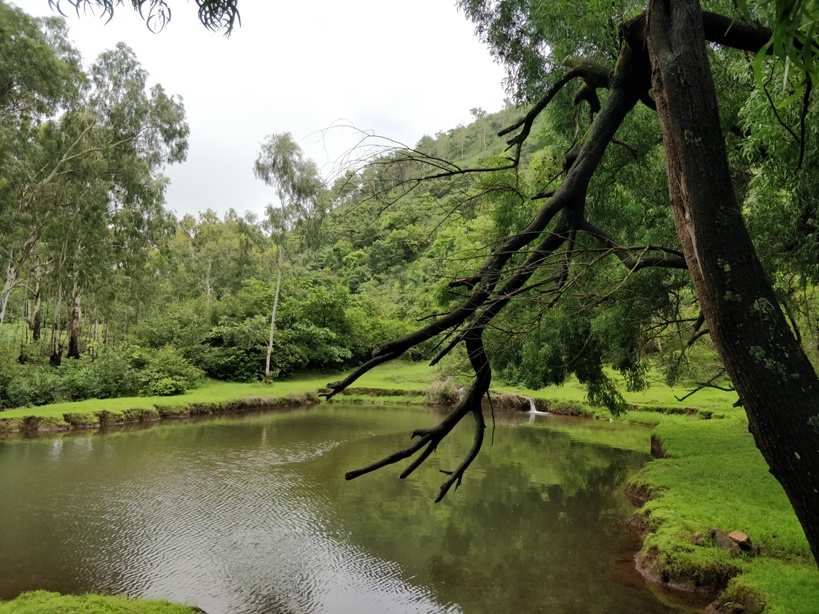
How to book Panhala Trek
Trek organizer: Shikharvedh ( led by Jagdish Patil)
There are many other groups in Mumbai, Pune and Kolhapur who organises this trek. One can go on their own as well, but need to study the route before hand as it gets confusing at some places.
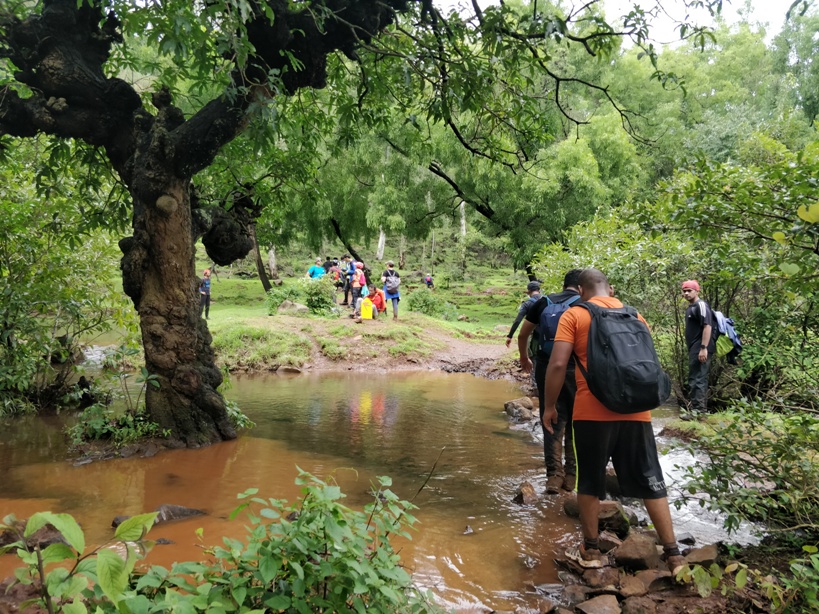
How to reach Kolhapur and Panhala from Mumbai and Pune
By Bus
From Mumbai and Pune best way is to take private bus overnight journey. Try to reach early at Kolhapur at least by 5 a.m.
From Kolhapur you can easily get local transport till Panhala fort.
By Train
Mahalaxmi Express – The 17411/17412 Mahalaxmi Express is an express train that runs between Mumbai and Kolhapur. It is a daily service. It operates as train number 17411 from Mumbai CSMT to Kolhapur SCSMT and as train number 17412 in the reverse direction. It goes via Pune.
Source of information about Panhala fort and the battle of Pavankhind: For more, please read on Wikipedia and other references related to Marathas.
Last Thoughts on Panhala Trek
This trek for me was one of its kind as it gave opportunity to revisit the history and valour of the brave Marathas. High endurance level was required for this trek which I wasn’t sure whether I will be able to do but I was determined like the Mavlas and yes I recorded my highest distance trek of 44 km in a single day. The rich Panhala Fort history makes this trek all the more worthwhile. Panhala Fort trekking is the best trek if you are looking for trekking near Kolhapur.
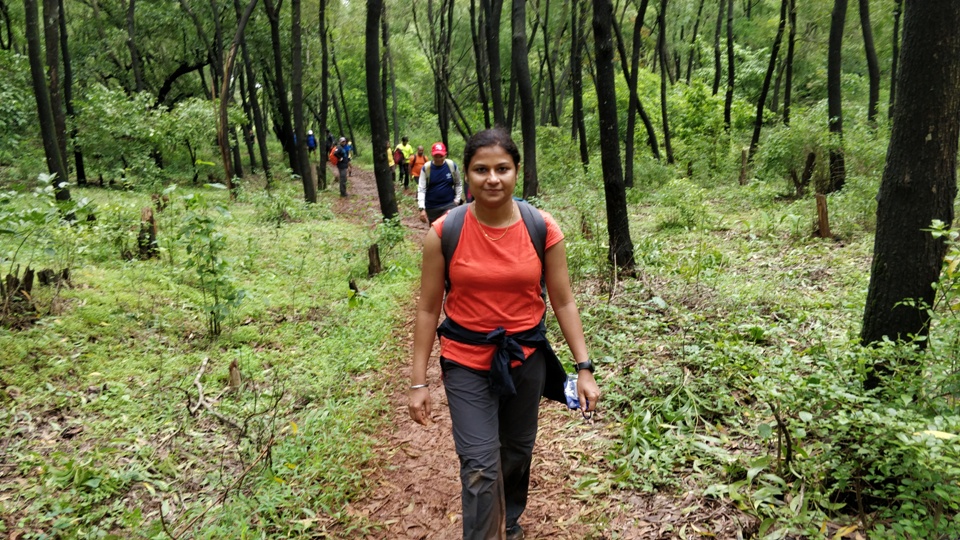
Author Bio
I hail from a small town named Sawantwadi in Maharashtra and have spent my childhood in susegad (quite and relaxed) Goa. Desire to be independent dragged me to the dream city Mumbai where I am currently located.
My wanderlust landed me to numerous places across India and few outside India and trekking became part of my life. I have done more than 20 treks in Sahyadri mountain range of Maharashtra, the most challenging and life threatening of which was Alang- Madan-Kulang range and few Himalayan treks including the popular and deadly Chadar trek in Zanskar region of Ladakh, which was truly worthy of all the risks one carries.
Credit goes to Mumbai for transforming me from shy little girl to bold independent woman who dares to travel alone, eat alone and even watch movie alone if need be.
Follow this blog for more such stories
Free Guides on Maharashtra
Do not miss these free guides on Maharashtra. Please read to dream and plan for that amazing trip of a lifetime.
Best Monsoon Treks in Sahyadris of Maharashtra
Monsoon Trip to Lonavala and Khandala
Gudi Padwa Shobha Yatra in Dombivali
The colorful Kala Ghoda Arts Festival in Mumbai
Babington Point in Mahabaleshwar
Hacks for student life in Pune
Pattaya Street – Restaurant in Navi Mumbai
Related posts:
Fort Panhala to Pawankhind – All alone!
August 1, 2011 by chalatmusafir
Shivaji’s escape from the siege of Fort Panhala on a rainy night, the subsequent frantic chase given by the Bijapur forces and the battle of Pawankhind culminating in the inspiring sacrifice by Baji Prabhu Deshpande and 300 Maratha soldiers is the stuff of legends. The fable of Shiva Kashid, the barber who volunteered to dress up like his beloved King to misguide the enemy and assist in the escape, knowing well that a certain death lay in store provides a touching subtext.
The 75 Km-long route of the escape is broadly known. It extends across a portion of Kolhapur district in Maharashtra, from Fort Panhala to Fort Vishalgad. On this route, Pawankhind lies at a distance of 55 Km from Fort Panhala. Even today, the landscape is as rugged, has few roads and is dotted with nothing more than quaint hillside villages, peopled by simple Marathas farmers or Dhangar shepherds.

Shivaji is not just a ruler who lived centuries ago. He is a sacred memory alive in the hearts and minds of the Marathis. No other royal figure of India commands such devotion. The trek from Panhala to Vishalgad is therefore, a mandatory annual fixture – almost a pilgrimage – for many adventure groups in Mumbai, Pune, Kolhapur and Sangli. Since the date of the original operation was 13 July 1660, the trek too is performed in the month of July when the monsoon is usually in full fury in the Western Ghats.
********
I had been trying to do the trek for last three years. But somehow the plan fell through every time. This year I am a little more determined. I get in touch with an adventure group. They have planned it on the coming weekend. Some 400 people in all have already signed up. But I have prior commitments and will not be able to make it that day.
I feel sure the trek can be undertaken independently by a smaller group. I try to rope in a couple of friends who I feel will be enthusiastic. Enthusiastic they do sound, but have no time. Finally, I decide to go it alone.

Three days later, I get a rough, hand-drawn sketch of the route from a doctor friend who did the trek that I could not do. The most important details therein are the names of villages. Now I know what to ask the solitary shepherd I run into when I get lost. The kind doctor also fills me in with a few expected hazards – like ankle deep mud, pestering leeches and treacherous mountain streams that have burst banks due to heavy rains.
*********
I pack a rather perfunctory collection of items. Whatever comes to my mind, goes in. Whatever doesn’t occur to me is left out. So I have a field bandage, but not a rope. A light blanket but not a sleeping bag. A torch but not a knife. A waterproof cape, but not a sun cap. A painkiller tablet, but not a sprain ointment. Snake and scorpion bites are a real possibility. But I carry nothing to deal with such a crisis.
Fortunately, during the whole trek, I never face the requirement of any of the items I have forgotten.
As energy food, I pack in Konkan special stuff – groundnut Laddoos and baked cashew nuts. They are light in weight but provide an instant rush of energy when eaten. I decide against taking any chocolate bars. I do not want them flowing all over my bag and clothes with rain water.
*********
REACHING PANHALA

The good old Maharashtra ST takes me first to Kolhapur and thereon to Fort Panhala.

It is 1930 hrs. I check in to the first hotel I see and enquire half-heartedly for a guide who can come along with me.
Since the distance involved is long and the degree of difficulty considerable, he is more likely to be a companion-buddy than a mere paid guide. My reluctance is mainly on that count. He is going to rob me of the solitude that I am looking forward to. I want to be all by myself, in the midst of lush green Ghats, torrential rains, overflowing lakes and winding foot tracks. There are going to be no roads, no cars, no trains and not many people. I also expect to be surveyed by at least a startled rabbit if not – hopefully – an annoyed leopard.
The hotel owner knocks on my door late in the night to tell me that no guide is available. He also urges me not to go ahead with the idea of trekking alone.
************
DAY ONE : FORT PANHALA TO RINGEWADI
I check out pretty early at 0615 hrs – backpack, rain gear n all – and stroll casually around the drenched, misty interiors of Fort Panhala for a while. But I am postponing serious sightseeing to another day and deviate quickly towards my intended exit – The Raj Dindi gate. On the way though, I take in whatever I can.


Unlike most other forts of India, Panhala is an inhabited mini-town with its own local governing body. This means marginally better civic amenities – like roads and traffic islands at least. Many families have lived here for generations. Besides, the moneyed lot in Kolhapur have their second homes here. The monsoon fog is making it all look faintly European.

A curious but incomplete-looking structure stands in the middle of a lake.

An ancient banyan tree whose ancestors probably saw and heard the great warrior King himself.

The crumbling ramparts give a fascinating birds-eye view of the rain-washed landscape below.

A gentleman who is plucking flowers for his early morning worship, points out to me the way to Rajdindi gate.

As transpires later, I had misunderstood his directions. But for now, I move along this forest path.

Nature claims me without wasting a moment. Thick growth on either side seems to be waiting to overrun the opening.

At the end of the track, I find myself, not at the Rajdindi gate but at a forest department hut. It has these contradictory signboards of “Welcome” and “No Entry” placed in sight of each other! So typically Indian!

Already outside the fortifications of Panhala, I choose to descend further and soon reach a black-topped road below the fort where a village is yet to wake up from its sleep. Chicken have barely begun scurrying around. I find an odd early riser and learn from him that this is not Turukwadi village but a flank of Panhala town itself.

I follow the road and reach Turukwadi which isn’t very far.

At this point, I have to abandon the road and take a hilly path to Mahalunge. I turn around to catch the last sight of the mighty Fort Panhala, wondering if the great Shivaji and his loyal Maratha warriors could have passed this same spot that night three centuries ago.

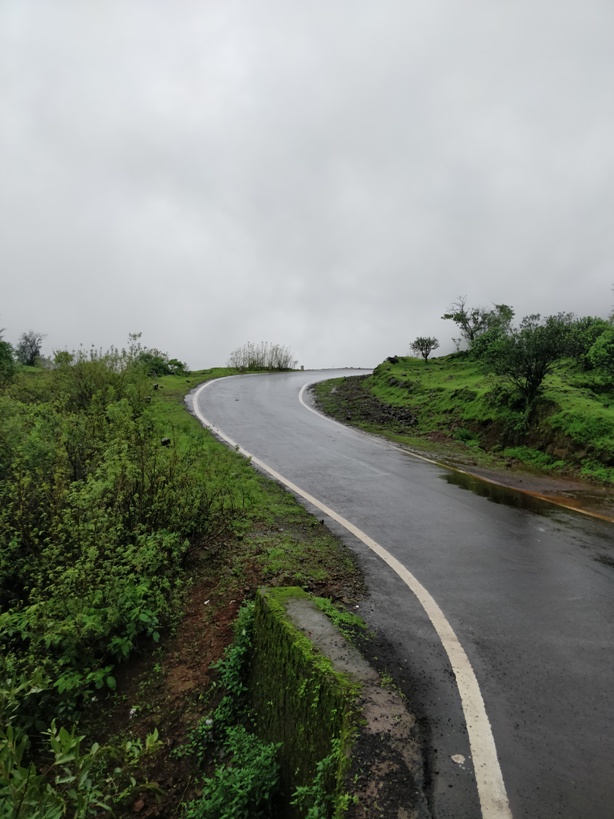
The silence of the early morning is utterly peaceful. The countryside has gained its monsoon splendour. This impossibly rich hue of green will be accompanying me throughout the trek.


Immediately as I start climbing the hill on way to Mahalunge, I hear the roar of water gushing down. It is in close vicinity. But the undergrowth is so thick, I can only see this much after a lot of effort.

A multicoloured frog concealed in the mud.

The first sight of village Mahalunge.


Farmers (meaning almost everybody!) in Mahalunge are hard at work in their fields while women are filling water at the village well. I cross Mahalunge and begin a rather short and gentle climb to Mhasai Pathaar, the most anticipated part of the trek.
MHASAI PATHAAR
Mhasai Pathaar (Mhasai Plateau) is a peculiar geological formation. It is a table-top piece of land roughly four miles by one mile.

It has mild undulations, resulting in creation of a number of mid-sized lakes all over its surface. The lakes are presently filled to the brim owing to heavy rains and their banks are narrow mud bogs full of swaying water lilies.

The Pathaar has no trees and very sparse shrubbery. It falls steeply on all sides to the plains below where tiny villages abut the cliffs. There is little human presence on the Pathaar itself. In day time, a few cowherds bring their livestock for grazing. But that too is rare in this season as fodder in available in plenty close to the villages during rains.

I am reminded of the ominous, mysterious moor in the Sherlock Holmes adventure “The Hound of Baskervilles”.

No photograph can do justice to Mhasai Pathaar – except, perhaps aerial ones. It is a 3600 experience. By the grace of God, the weather is pleasant. Sun is hidden behind thick, dark clouds but it is not raining. An unceasing cool breeze buzzes in the ears. There is nay a sound in the air, save a stray alarmed sparrow chirping as it flies overhead.
I put myself on pause mode and marvel at the unadulterated charm of nature on display all around me.
Water in a lake looking like clouds due to wind-generated waves.

Wild mushrooms emerging out of decomposing cattle dung.

Naturally formed caves at the edge of the Pathaar. Ideal abode for a leopard!

Drinking water straight from a lake!

The only permanent – so to speak – signs of human existence here are the two temples of Goddess Mhasai Mata. Both are rather non-descript and attract some pilgrims only on Tuesday – the designated favourite day of the Goddess. I see the first temple in far distance. The original stone structure has given way and the new cement one is incomplete.


I bow to the deity inside and move on. The road ahead extends right to the apparent horizon.

Soon I can spot the second – and probably more popular – temple.

I see countless coconut shells strewn around, a testimony to the crowd size of the previous Tuesday. Also lying about are innards of sacrificed chicken. Mhasai Mata is a Goddess of the shepherds and farmers and hence approves of animal sacrifice unlike other Brahminized deities.

The priest-attendant is busy with the rituals but hearing me, he comes out of the sanctum. In return for a suitable offering, he hands me a packet of holy ash which will ensure my safety during the trek.

I survey the village of Ghungur Bandivde spread below the cliff behind the temple.

A huge lake has recently been dug right opposite the temple. The excavated earth has piled up over an acre of land, blocking way forward.

I say goodbye to the priest with folded hands and take a detour around the mud mounds. The two Resident Dogs of the Temple escort me, no doubt attracted by the smell of the foodstuff I am carrying. They remain with me right till Orewadi, the next village.

A light but persistent rain continues. Rivulets of water run down my face, my rain jacket and my backpack.
A brief while later, I site two huge lakes side by side. They are the biggest I have seen on the Pathaar so far.

I glance all around. Not a soul for a mile. Besides, there is a thatched-roof shed nearby. I can’t resist the opportunity. I lose my clothes in the shed and have my first-ever skinny-dip. The Resident Dogs are mock-wrestling in a puddle and a few cows are munching grass on the banks of the lake. They all appear deeply disinterested.
Sorry, no pictures!
The Pathaar ends sooner than I expect. I find myself passing by this eucalyptus forest while a few alarmed buffaloes wonder if I could be a threat.


A small stream jumps down the edge of the Pathaar.

A cowherd tells me I have overshot Kumbharwadi a bit, but no problems, I could go down to Orewadi and then follow the kutcha road to Kumbharwadi. I heed his advice and begin descending to Orewadi. I can see my destination from the top.

The kind cowherd has told me the alignment of the foot track in great detail. But the temptation to beat my own path is too great. I attempt to take a short cut and soon find myself on all fours, negotiating this slippery vertical rock cautiously while the shepherd shouts unintelligibly from the top.

Last glance at Mhasai Pathaar.

I waste a lot of time reaching Orewadi (which is on a detour in the first place) and then moving on to Kumbharwadi. At Kumbharwadi, the sky opens up and a torrential downpour begins.
*********
From hereon, the trek progressively becomes a lonely, melancholy trudge. The shoes and socks cling to my feet and drip. Under incessant rain, the backpack gains in weight. The clothes turn wet inside rain wear. Very soon, my damp shorts begin to bite the insides of my thighs, making the act of walking brutally difficult. It feels like someone is singing my thigh-skin with burning coal. And I have not even completed a third of the route.
I fool around with my cell camera to cheer my sagging spirits and distract myself from the pain of trouser-bites, though clicking pictures in rain is also a test of one’s skill and patience.
Chafewadi, Khotwadi and Dhangarwadi come and go past in monotonous succession.


The men and women in the villages are used to seeing trekker groups from Mumbai and Pune pass by in this season. In each village – or in the rice fields outside – I have exactly the same interaction with the locals:
“Are there more people behind you?”
“No. I am all alone.”
“Alone…??”
“Yes, alone.”
“Which place do you belong to?” (As if that would explain the madness.)
I wizen up after a few such annoying encounters and modify the interaction.
“Are there more people behind you?”
“Yes. But they are a little far away. I started early.”
The rain continues unabated, not giving more than a few minutes respite at a time. The landscape around is bewitchingly beautiful.


Unusual rock formations on a hill top.

Traditional motifs on doors of houses.

A Tulsi plant with (perhaps) the image of the guardian saint of the area carved on the Vrindavan.

I remember Shivaji, Baji Prabhu and the brave Marathas. I begin to understand the insider-versus-outsider dimension of their fight. All the Marathas were from one or another of these very villages and knew this terrain like the back of one’s hand (Baji Prabhu, however, was from Bhor tehsil near Pune) while Siddi Jauhar and Siddi Masood perhaps did not know even the local language.
**********
Short of Mandlaiwadi, I have to cross a stream. It is wide, deep and would not allow jumping over. I have no option but to remove my shoes and walk through knee deep water.

A little upstream, I see a small lake formed. A little breather seems to be in order.

At Mandlaiwadi, a villager invites me inside his house to wait till rain subsides. I immediately get rid of my shoes and hang them on my backpack, switching to chappals instead.

The way from Mandlaiwadi onwards is a series of obstacles which sap my energy tremendously, while heavy rain continues to pound the earth and sting my face.
Deep nullahs that can be forded only by wading across them.


Foot tracks that have turned into waterways.

Paddy fields that dare you to cross through ankle-deep mud.


At a spot, I simply throw off my backpack, flop down on wet grass and close my eyes. The only sound heard is of a distant waterfall jumping down from a hill. The serenity of it overpowers me. I let my muscles and my mind relax, allowing myself the luxury to weigh the options of either stopping or moving ahead.
Ah, the pleasures of trekking alone!

Of course, it is just an indulgence. There is no real option but to pull oneself together and resume the march.
*************
I reach Karpewadi at 1600 hrs. The locals eye me with concern and exhort me to call it a day. Ignoring them, I cross the village and move on. But the light has begun to fade and I am staring at a rather large (meaning I can’t see the other end !) eucalyptus forest which I have to cross.

The forest is a government-planted one and isn’t very thick. But the following facts concern me.
1. It is contiguous with a natural forest which has dense undergrowth.
2. It is getting dark.
3. There is absolutely no human presence around. Nearest village on either side is two miles away.
4. I have never dealt with hostile wild animals in my life.
I get hold of a stout stick and hold it in ‘ready’ position with both hands before moving inside the forest. If a leopard (or a bear) does pounce on me, I can perhaps break a couple of his teeth before s/he settles down for dinner.
Any environmentalist will rethink his agenda if he is left inside a forest alone on a rainy evening with just a stick for protection. Let me tell you it is pretty unsettling! Every sound sets one’s imagination ablaze with suspicions and every shadow looks like that of some predator.
Many tracks meet and disperse in the forest. It could have been confusing but these route markers painted by the adventure groups four days ago, keep me from getting lost -though it is not much of a consolation!

A red coloured crab stares curiously at me!

I never thought I would be so happy to see human beings. But after that long, solitary walk through eerie woods, this view below gladdens my heart!

It is 1830 hrs. I have crossed Amberwadi and reach Ringewadi quite exhausted – not so much due to the walk as because of mud, rain and the trouser bites. I decide I am staying here for the night.
***********

My hosts for the night are the Bharankar family. They are farmers of rather moderate means, but extremely dignified and hospitable. (Actually, the surname of the entire village is Bharankar and they are all each other’s relatives.)
I change my dripping clothes and hang them up to dry (fat chance of that, though!). Mr Bharankar spots the leeches who are feasting on my legs and promptly removes them (leeches, not the legs!) with a sickle.

The dinner is rice bhakris, lentil curry, boiled rice and a raw onion. Food seldom tasted so delicious in past! We talk about random things over food, the way two absolute strangers would. But soon, we are talking about farmer’s concerns and issues. I am humbled to see that the Bharankars, in spite of their obvious difficulties, scrupulously refrain from any kind of cribbing or complaining during the discussion and hold on to their self-respect.
After dinner, the family watches their favourite Marathi soap on a B&W television (didn’t know they still existed!) while I lay down on a blanket next to this grain stack, hearing the rampaging rain outside.

*************
DAY TWO: FROM RINGEWADI TO PAWANKHIND
My eyes open at 0530 hrs. Day must be breaking outside, but inside the well-sealed stone house, it is utterly dark. Only when I peep out through a tiny opening next to the granary do I see the dawn.
Yesterday, I dreaded the prospect of waking up in the morning and walking again. I felt my legs would simply get jammed. But nothing of the sort happens. My legs are aching a little, but I feel I can walk.
A hot cup of tea later, I say my goodbyes to the Bharankars and move on.
For the first time after crossing Turukwadi yesterday morning, I set my foot on a black-topped road. It runs a little distance away from Ringewadi. I cross it and continue along a foot track. As it turns out, the next village Patewadi isn’t very far. Had I known this, I wouldn’t have halted at Ringewadi.
See if you can spot the road in this picture below.

Rain is absolutely unrelenting. It has already filled this well to the brim.

Jackfruit trees lined up in a grazing pasture.

Water, water everywhere…!

Patewadi and Sukalmacha Dhangarwada villages pass by.


On way to my last stop, Masevde, I find myself yet again in a forest all by myself. It is far denser than the one I crossed yesterday. Rain is making it look even more sinister. And I have forgotten that stick at the Bharankars’ house.


What is more, a number of nullahs are flowing through the undergrowth. Though the water level and speed has receded since yesterday, one can imagine it from the size of objects that have flown along from top.

Trying to cross this huge tree lying in water, I suddenly sense movement scarily close to me. I turn around in terror and find that it is a man carrying a big load on his head! He is waiting for me to move. Anti-climax! I tell him as much, to his mild amusement! He is a shepherd from Masevde and is returning from the forest after collecting this load of Ayurvedic herbs which he will be selling to a shop in Malkapur. I am relieved to find company and walk behind him to Masevde.

The last lap Masevde – Pandhrepani – Pawankhind is entirely along a black-topped road. I have, therefore chosen to end my trek at Masevde and take a bus to Pawankhind.

Some school kids are also waiting at the bus stop. They will be going to Malkapur which is in opposite direction. They tell me that my bus to Vishalgad is at 1130 hrs. It means I have to wait for 45 minutes.

Thankfully, the MSRTC bus is dot on time. I get down at Pawankhind stop. The conductor tells me to be back there by 1345 hrs and the vehicle speeds off towards Vishalgad.

*************
Pawankhind is a very short walk away. I descend to the pass. The Satara NCC battalion has put up a board marking the site.

I imagine the bloody night battle taking place around me between the valiant Marathas and their chasers. I imagine the tired, outnumbered peasant-warriors falling to their death one by one, delaying the enemy enough to enable their beloved King to reach Vishalgad safely. I imagine Baji Prabhu, their mortally wounded chief, refusing to be evacuated until he hears the artillery gun fired from Vishalgad. I imagine blood mixing with the rain and flowing down the hill.
I feel a lump rising in my throat. I bow down on my knees and touch my head to the ground. I rub some mud on my forehead and drink a little water from the nullah, cupping it in my palm in the Hindu religious tradition.

************
Timeline
| Location | Time |
|
DAY ONE |
|
| Panhala | 0720 |
| Turukwadi | 0755 |
| Mahalunge | 0815 |
| Mhasai Pathar | 0820 |
| Mhasai Temple 1 | 0845 |
| Mhasai Temple 2 | 0935-0945 |
| Orewadi | 1100 |
| Kumbharwadi | 1130 |
| Chafewadi | 1200 |
| Khotwadi | 1215 |
| Dhangarwadi | 1300 |
| Mandalaiwadi | 1400-1445 |
| Karpewadi | 1600 |
| Amberwadi | 1700 |
| Ringewadi | 1800 (Night Halt) |
|
DAY TWO |
|
| Ringewadi | 0700 |
| Patewadi | 0740 |
| Sukalmacha Dhangarwada | 0930 |
| Masevde | 1030 |
| Masevde bus stop | 1045-1130 (waiting for bus) |
| Pawankhind (by bus) | 1200 |


No comments:
Post a Comment